Cancer Immunology Laboratory, Department of Clinical Research, Singapore General Hospital, Singapore, Singapore.
PLoS One. 2010 May 26;5(5):e10845. doi: 10.1371/journal.pone.0010845.
Multiple myeloma (MM) is a malignancy of terminally-differentiated plasma cells, and the second most prevalent blood cancer. At present there is no cure for MM, and the average prognosis is only three to five years. Current treatments such as chemotherapy are able to prolong a patient's life but rarely prevent relapse of the disease. Even hematopoietic stem cell transplants and novel drug combinations are often not curative, underscoring the need for a continued search for novel therapeutics. CD137 and its ligand are members of the Tumor Necrosis Factor (TNF) receptor and TNF superfamilies, respectively. Since CD137 ligand cross-linking enhances proliferation and survival of healthy B cells we hypothesized that it would also act as a growth stimulus for B cell cancers.
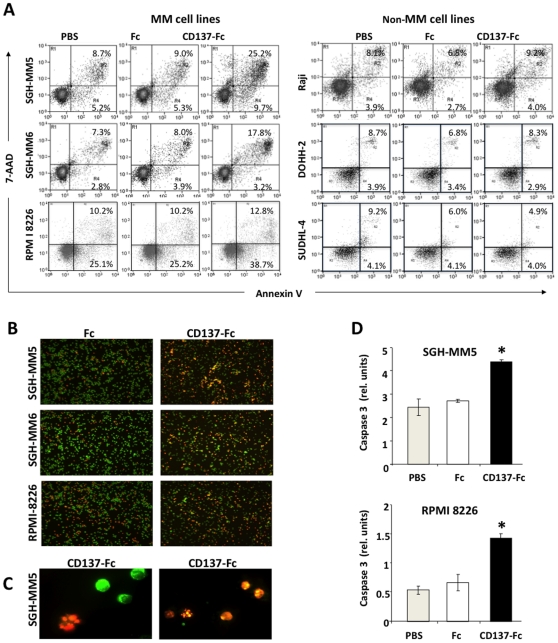
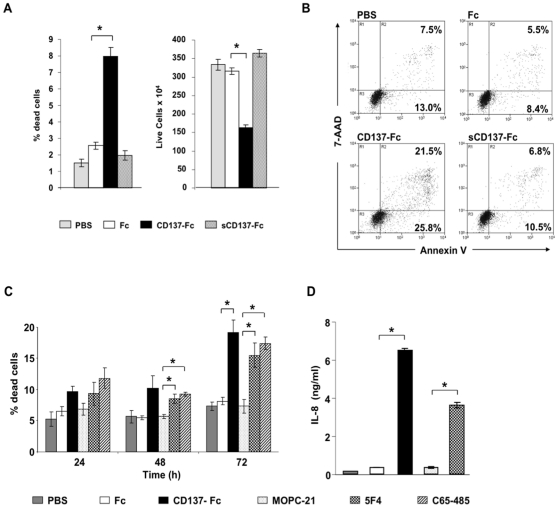
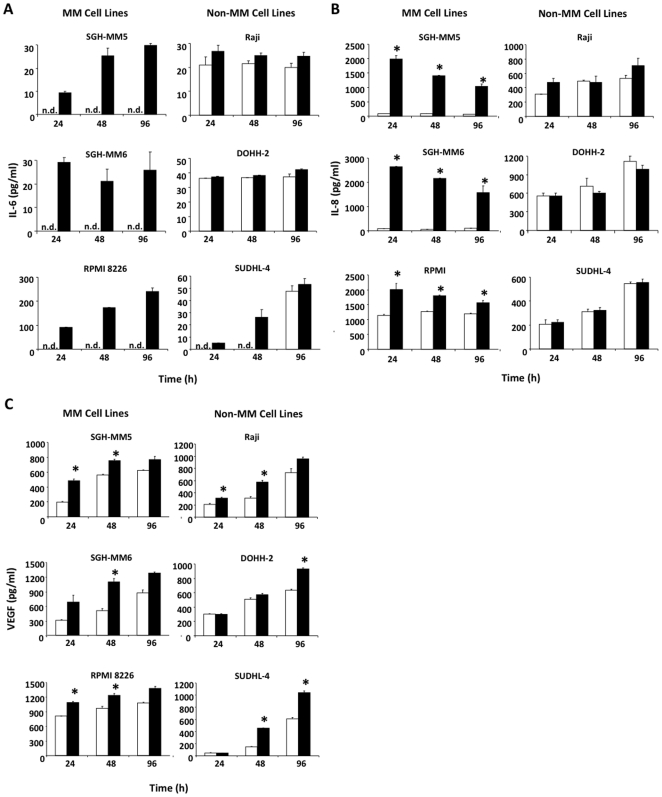
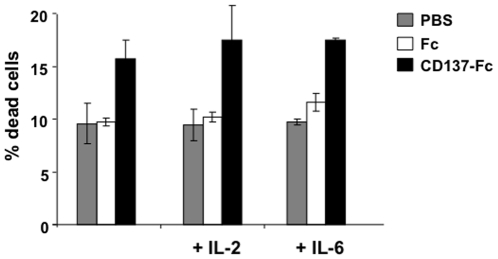
METHODOLOGY/PRINCIPAL FINDINGS: Proliferation and survival of B cell lymphoma cell lines were not affected or slightly enhanced by CD137 ligand agonists in vitro. But surprisingly, they had the opposite effects on MM cells, where CD137 ligand signals inhibited proliferation and induced cell death by apoptosis. Furthermore, secretion of the pro-inflammatory cytokines, IL-6 and IL-8 were also enhanced in MM but not in non-MM cell lines in response to CD137 ligand agonists. The secretion of these cytokines in response to CD137 ligand signaling was consistent with the observed activation of the classical NF-kappaB pathway. We hypothesize that the induction of this pathway results in activation-induced cell death, and that this is the underlying mechanism of CD137-induced MM cell death and growth arrest.
CONCLUSIONS/SIGNIFICANCE: These data point to a hitherto unrecognized role of CD137 and CD137 ligand in MM cell biology. The selective inhibition of proliferation and induction of cell death in MM cells by CD137 ligand agonists may also warrant a closer evaluation of their therapeutic potential.
多发性骨髓瘤(MM)是一种终末分化的浆细胞恶性肿瘤,也是第二大常见的血液癌。目前,MM 尚无治愈方法,平均预后仅为三到五年。目前的治疗方法,如化疗,能够延长患者的生命,但很少能预防疾病的复发。即使是造血干细胞移植和新型药物联合治疗,也往往不能治愈,这凸显了继续寻找新疗法的必要性。CD137 和其配体分别是肿瘤坏死因子(TNF)受体和 TNF 超家族的成员。由于 CD137 配体交联增强了健康 B 细胞的增殖和存活,我们假设它也将作为 B 细胞癌的生长刺激物。
方法/主要发现:体外实验中,CD137 配体激动剂对 B 细胞淋巴瘤细胞系的增殖和存活没有影响或略有增强。但令人惊讶的是,它们对 MM 细胞有相反的作用,CD137 配体信号抑制 MM 细胞的增殖,并通过细胞凋亡诱导细胞死亡。此外,与非 MM 细胞系相比,MM 细胞系对 CD137 配体激动剂的反应中,促炎细胞因子 IL-6 和 IL-8 的分泌也增强了。对 CD137 配体信号的反应中这些细胞因子的分泌与观察到的经典 NF-kappaB 途径的激活一致。我们假设该途径的诱导导致激活诱导的细胞死亡,这是 CD137 诱导 MM 细胞死亡和生长停滞的潜在机制。
结论/意义:这些数据指出了 CD137 和 CD137 配体在 MM 细胞生物学中一个迄今为止尚未被认识到的作用。CD137 配体激动剂对 MM 细胞选择性地抑制增殖并诱导细胞死亡,这也可能需要更仔细地评估它们的治疗潜力。