Cellular Immunology Section, Vaccine Research Center, National Institute of Allergy and Infectious Diseases, National Institutes of Health, Bethesda, MD 20892, USA.
J Exp Med. 2010 Jul 5;207(7):1421-33. doi: 10.1084/jem.20092532. Epub 2010 Jun 7.
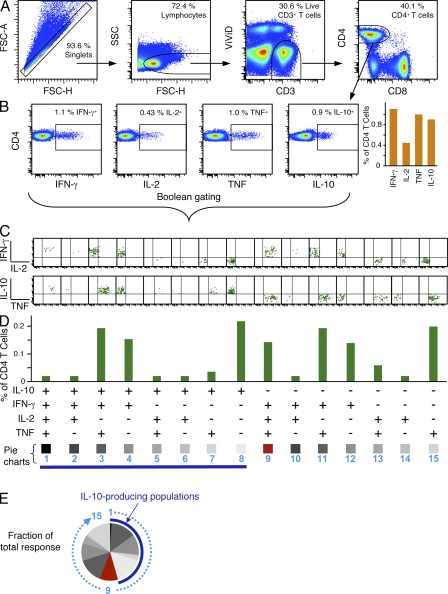
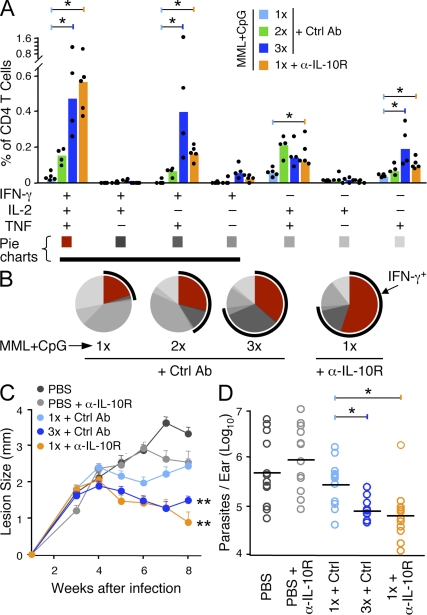
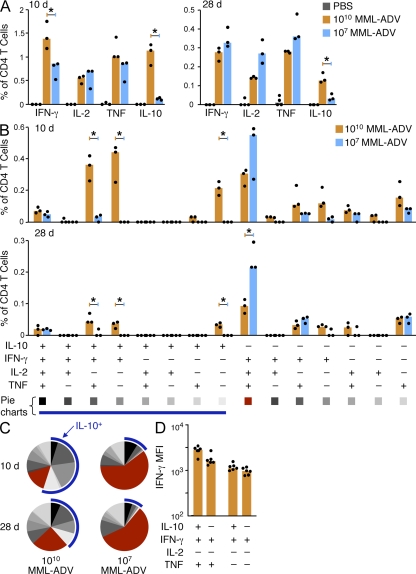
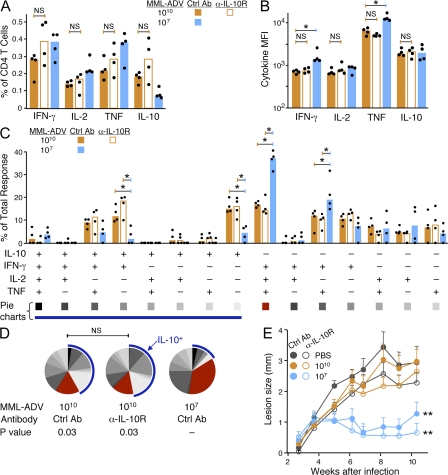
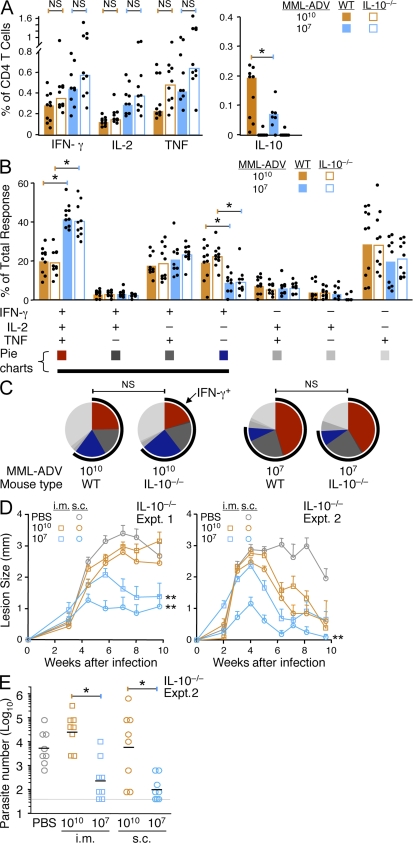
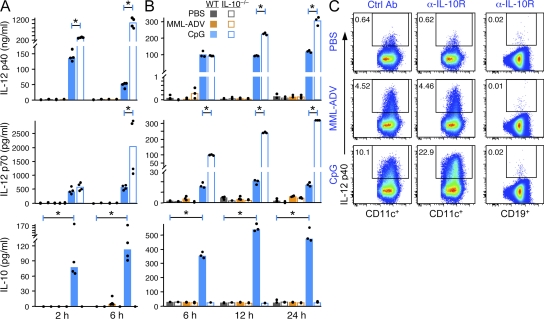
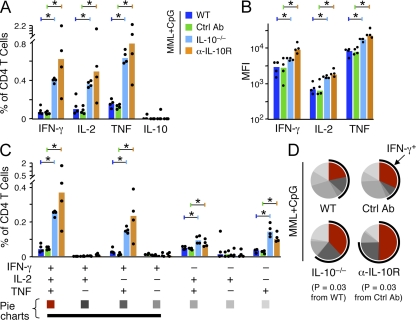
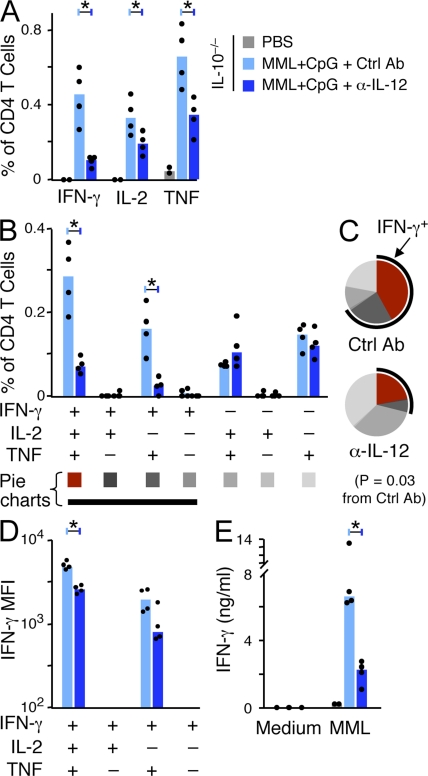
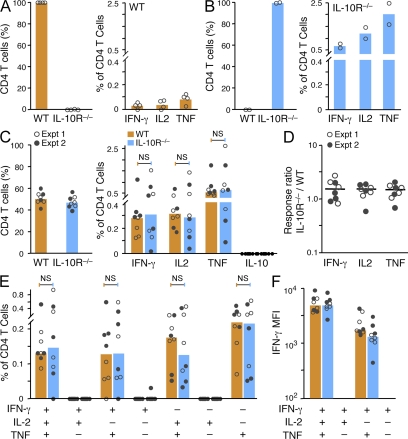
The quality of a Th1 response can be a prospective correlate of vaccine-mediated protection against certain intracellular pathogens. Using two distinct vaccine platforms, we evaluate the influence of interleukin (IL) 10 production on the magnitude, quality, and protective capacity of CD4(+) T cell responses in the mouse model of Leishmania major infection. Multiparameter flow cytometry was used to delineate the CD4(+) T cell production of interferon (IFN) gamma, IL-2, tumor necrosis factor (TNF), and IL-10 (or combinations thereof) after vaccination. Immunization with a high dose of adenovirus (ADV) expressing leishmanial proteins (MML-ADV) elicited a limited proportion of multifunctional IFN-gamma(+)IL-2(+)TNF(+) Th1 cells, a high frequency of IL-10-producing CD4(+) T cells, and did not protect against subsequent challenge. Surprisingly, in the absence of IL-10, there was no change in the magnitude, quality, or protective capacity of the Th1 response elicited by high-dose MML-ADV. In contrast, after immunization with MML protein and CpG (MML + CpG), IL-10 limited the production of IL-12 by DCs in vivo, thereby decreasing the generation of multifunctional Th1 cells. Consequently, three immunizations with MML + CpG were required for full protection. However, inhibiting IL-10 at the time of immunization enhanced the magnitude and quality of the Th1 response sufficiently to mediate protection after only a single immunization. Overall, we delineate distinct mechanisms by which vaccines elicit protective Th1 responses and underscore the importance of multifunctional CD4(+) T cells.
Th1 反应的质量可以作为疫苗介导的针对某些细胞内病原体的保护的前瞻性相关因素。我们使用两种不同的疫苗平台,评估白细胞介素 (IL) 10 产生对 CD4(+)T 细胞反应的幅度、质量和保护能力的影响在小鼠大孢子虫感染模型中。多参数流式细胞术用于描绘 IFN-γ、IL-2、肿瘤坏死因子 (TNF) 和 IL-10(或其组合)在接种后的 CD4(+)T 细胞产生情况。用表达利什曼原虫蛋白的高剂量腺病毒 (ADV)(MML-ADV)免疫引发了有限比例的多功能 IFN-γ(+)IL-2(+)TNF(+)Th1 细胞、高频率的 IL-10 产生的 CD4(+)T 细胞,并且不能预防随后的挑战。令人惊讶的是,在没有 IL-10 的情况下,高剂量 MML-ADV 引发的 Th1 反应的幅度、质量或保护能力没有变化。相比之下,在用 MML 蛋白和 CpG(MML + CpG)免疫后,IL-10 限制了体内树突状细胞中 IL-12 的产生,从而减少了多功能 Th1 细胞的产生。因此,需要进行三次 MML + CpG 免疫才能获得完全保护。然而,在免疫时抑制 IL-10 足以增强 Th1 反应的幅度和质量,使其在单次免疫后即可介导保护。总体而言,我们描绘了疫苗引发保护性 Th1 反应的不同机制,并强调了多功能 CD4(+)T 细胞的重要性。