Department of Immunology and Microbial Science, The Scripps Research Institute, La Jolla, California, United States of America.
PLoS Pathog. 2010 Jun 3;6(6):e1000934. doi: 10.1371/journal.ppat.1000934.
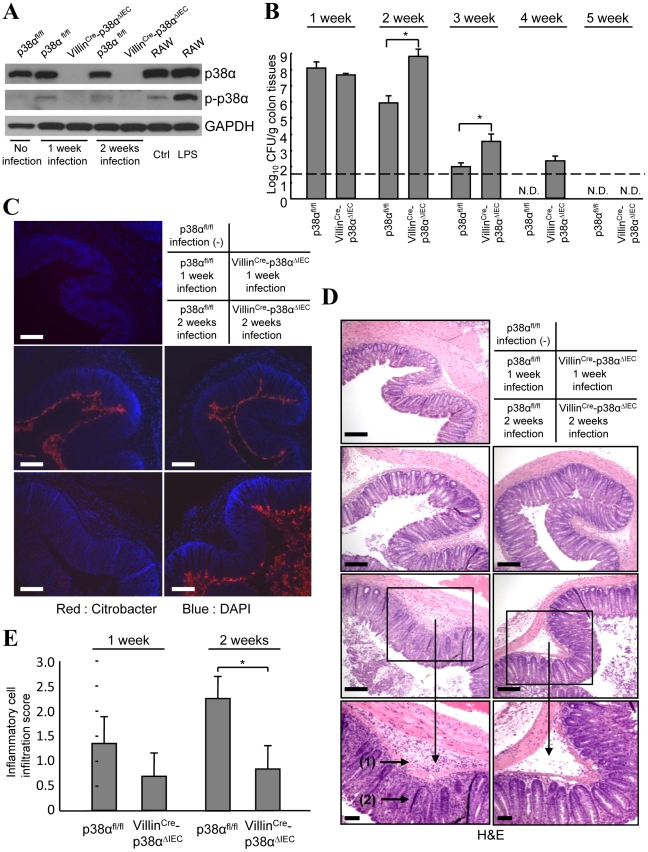
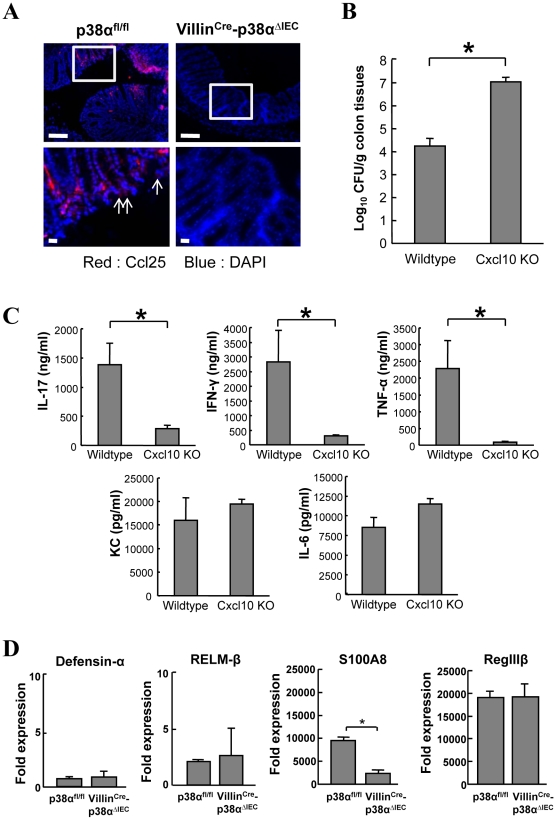
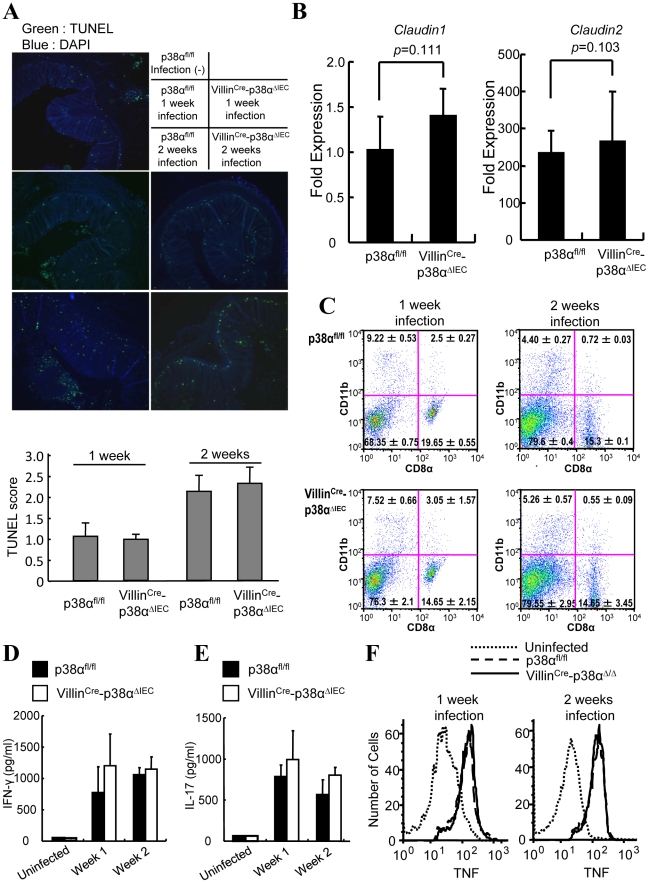
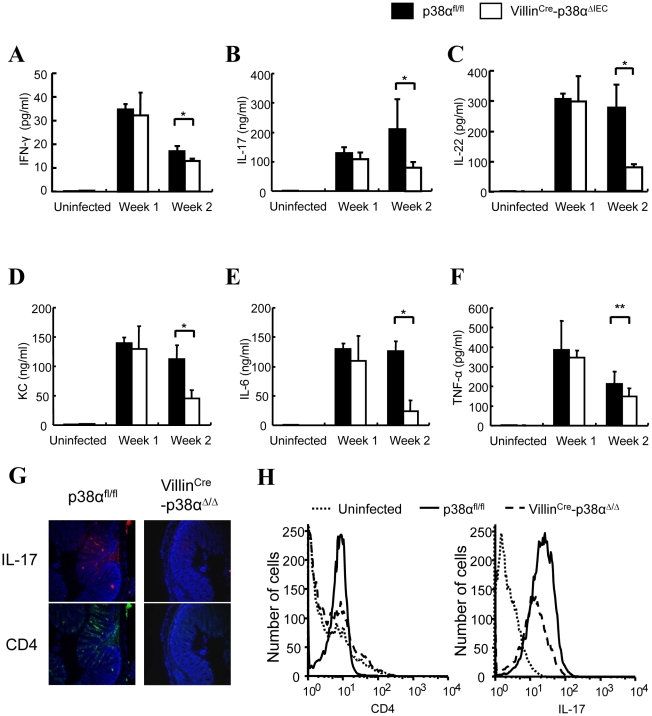
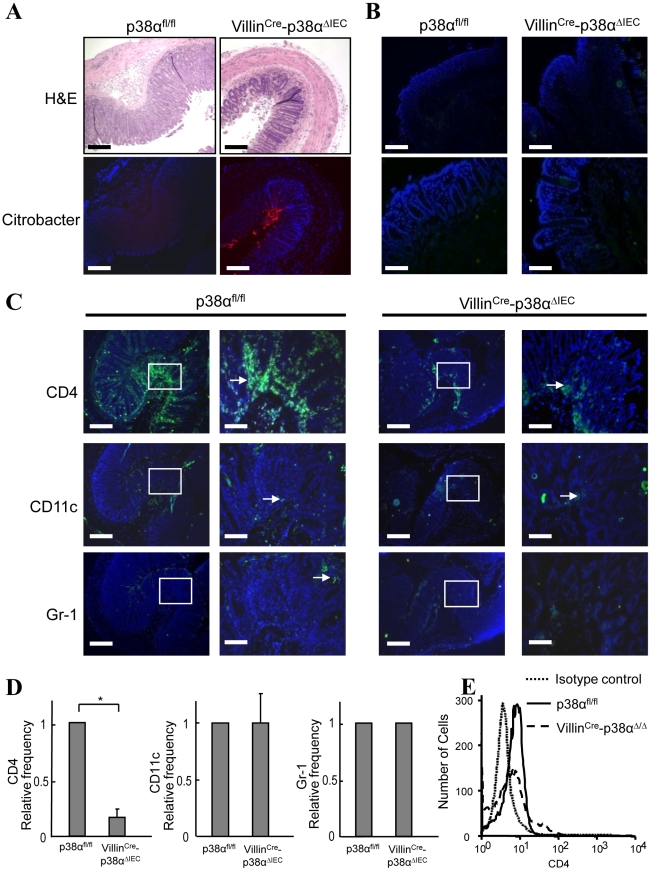
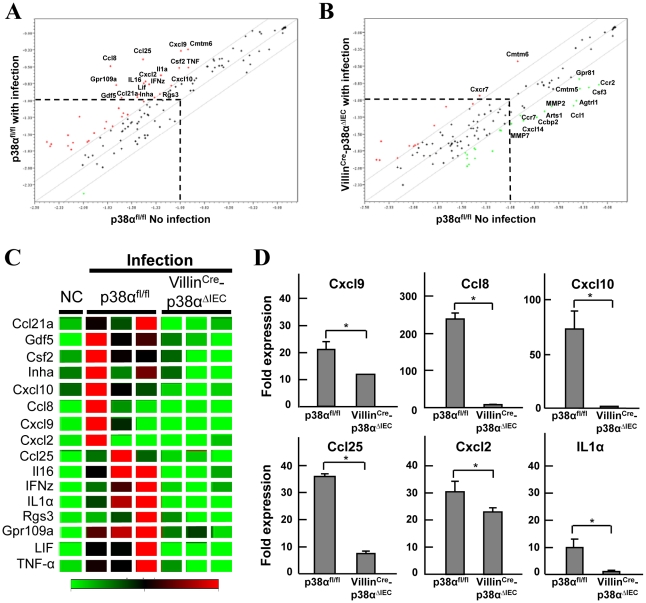
Intestinal epithelial cells (IECs) compose the first barrier against microorganisms in the gastrointestinal tract. Although the NF-kappaB pathway in IECs was recently shown to be essential for epithelial integrity and intestinal immune homeostasis, the roles of other inflammatory signaling pathways in immune responses in IECs are still largely unknown. Here we show that p38alpha in IECs is critical for chemokine expression, subsequent immune cell recruitment into the intestinal mucosa, and clearance of the infected pathogen. Mice with p38alpha deletion in IECs suffer from a sustained bacterial burden after inoculation with Citrobacter rodentium. These animals are normal in epithelial integrity and immune cell function, but fail to recruit CD4(+) T cells into colonic mucosal lesions. The expression of chemokines in IECs is impaired, which appears to be responsible for the impaired T cell recruitment. Thus, p38alpha in IECs contributes to the host immune responses against enteric bacteria by the recruitment of immune cells.
肠上皮细胞 (IECs) 构成了胃肠道中抵御微生物的第一道屏障。尽管最近已经表明 IECs 中的 NF-κB 途径对于上皮完整性和肠道免疫稳态至关重要,但其他炎症信号通路在 IECs 中的免疫反应中的作用在很大程度上仍然未知。在这里,我们表明 IECs 中的 p38α对于趋化因子的表达、随后的免疫细胞募集到肠道黏膜以及感染病原体的清除至关重要。IECs 中 p38α 缺失的小鼠在接种鼠柠檬酸杆菌后会持续存在细菌负担。这些动物在上皮完整性和免疫细胞功能方面正常,但未能将 CD4(+)T 细胞募集到结肠黏膜病变中。IECs 中趋化因子的表达受损,这似乎是导致 T 细胞募集受损的原因。因此,IECs 中的 p38α 通过募集免疫细胞来促进宿主对肠道细菌的免疫反应。