Tianjin Key Laboratory of Lung Cancer Metastasis and Tumor Microenviroment, Tianjin Lung Cancer Institute, Tianjin Medical University General Hospital, Tianjin 300052, China.
BMC Cancer. 2010 Jun 9;10:269. doi: 10.1186/1471-2407-10-269.
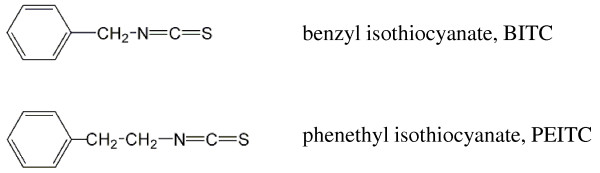
Isothiocyanates are natural compounds found in consumable cruciferous vegetables. They have been shown to inhibit chemical carcinogenesis by a wide variety of chemical carcinogens in animal models. Recent studies have also shown that isothiocyanates have antitumor activity, inhibiting the growth of several types of cultured human cancer cells. Our previous study showed that PEITC inhibited human leukemia cells growth by inducing apoptosis. However, the effect of isothiocyanates on lung cancer cell metastasis has not been studied. In the present study, we investigated the inhibitory effects of BITC and PEITC on metastatic potential of highly metastatic human lung cancer L9981 cells.
Cell migration and invasion were measured by wound healing assay and transwell chemotaxis assay. Expression of metastasis-related genes was assessed by quantitative RT-PCR and Western blotting. The mechanisms of action were evaluated by flow cytometry, reporter assay and Western blotting.
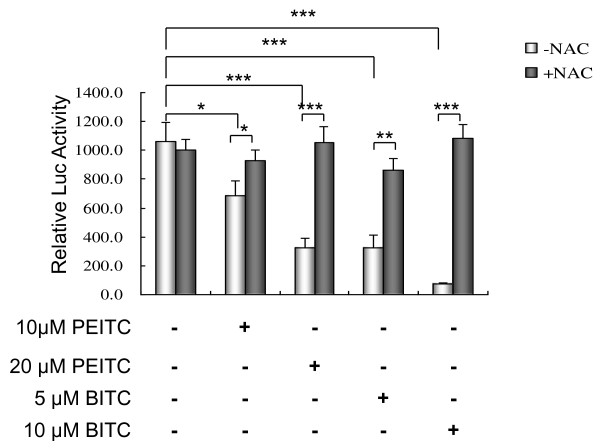
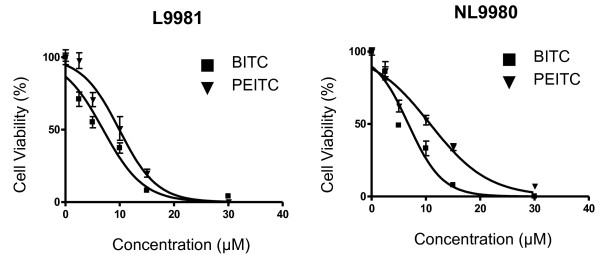
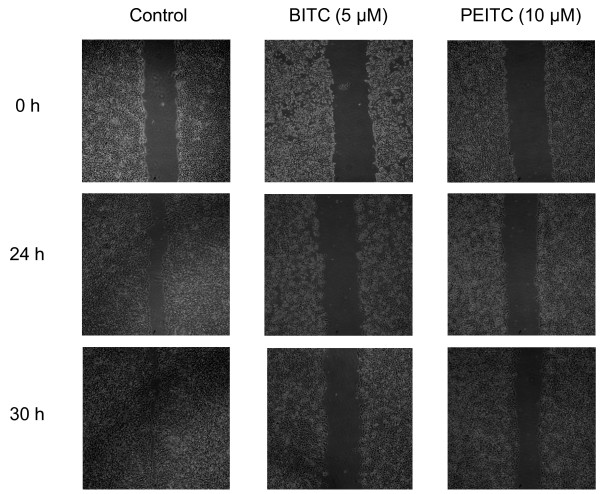
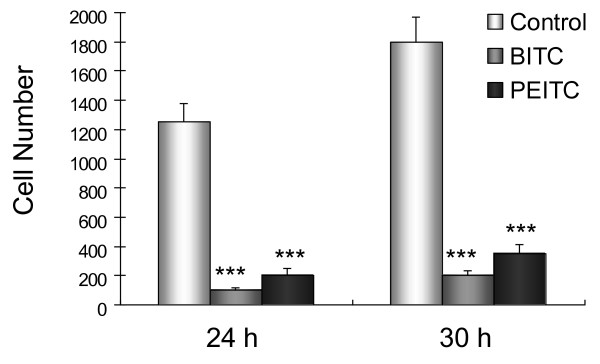
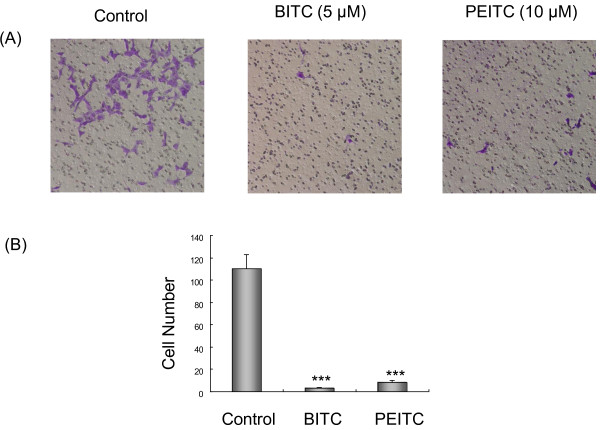
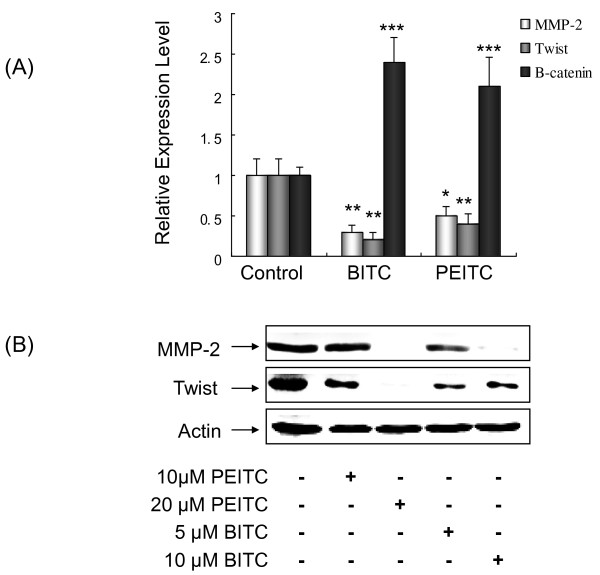
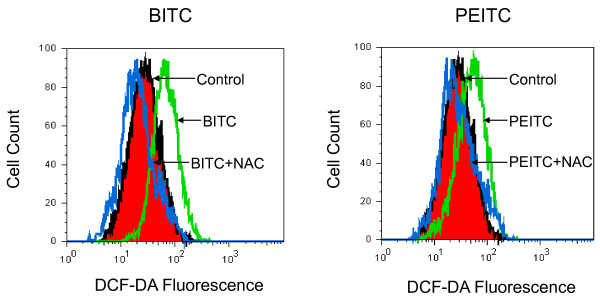
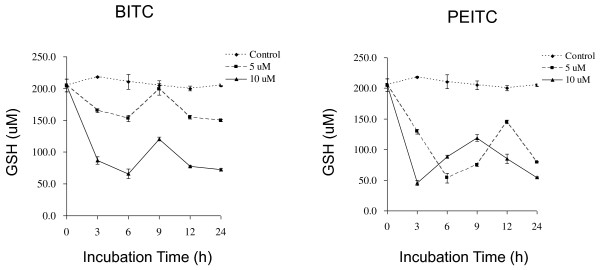
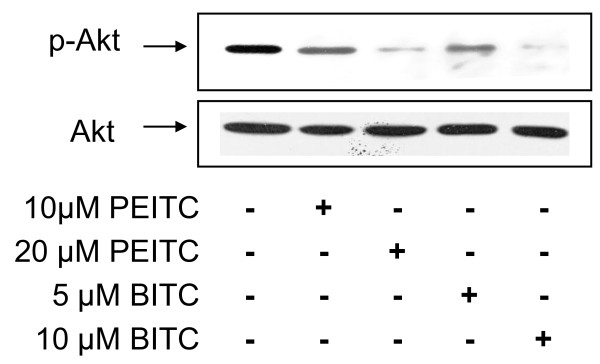
Our data showed that both BITC and PEITC inhibited L9981 cell growth in a dose-dependent manner, the IC50 values were 5.0 and 9.7 microM, respectively. Cell migrations were reduced to 8.1% and 16.5% of control, respectively; and cell invasions were reduced to 2.7% and 7.3% of control, respectively. Metastasis-related genes MMP-2, Twist and beta-catenin were also modulated. BITC and PEITC inhibited cell survival signaling molecules Akt and NFkappaB activation. Moreover, BITC and PEITC increased ROS generation and caused GSH depletion. Pretreatment with NAC blocked BITC and PEITC induced ROS elevation and NFkappaB inhibition.
Our results indicated that BITC and PEITC suppress lung cancer cell metastasis potential by modulation of metastasis-related gene expression, inhibition of Akt/NFkappaB pathway. Induction of oxidative stress may play an important role.
异硫氰酸酯是可食用十字花科蔬菜中含有的天然化合物。它们在动物模型中已被证明可抑制多种化学致癌物的化学致癌作用。最近的研究还表明,异硫氰酸酯具有抗肿瘤活性,可抑制几种类型的培养人癌细胞的生长。我们之前的研究表明,PEITC 通过诱导细胞凋亡抑制人白血病细胞的生长。然而,异硫氰酸酯对肺癌细胞转移的影响尚未研究。在本研究中,我们研究了 BITC 和 PEITC 对高转移性人肺癌 L9981 细胞转移潜能的抑制作用。
通过划痕愈合试验和 Transwell 趋化试验测定细胞迁移和侵袭。通过定量 RT-PCR 和 Western blot 评估转移相关基因的表达。通过流式细胞术、报告基因测定和 Western blot 评估作用机制。
我们的数据表明,BITC 和 PEITC 均以剂量依赖性方式抑制 L9981 细胞生长,IC50 值分别为 5.0 和 9.7 μM。细胞迁移分别减少至对照的 8.1%和 16.5%;细胞侵袭分别减少至对照的 2.7%和 7.3%。转移相关基因 MMP-2、Twist 和β-catenin 也被调节。BITC 和 PEITC 抑制细胞存活信号分子 Akt 和 NFκB 的激活。此外,BITC 和 PEITC 增加 ROS 生成并导致 GSH 耗竭。NAC 预处理阻断了 BITC 和 PEITC 诱导的 ROS 升高和 NFκB 抑制。
我们的结果表明,BITC 和 PEITC 通过调节转移相关基因表达、抑制 Akt/NFκB 通路来抑制肺癌细胞转移潜能。诱导氧化应激可能发挥重要作用。