Lilly Research Laboratories, Eli Lilly and Company, Lilly Corporate Center, Indianapolis, Indiana, USA.
BMC Psychiatry. 2010 Jun 10;10:43. doi: 10.1186/1471-244X-10-43.
An advance in the treatment of schizophrenia is the development of long-acting intramuscular formulations of antipsychotics, such as olanzapine long-acting injection (LAI). During clinical trials, a post-injection syndrome characterized by signs of delirium and/or excessive sedation was identified in a small percentage of patients following injection with olanzapine LAI.
Safety data from all completed and ongoing trials of olanzapine LAI were reviewed for possible cases of this post-injection syndrome. Descriptive analyses were conducted to characterize incidence, clinical presentation, and outcome. Regression analyses were conducted to assess possible risk factors.
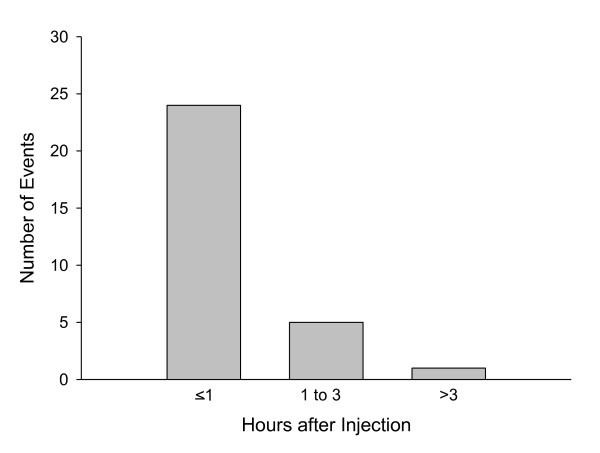
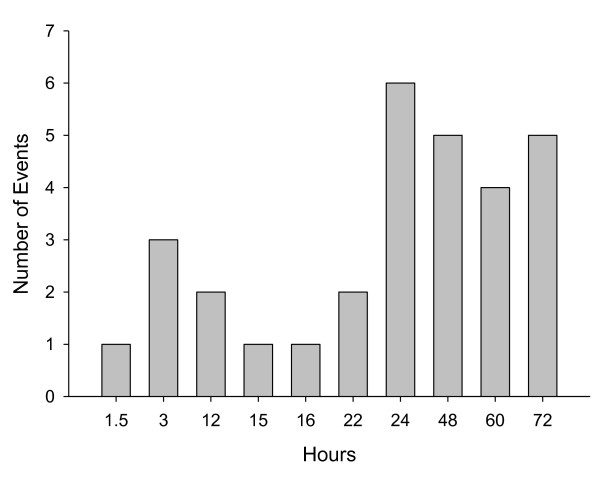
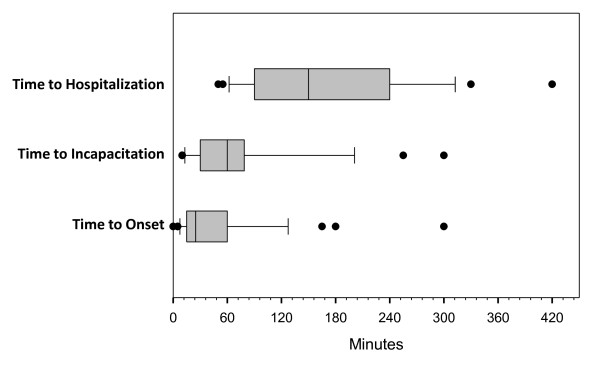
Based on approximately 45,000 olanzapine LAI injections given to 2054 patients in clinical trials through 14 October 2008, post-injection delirium/sedation syndrome occurred in approximately 0.07% of injections or 1.4% of patients (30 cases in 29 patients). Symptomatology was consistent with olanzapine overdose (e.g., sedation, confusion, slurred speech, altered gait, or unconsciousness). However, no clinically significant decreases in vital signs were observed. Symptom onset ranged from immediate to 3 to 5 hours post injection, with a median onset time of 25 minutes post injection. All patients recovered within 1.5 to 72 hours, and the majority continued to receive further olanzapine LAI injections following the event. No clear risk factors were identified.
Post-injection delirium/sedation syndrome can be readily identified based on symptom presentation, progression, and temporal relationship to the injection, and is consistent with olanzapine overdose following probable accidental intravascular injection of a portion of the olanzapine LAI dose. Although there is no specific antidote for olanzapine overdose, patients can be treated symptomatically as needed. Special precautions include use of proper injection technique and a post-injection observation period.
ClinicalTrials.gov ID; URL: http://http//www.clinicaltrials.gov/: NCT00094640, NCT00088478, NCT00088491, NCT00088465, and NCT00320489.
抗精神分裂症治疗的一项进展是开发长效肌肉注射制剂的抗精神病药物,如奥氮平长效注射剂(LAI)。在临床试验中,一小部分患者在注射奥氮平 LAI 后出现以意识混乱和/或过度镇静为特征的注射后综合征。
对奥氮平 LAI 所有已完成和正在进行的试验的安全性数据进行了审查,以确定是否可能出现这种注射后综合征病例。进行描述性分析以确定发病率、临床表现和结果。进行回归分析以评估可能的危险因素。
截至 2008 年 10 月 14 日,大约有 2054 名患者在临床试验中接受了约 45000 次奥氮平 LAI 注射,约 0.07%的注射或 1.4%的患者出现注射后意识混乱/镇静综合征(30 例中的 29 例)。症状与奥氮平过量一致(例如镇静、意识混乱、言语不清、步态改变或意识丧失)。然而,没有观察到生命体征的临床显著下降。症状发作时间从注射后即刻到 3 至 5 小时不等,中位发作时间为注射后 25 分钟。所有患者在 1.5 至 72 小时内恢复,大多数患者在事件发生后继续接受奥氮平 LAI 进一步注射。未确定明确的危险因素。
根据症状表现、进展情况以及与注射的时间关系,可以很容易地识别出注射后意识混乱/镇静综合征,这与奥氮平过量一致,可能是奥氮平 LAI 剂量的一部分意外血管内注射后所致。虽然奥氮平过量没有特定的解毒剂,但可以根据需要对患者进行对症治疗。特殊预防措施包括使用正确的注射技术和注射后观察期。
ClinicalTrials.gov ID;URL:http://http//www.clinicaltrials.gov/:NCT00094640、NCT00088478、NCT00088491、NCT00088465 和 NCT00320489。