Oncologia Molecolare e Angiogenesi, Istituto Nazionale per la Ricerca sul Cancro, 16132 Genova, Italy.
Mol Cancer. 2010 Jun 10;9:142. doi: 10.1186/1476-4598-9-142.
Prostate cancer shows an extremely slow progression, appearing in its metastatic, hormone refractory phenotype mostly in elderly men. The chemopreventive targeting of this tumor could accordingly delay its malignancy over life expectancy. The cancer chemopreventive retinoid N-(4 hydroxyphenyl)retinamide (4HPR) has already been shown to restrain prostate cancer growth in vitro and in vivo, though its mechanisms of action are only partially explained.
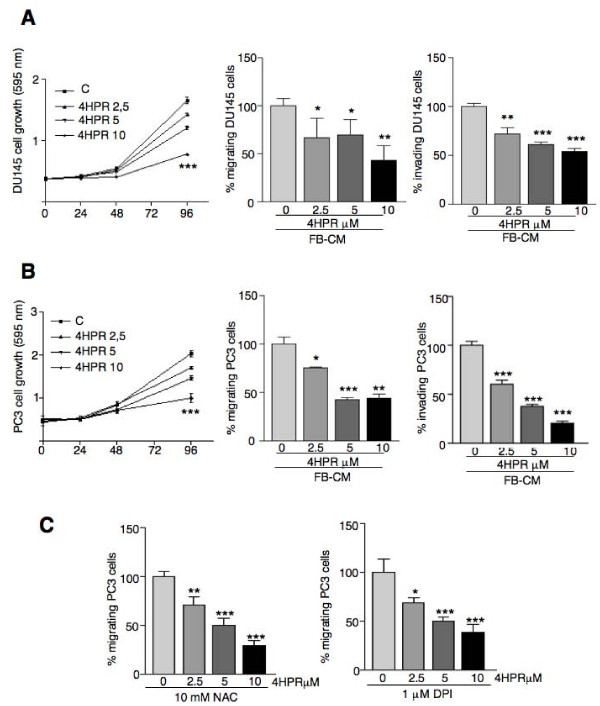
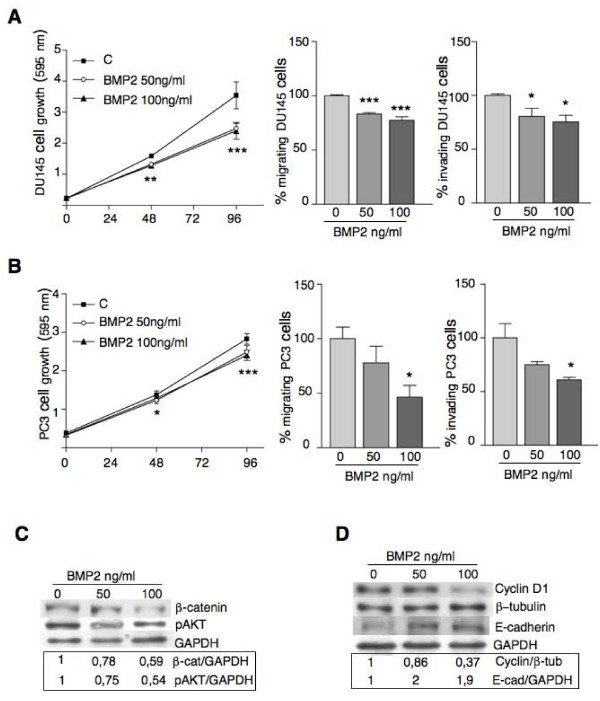
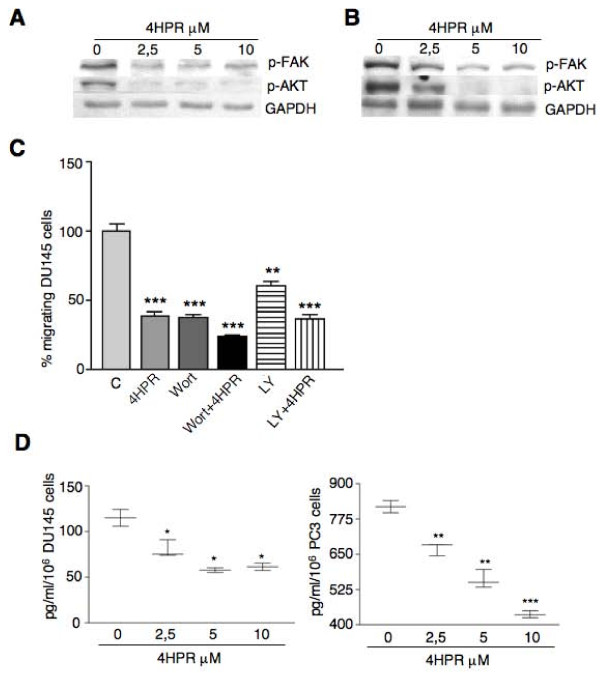
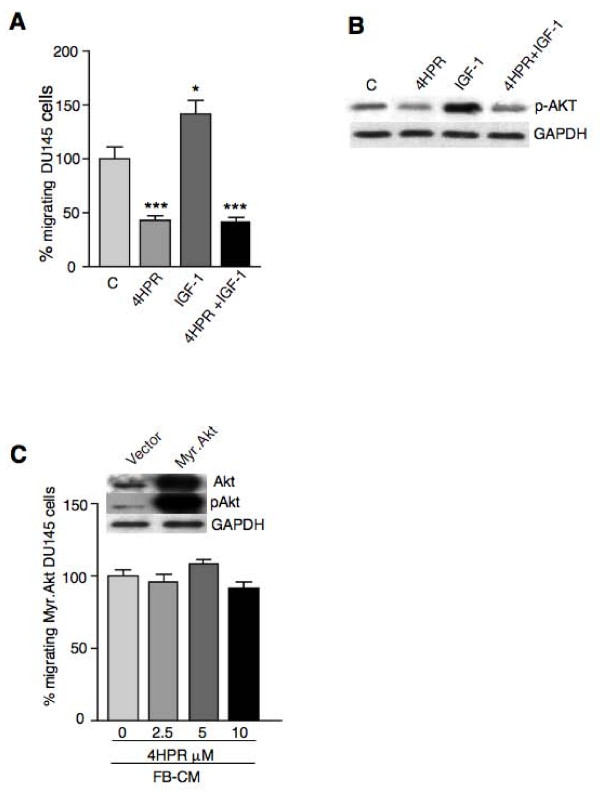
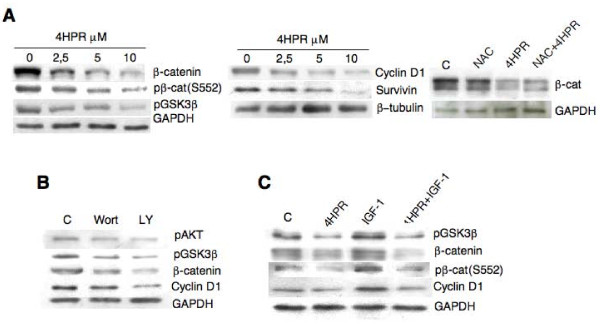
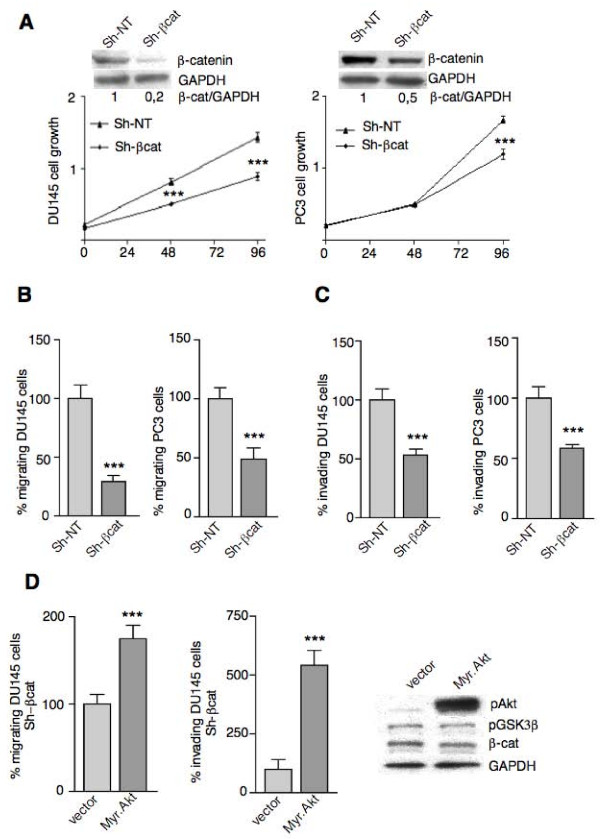
We found that 4HPR impairs DU145 and PC3 prostate cancer cells migration and invasion by down-regulating FAK and AKT activation and by enhancing beta-catenin degradation, causing the downregulation of target genes like cyclin D1, survivin and VEGF. This non-migratory phenotype was similarly produced in both cell lines by stable silencing of beta-catenin. 4HPR was able to decrease AKT phosphorylation also when powerfully upregulated by IGF-1 and, consequently, to impair IGF-1-stimulated cell motility. Conversely, the expression of constitutively active AKT (myr-AKT) overcame the effects of 4HPR and beta-catenin-silencing on cell migration. In addition, we found that BMP-2, a 4HPR target with antiangiogenic activity, decreased prostate cancer cell proliferation, migration and invasion by down-regulating the pathway described involving AKT phosphorylation, beta-catenin stability and cyclin D1 expression.
These data point to 4HPR as a negative regulator of AKT phosphorylation, effectively targeting the beta-catenin pathway and inducing a relatively benign phenotype in prostate cancer cells, limiting neoangiogenesis and cell invasion.
前列腺癌的进展极其缓慢,其转移性、激素难治性表型主要出现在老年男性中。因此,针对这种肿瘤的化学预防可能会延长其在预期寿命内的恶性程度。化学预防用视黄醇 N-(4-羟苯基)视黄酰胺(4HPR)已被证明可在体外和体内抑制前列腺癌的生长,但作用机制仅部分得到解释。
我们发现,4HPR 通过下调 FAK 和 AKT 的激活并增强β-连环蛋白的降解,从而抑制 DU145 和 PC3 前列腺癌细胞的迁移和侵袭,导致细胞周期蛋白 D1、存活素和 VEGF 等靶基因下调。在这两种细胞系中,通过稳定沉默β-连环蛋白也可以产生这种非迁移表型。4HPR 还能够降低 IGF-1 强烈上调时 AKT 的磷酸化,从而损害 IGF-1 刺激的细胞迁移。相反,组成型激活 AKT(myr-AKT)的表达克服了 4HPR 和β-连环蛋白沉默对细胞迁移的影响。此外,我们发现,具有抗血管生成活性的 4HPR 靶标 BMP-2 通过下调涉及 AKT 磷酸化、β-连环蛋白稳定性和细胞周期蛋白 D1 表达的途径,降低前列腺癌细胞的增殖、迁移和侵袭。
这些数据表明 4HPR 是 AKT 磷酸化的负调节剂,可有效靶向β-连环蛋白途径,并诱导前列腺癌细胞出现相对良性的表型,限制新生血管形成和细胞侵袭。