Avet-Rochex Amélie, Boyer Karène, Polesello Cédric, Gobert Vanessa, Osman Dani, Roch Fernando, Augé Benoit, Zanet Jennifer, Haenlin Marc, Waltzer Lucas
Université de Toulouse, UPS, CBD Centre de Biologie du Développement, Bât4R3, 118 route de Narbonne, 31062 Toulouse, France.
BMC Dev Biol. 2010 Jun 11;10:65. doi: 10.1186/1471-213X-10-65.
In metazoans, the hematopoietic system plays a key role both in normal development and in defense of the organism. In Drosophila, the cellular immune response involves three types of blood cells: plasmatocytes, crystal cells and lamellocytes. This last cell type is barely present in healthy larvae, but its production is strongly induced upon wasp parasitization or in mutant contexts affecting larval blood cell homeostasis. Notably, several zygotic mutations leading to melanotic mass (or "tumor") formation in larvae have been associated to the deregulated differentiation of lamellocytes. To gain further insights into the gene regulatory network and the mechanisms controlling larval blood cell homeostasis, we conducted a tissue-specific loss of function screen using hemocyte-specific Gal4 drivers and UAS-dsRNA transgenic lines.
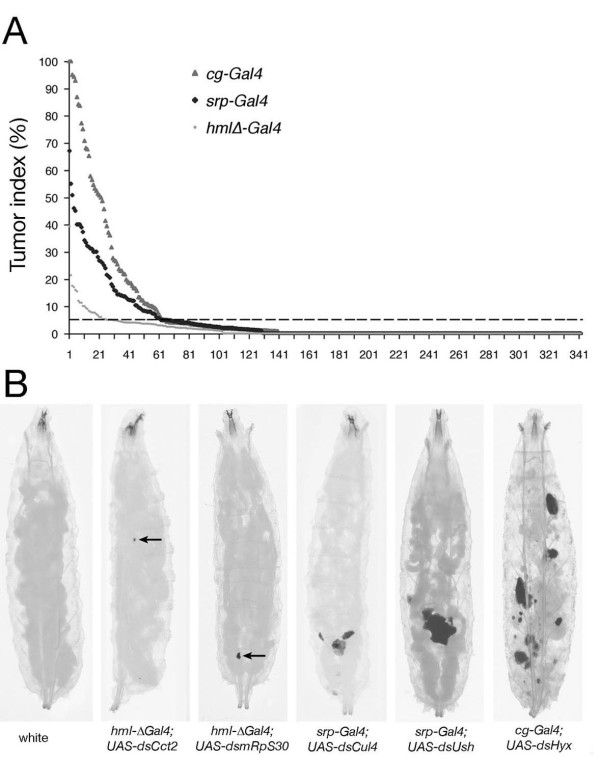
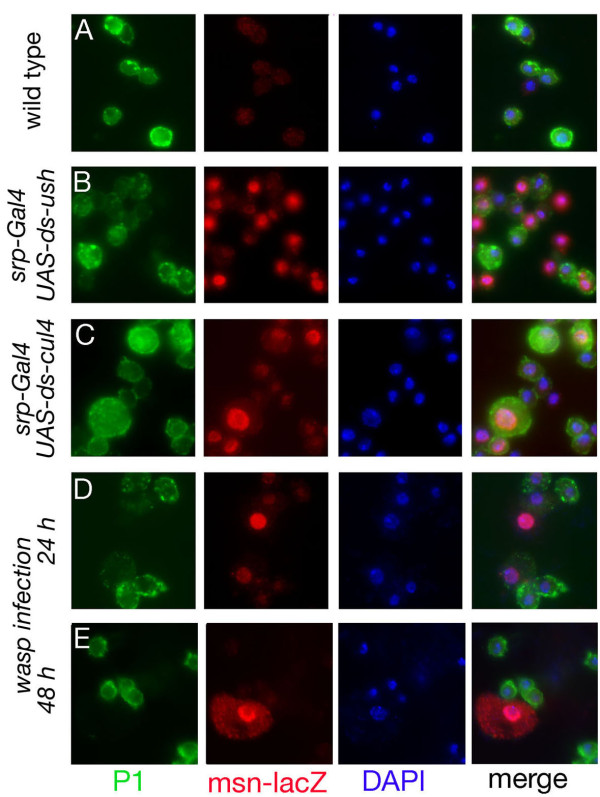
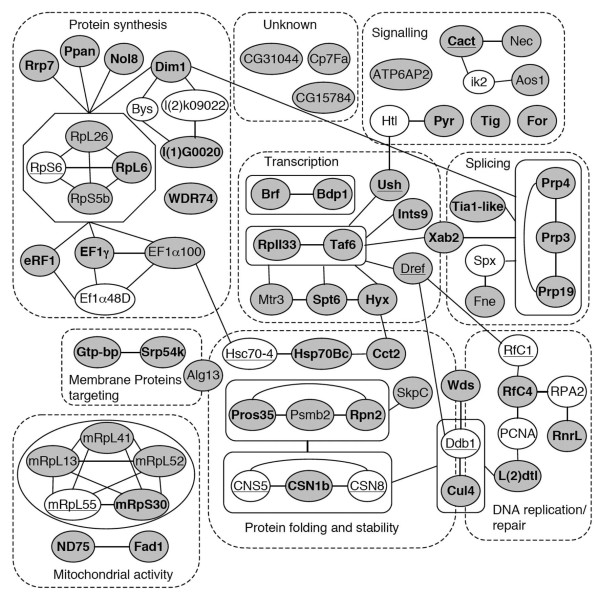
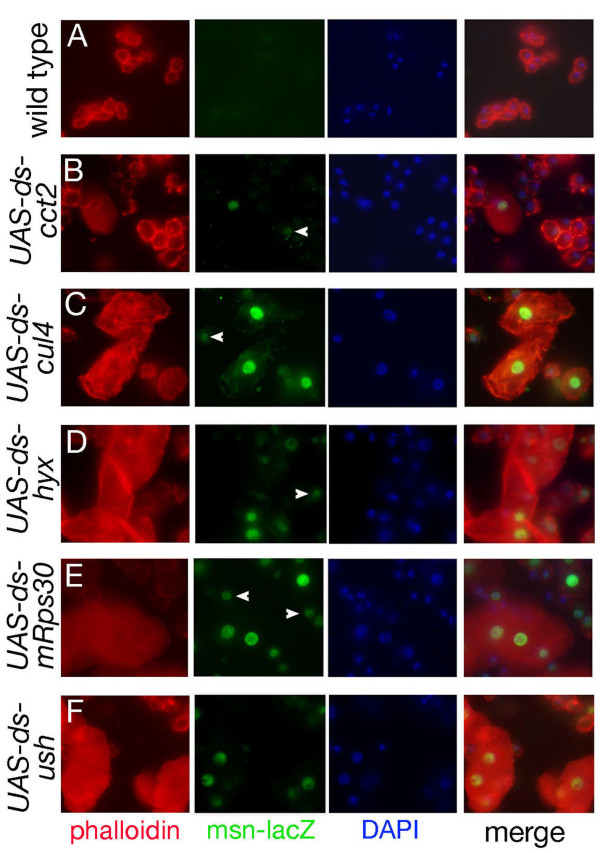
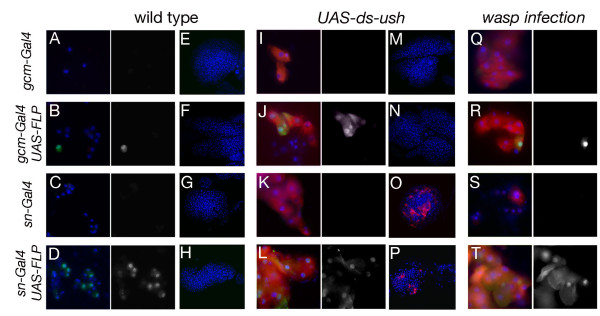
By targeting around 10% of the Drosophila genes, this in vivo RNA interference screen allowed us to recover 59 melanotic tumor suppressor genes. In line with previous studies, we show that melanotic tumor formation is associated with the precocious differentiation of stem-cell like blood progenitors in the larval hematopoietic organ (the lymph gland) and the spurious differentiation of lamellocytes. We also find that melanotic tumor formation can be elicited by defects either in the fat body, the embryo-derived hemocytes or the lymph gland. In addition, we provide a definitive confirmation that lymph gland is not the only source of lamellocytes as embryo-derived plasmatocytes can differentiate into lamellocytes either upon wasp infection or upon loss of function of the Friend of GATA cofactor U-shaped.
In this study, we identify 55 genes whose function had not been linked to blood cell development or function before in Drosophila. Moreover our analyses reveal an unanticipated plasticity of embryo-derived plasmatocytes, thereby shedding new light on blood cell lineage relationship, and pinpoint the Friend of GATA transcription cofactor U-shaped as a key regulator of the plasmatocyte to lamellocyte transformation.
在后生动物中,造血系统在机体的正常发育和防御中起着关键作用。在果蝇中,细胞免疫反应涉及三种血细胞:浆细胞、晶体细胞和片层细胞。最后一种细胞类型在健康幼虫中几乎不存在,但在黄蜂寄生或影响幼虫血细胞稳态的突变背景下,其产生会被强烈诱导。值得注意的是,几种导致幼虫形成黑色素瘤块(或“肿瘤”)的合子突变与片层细胞的分化失调有关。为了进一步深入了解基因调控网络以及控制幼虫血细胞稳态的机制,我们使用血细胞特异性Gal4驱动子和UAS-dsRNA转基因品系进行了组织特异性功能缺失筛选。
通过针对约10%的果蝇基因,这种体内RNA干扰筛选使我们鉴定出59个黑色素瘤抑制基因。与之前的研究一致,我们表明黑色素瘤的形成与幼虫造血器官(淋巴腺)中干细胞样血液祖细胞的过早分化以及片层细胞的异常分化有关。我们还发现,脂肪体、胚胎来源的血细胞或淋巴腺中的缺陷都可能引发黑色素瘤的形成。此外,我们提供了确凿的证据,证明淋巴腺不是片层细胞的唯一来源,因为胚胎来源的浆细胞在黄蜂感染或GATA辅因子U-shaped的功能缺失时可以分化为片层细胞。
在本研究中,我们鉴定出55个以前在果蝇中其功能与血细胞发育或功能无关的基因。此外,我们的分析揭示了胚胎来源的浆细胞具有意想不到的可塑性,从而为血细胞谱系关系提供了新的线索,并确定GATA转录辅因子U-shaped是浆细胞向片层细胞转化的关键调节因子。