Laboratory of Clinical Immunology and Allergy-LIM60, Division of Clinical Immunology and Allergy, Department of Medicine, University of São Paulo School of Medicine, São Paulo, Brazil.
PLoS One. 2010 Jun 11;5(6):e11072. doi: 10.1371/journal.pone.0011072.
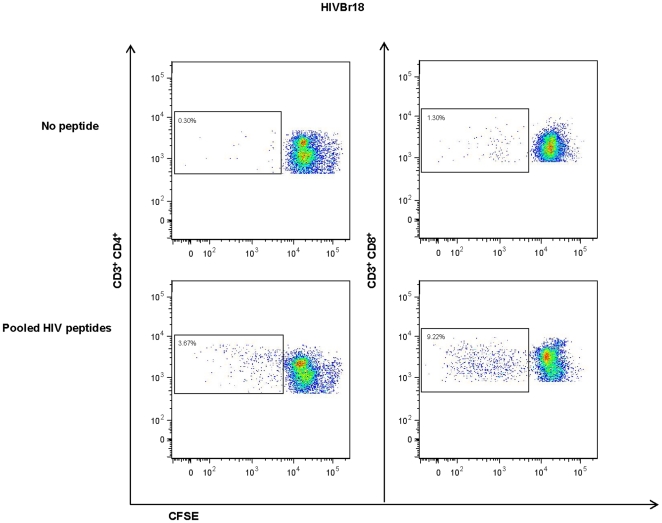
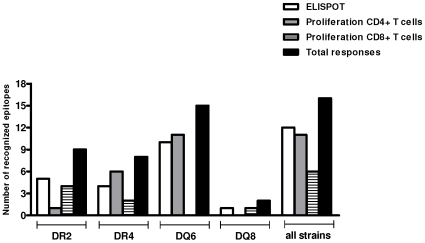
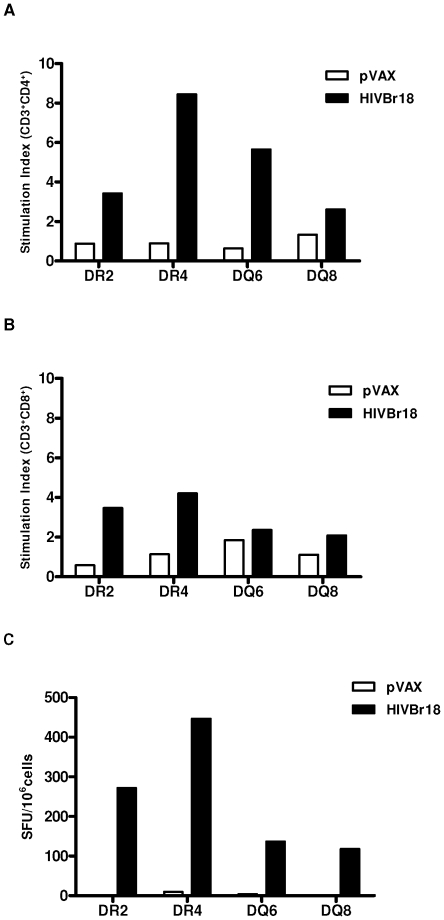
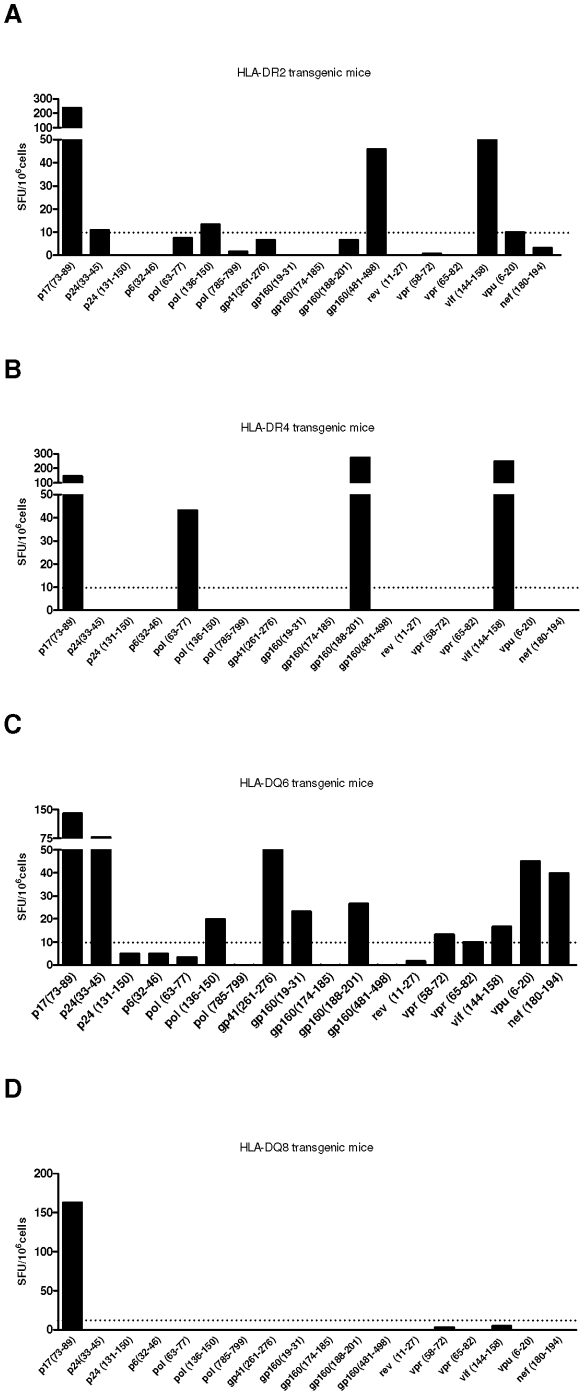
Current HIV vaccine approaches are focused on immunogens encoding whole HIV antigenic proteins that mainly elicit cytotoxic CD8+ responses. Mounting evidence points toward a critical role for CD4+ T cells in the control of immunodeficiency virus replication, probably due to cognate help. Vaccine-induced CD4+ T cell responses might, therefore, have a protective effect in HIV replication. In addition, successful vaccines may have to elicit responses to multiple epitopes in a high proportion of vaccinees, to match the highly variable circulating strains of HIV. Using rational vaccine design, we developed a DNA vaccine encoding 18 algorithm-selected conserved, "promiscuous" (multiple HLA-DR-binding) B-subtype HIV CD4 epitopes - previously found to be frequently recognized by HIV-infected patients. We assessed the ability of the vaccine to induce broad T cell responses in the context of multiple HLA class II molecules using different strains of HLA class II- transgenic mice (-DR2, -DR4, -DQ6 and -DQ8). Mice displayed CD4+ and CD8+ T cell responses of significant breadth and magnitude, and 16 out of the 18 encoded epitopes were recognized. By virtue of inducing broad responses against conserved CD4+ T cell epitopes that can be recognized in the context of widely diverse, common HLA class II alleles, this vaccine concept may cope both with HIV genetic variability and increased population coverage. The vaccine may thus be a source of cognate help for HIV-specific CD8+ T cells elicited by conventional immunogens, in a wide proportion of vaccinees.
当前的 HIV 疫苗方法侧重于编码整个 HIV 抗原蛋白的免疫原,这些免疫原主要引发细胞毒性 CD8+反应。越来越多的证据表明,CD4+T 细胞在控制免疫缺陷病毒复制方面起着关键作用,这可能是由于同源帮助。疫苗诱导的 CD4+T 细胞反应因此可能对 HIV 复制具有保护作用。此外,成功的疫苗可能需要在很大比例的疫苗接种者中引发对多个表位的反应,以匹配 HIV 循环株的高度变异性。我们使用合理的疫苗设计,开发了一种 DNA 疫苗,编码 18 种算法选择的保守、“混杂”(多种 HLA-DR 结合)B 亚型 HIV CD4 表位-先前发现这些表位经常被感染 HIV 的患者识别。我们评估了疫苗在使用不同的 HLA Ⅱ类转基因小鼠(-DR2、-DR4、-DQ6 和 -DQ8)的情况下诱导多种 HLA Ⅱ类分子背景下广泛 T 细胞反应的能力。小鼠显示出显著广度和幅度的 CD4+和 CD8+T 细胞反应,并且识别出 18 个编码表位中的 16 个。由于诱导针对保守 CD4+T 细胞表位的广泛反应,这些表位可以在广泛不同的常见 HLA Ⅱ类等位基因背景下识别,这种疫苗概念可能既能应对 HIV 遗传变异性,又能增加人群覆盖率。因此,该疫苗可能成为传统免疫原诱导的 HIV 特异性 CD8+T 细胞的同源帮助源,在很大比例的疫苗接种者中。