Stengel Andreas, Taché Yvette
Department of Medicine, CURE Digestive Diseases Research Center, Digestive Diseases Division UCLA, Los Angeles, CA 90073, USA.
Regul Pept. 2010 Aug 9;163(1-3):18-23. doi: 10.1016/j.regpep.2010.05.002. Epub 2010 May 16.
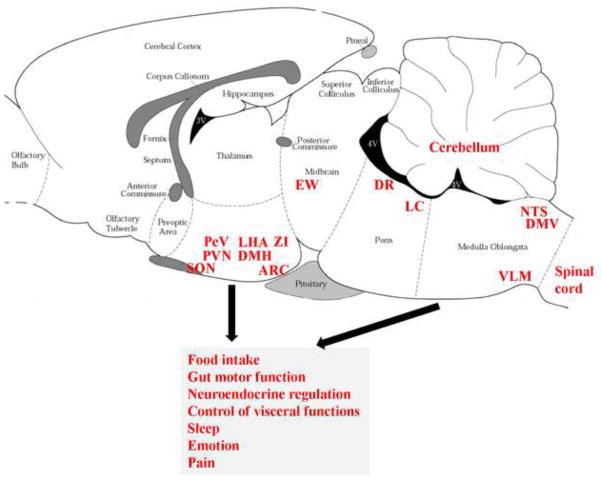
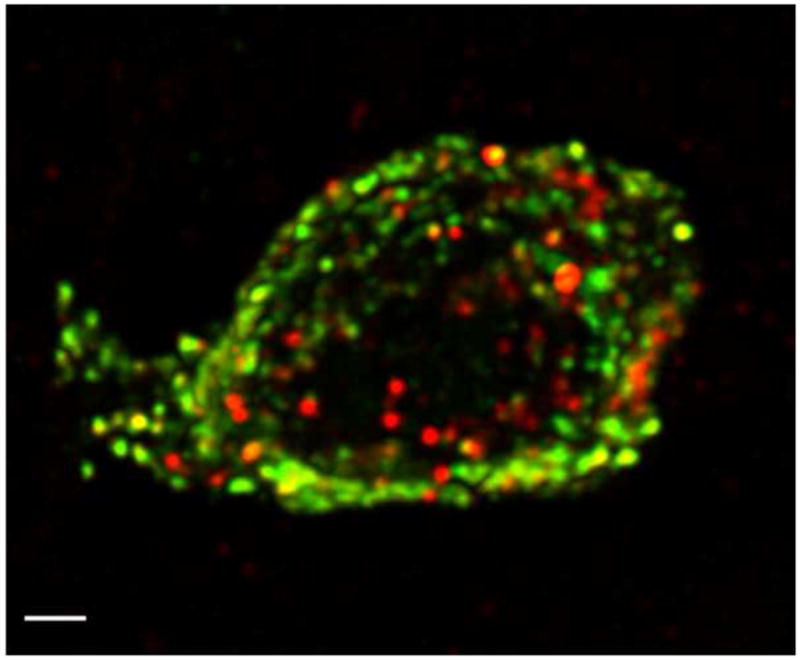
Nesfatin-1 is an 82 amino acid peptide recently discovered in the brain which is derived from nucleobindin2 (NUCB2), a protein that is highly conserved across mammalian species. Nesfatin-1 has received much attention over the past two years due to its reproducible food intake-reducing effect that is linked with recruitment of other hypothalamic peptides regulating feeding behavior. A growing amount of evidence also supports that various stressors activate fore- and hindbrain NUCB2/nesfatin-1 circuitries. In this review, we outline the central nervous system distribution of NUCB2/nesfatin-1, and recent developments on the peripheral expression of NUCB2/nesfatin-1, in particular its co-localization with ghrelin in gastric X/A-like cells and insulin in ss-cells of the endocrine pancreas. Functional studies related to the characteristics of nesfatin-1's inhibitory effects on dark phase food intake are detailed as well as the central activation of NUCB2/nesfatin-1 immunopositive neurons in the response to psychological, immune and visceral stressors. Lastly, potential clinical implications of targeting NUCB2/nesfatin-1 signaling and existing gaps in knowledge to ascertain the role and mechanisms of action of nesfatin-1 are presented.
内脂素-1是一种最近在大脑中发现的由82个氨基酸组成的肽,它来源于核结合蛋白2(NUCB2),该蛋白在哺乳动物物种中高度保守。在过去两年里,内脂素-1因其可重复的减少食物摄入的作用而备受关注,这种作用与其他调节进食行为的下丘脑肽的募集有关。越来越多的证据还支持各种应激源会激活前脑和后脑的NUCB2/内脂素-1通路。在这篇综述中,我们概述了NUCB2/内脂素-1在中枢神经系统中的分布,以及NUCB2/内脂素-1在外周表达方面的最新进展,特别是它在胃X/A样细胞中与胃饥饿素以及在内分泌胰腺的胰岛β细胞中与胰岛素的共定位。还详细介绍了与内脂素-1对夜间食物摄入的抑制作用特征相关的功能研究,以及在应对心理、免疫和内脏应激源时NUCB2/内脂素-1免疫阳性神经元的中枢激活情况。最后,介绍了靶向NUCB2/内脂素-1信号传导的潜在临床意义以及确定内脂素-1的作用和作用机制方面现有的知识空白。