Division of Functional Genomics and Systems Medicine, Research Center for Genomic Medicine, Saitama Medical University, Hidaka, Saitama, Japan.
PLoS Genet. 2010 Jul 8;6(7):e1001019. doi: 10.1371/journal.pgen.1001019.
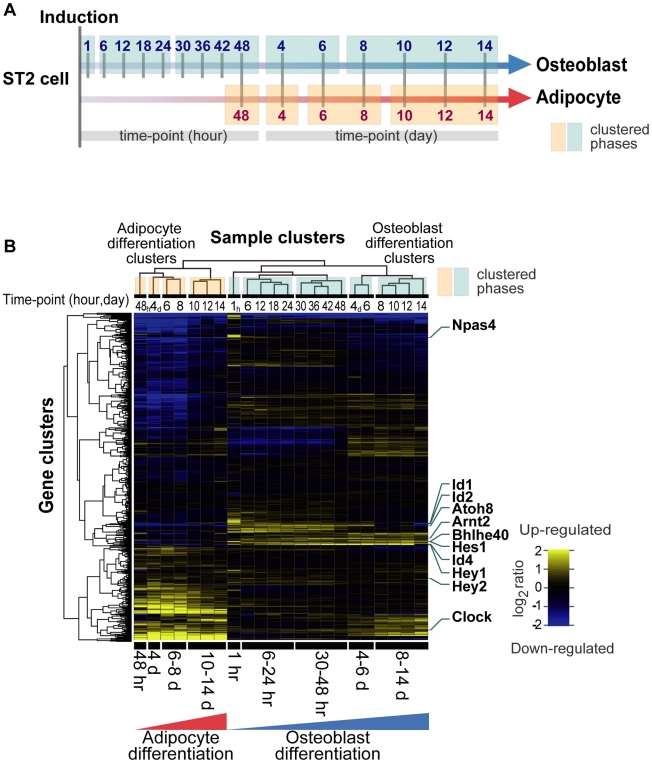
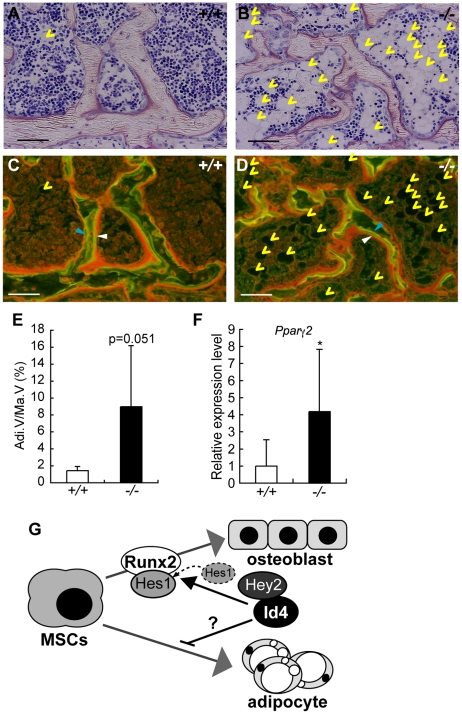
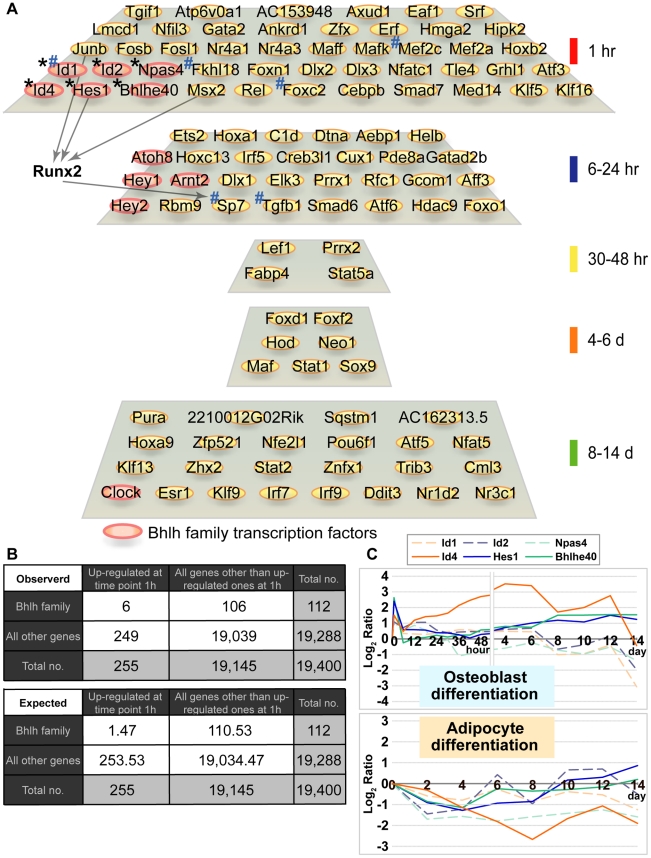
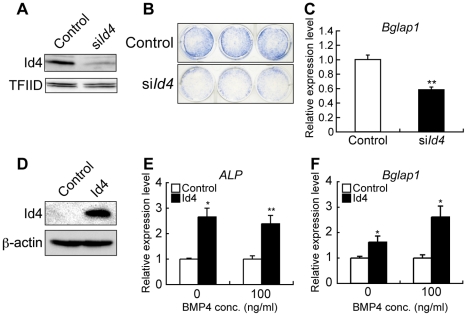
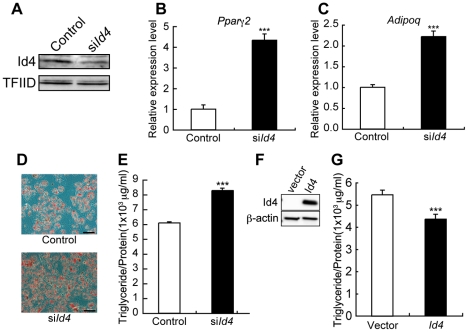
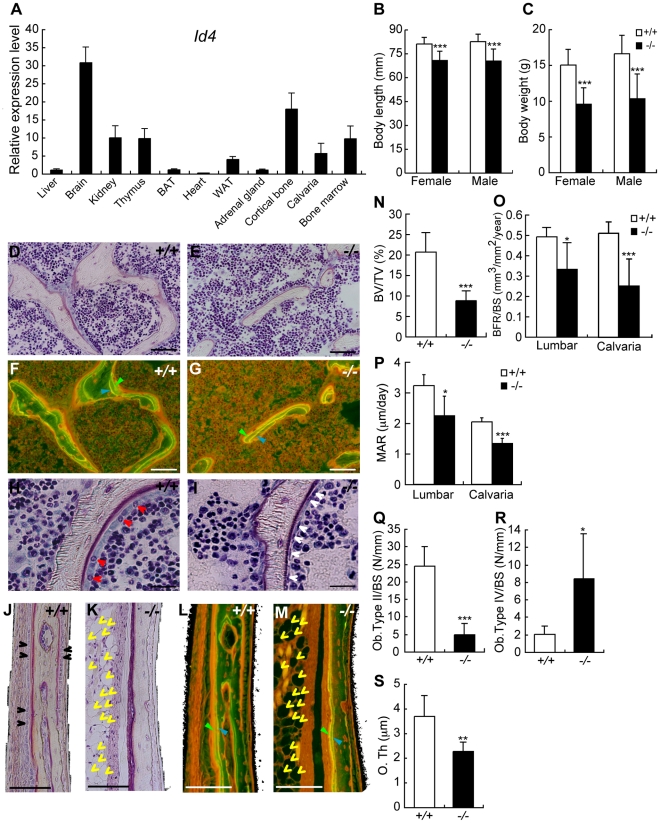
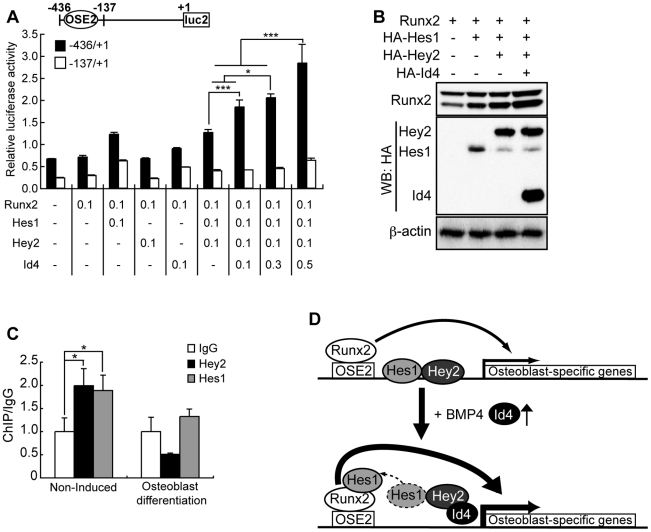
Excessive accumulation of bone marrow adipocytes observed in senile osteoporosis or age-related osteopenia is caused by the unbalanced differentiation of MSCs into bone marrow adipocytes or osteoblasts. Several transcription factors are known to regulate the balance between adipocyte and osteoblast differentiation. However, the molecular mechanisms that regulate the balance between adipocyte and osteoblast differentiation in the bone marrow have yet to be elucidated. To identify candidate genes associated with senile osteoporosis, we performed genome-wide expression analyses of differentiating osteoblasts and adipocytes. Among transcription factors that were enriched in the early phase of differentiation, Id4 was identified as a key molecule affecting the differentiation of both cell types. Experiments using bone marrow-derived stromal cell line ST2 and Id4-deficient mice showed that lack of Id4 drastically reduces osteoblast differentiation and drives differentiation toward adipocytes. On the other hand knockdown of Id4 in adipogenic-induced ST2 cells increased the expression of Ppargamma2, a master regulator of adipocyte differentiation. Similar results were observed in bone marrow cells of femur and tibia of Id4-deficient mice. However the effect of Id4 on Ppargamma2 and adipocyte differentiation is unlikely to be of direct nature. The mechanism of Id4 promoting osteoblast differentiation is associated with the Id4-mediated release of Hes1 from Hes1-Hey2 complexes. Hes1 increases the stability and transcriptional activity of Runx2, a key molecule of osteoblast differentiation, which results in an enhanced osteoblast-specific gene expression. The new role of Id4 in promoting osteoblast differentiation renders it a target for preventing the onset of senile osteoporosis.
在老年性骨质疏松症或与年龄相关的骨质减少症中观察到的骨髓脂肪细胞过度积累,是由 MSC 向骨髓脂肪细胞或成骨细胞的不平衡分化引起的。有几个转录因子被认为可以调节脂肪细胞和成骨细胞分化之间的平衡。然而,调节骨髓中脂肪细胞和成骨细胞分化平衡的分子机制仍有待阐明。为了鉴定与老年性骨质疏松症相关的候选基因,我们对分化中的成骨细胞和脂肪细胞进行了全基因组表达分析。在分化早期富集的转录因子中,Id4 被鉴定为影响两种细胞类型分化的关键分子。使用骨髓基质细胞系 ST2 和 Id4 缺陷小鼠进行的实验表明,缺乏 Id4 会大大减少成骨细胞分化,并促使其向脂肪细胞分化。另一方面,在诱导成脂的 ST2 细胞中敲低 Id4 会增加脂肪细胞分化的主调控因子 Ppargamma2 的表达。在 Id4 缺陷小鼠的股骨和胫骨骨髓细胞中也观察到了类似的结果。然而,Id4 对 Ppargamma2 和脂肪细胞分化的影响不太可能是直接的。Id4 促进成骨细胞分化的机制与 Id4 介导的 Hes1 从 Hes1-Hey2 复合物中的释放有关。Hes1 增加了 Runx2 的稳定性和转录活性,Runx2 是成骨细胞分化的关键分子,这导致增强了成骨细胞特异性基因表达。Id4 在促进成骨细胞分化中的新作用使其成为预防老年性骨质疏松症发生的靶标。