Department of Immunology, University of Washington, Seattle, Washington, United States of America.
PLoS Biol. 2010 Jul 20;8(7):e1000428. doi: 10.1371/journal.pbio.1000428.
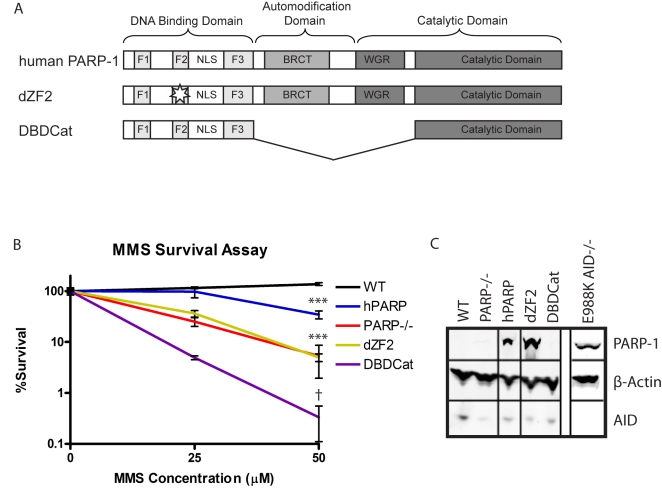
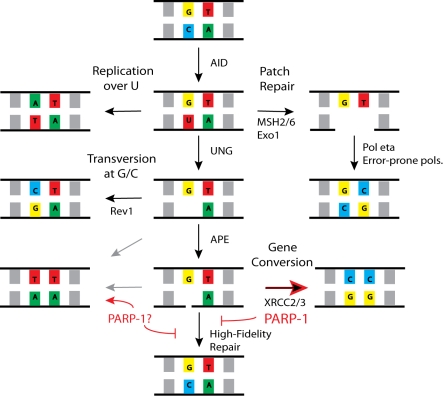
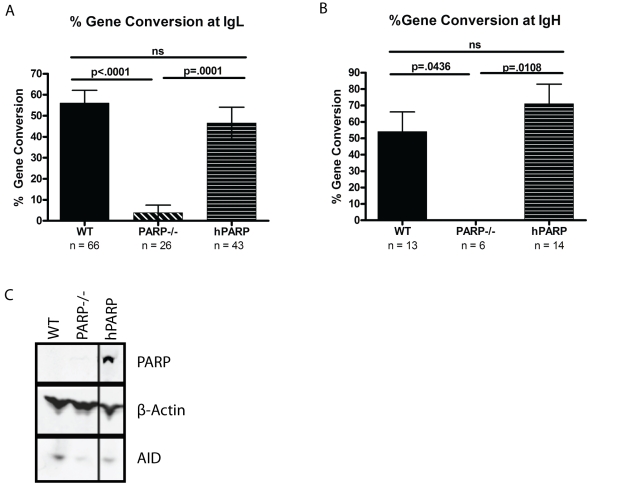
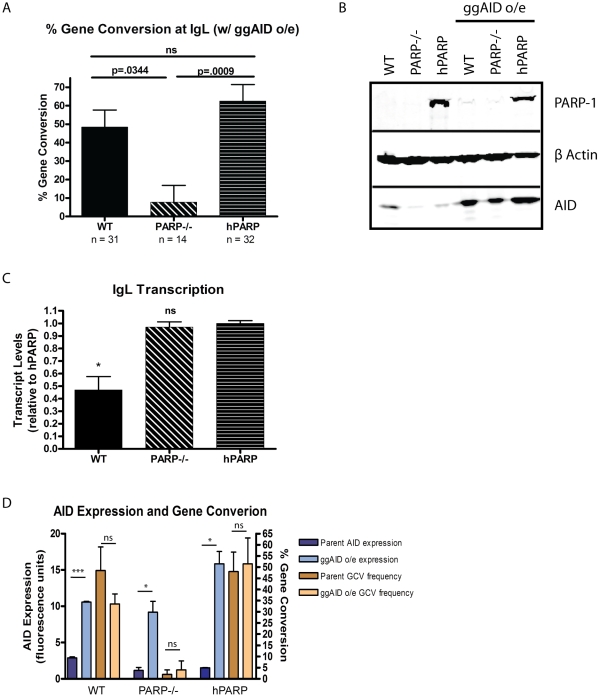
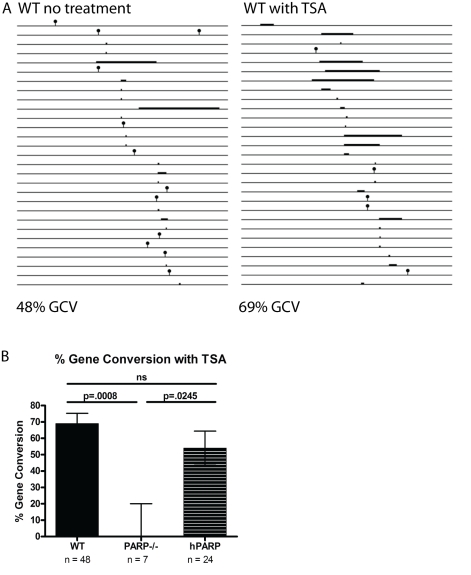
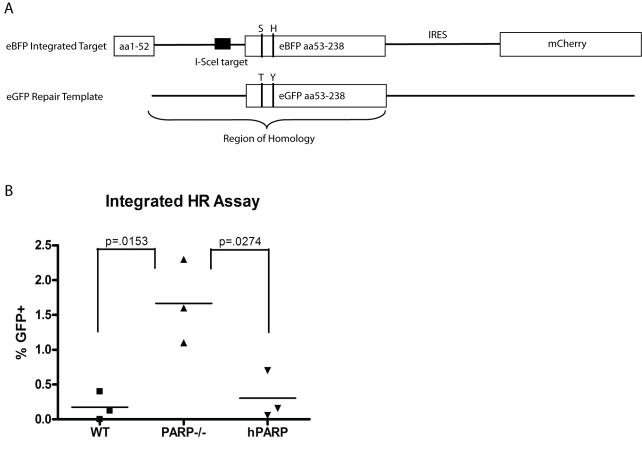
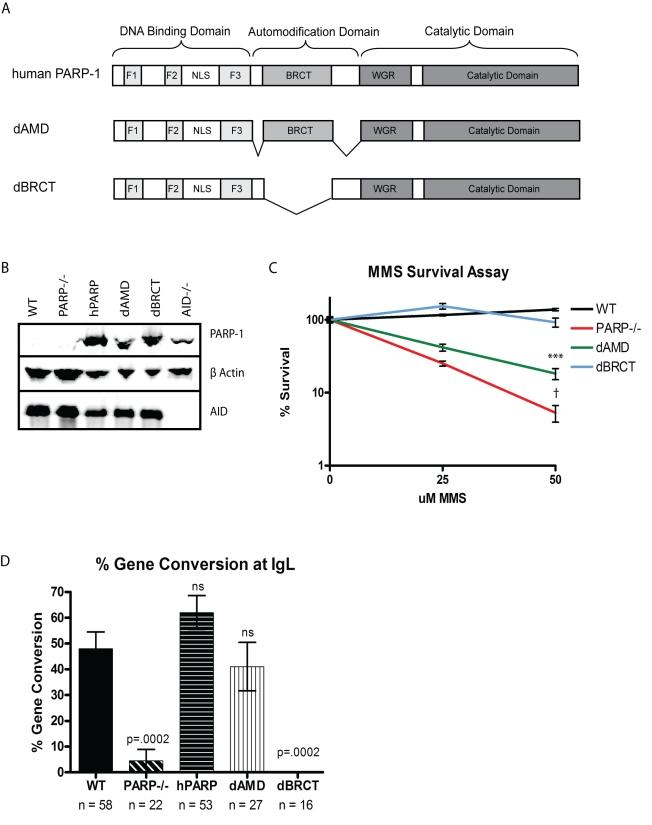
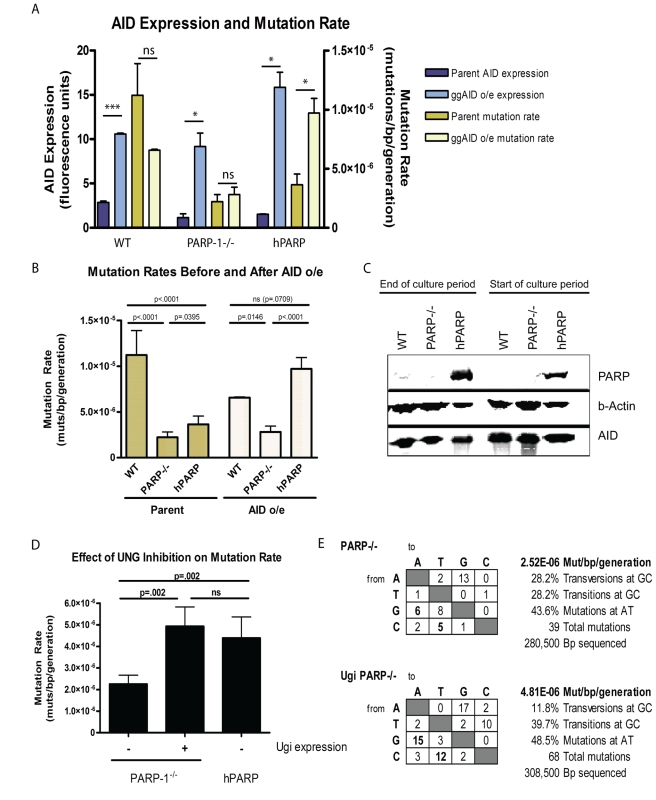
Genetic variation at immunoglobulin (Ig) gene variable regions in B-cells is created through a multi-step process involving deamination of cytosine bases by activation-induced cytidine deaminase (AID) and their subsequent mutagenic repair. To protect the genome from dangerous, potentially oncogenic effects of off-target mutations, both AID activity and mutagenic repair are targeted specifically to the Ig genes. However, the mechanisms of targeting are unknown and recent data have highlighted the role of regulating mutagenic repair to limit the accumulation of somatic mutations resulting from the more widely distributed AID-induced lesions to the Ig genes. Here we investigated the role of the DNA damage sensor poly-(ADPribose)-polymerase-1 (PARP-1) in the repair of AID-induced DNA lesions. We show through sequencing of the diversifying Ig genes in PARP-1(-/-) DT40 B-cells that PARP-1 deficiency results in a marked reduction in gene conversion events and enhanced high-fidelity repair of AID-induced lesions at both Ig heavy and light chains. To further characterize the role of PARP-1 in the mutagenic repair of AID-induced lesions, we performed functional analyses comparing the role of engineered PARP-1 variants in high-fidelity repair of DNA damage induced by methyl methane sulfonate (MMS) and the mutagenic repair of lesions at the Ig genes induced by AID. This revealed a requirement for the previously uncharacterized BRCT domain of PARP-1 to reconstitute both gene conversion and a normal rate of somatic mutation at Ig genes, while being dispensable for the high-fidelity base excision repair. From these data we conclude that the BRCT domain of PARP-1 is required to initiate a significant proportion of the mutagenic repair specific to diversifying antibody genes. This role is distinct from the known roles of PARP-1 in high-fidelity DNA repair, suggesting that the PARP-1 BRCT domain has a specialized role in assembling mutagenic DNA repair complexes involved in antibody diversification.
B 细胞中免疫球蛋白 (Ig) 基因可变区的遗传变异是通过一个多步骤过程产生的,该过程涉及激活诱导的胞嘧啶脱氨酶 (AID) 对胞嘧啶碱基的脱氨作用,以及随后的诱变修复。为了防止基因组受到脱靶突变的危险、潜在致癌作用的影响,AID 活性和诱变修复都特异性地靶向 Ig 基因。然而,靶向的机制尚不清楚,最近的数据强调了调节诱变修复以限制由更广泛分布的 AID 诱导的损伤导致的体细胞突变积累的作用,这些损伤导致 Ig 基因。在这里,我们研究了 DNA 损伤传感器多聚 (ADP-核糖) 聚合酶-1 (PARP-1) 在 AID 诱导的 DNA 损伤修复中的作用。我们通过对 PARP-1(-/-) DT40 B 细胞中多样化的 Ig 基因进行测序表明,PARP-1 缺陷导致基因转换事件明显减少,并增强了 Ig 重链和轻链上 AID 诱导损伤的高保真修复。为了进一步表征 PARP-1 在 AID 诱导的损伤诱变修复中的作用,我们通过比较甲基甲烷磺酸 (MMS) 诱导的 DNA 损伤的高保真修复和 AID 诱导的 Ig 基因损伤的诱变修复中工程化 PARP-1 变体的作用,进行了功能分析。这揭示了 PARP-1 以前未表征的 BRCT 结构域在重新构建基因转换和 Ig 基因的正常体细胞突变率方面的必要性,而对高保真碱基切除修复则是可有可无的。从这些数据中,我们得出结论,PARP-1 的 BRCT 结构域是启动多样化抗体基因特有的诱变修复的重要组成部分。该作用与 PARP-1 在高保真 DNA 修复中的已知作用不同,这表明 PARP-1 的 BRCT 结构域在组装涉及抗体多样化的诱变 DNA 修复复合物方面具有特殊作用。