Marck Roos, Huijing Marijn, Vest Deborah, Eshete Mekonen, Marck Klaas, McGurk Mark
Eur J Plast Surg. 2010 Aug;33(4):193-197. doi: 10.1007/s00238-010-0409-5. Epub 2010 Mar 5.
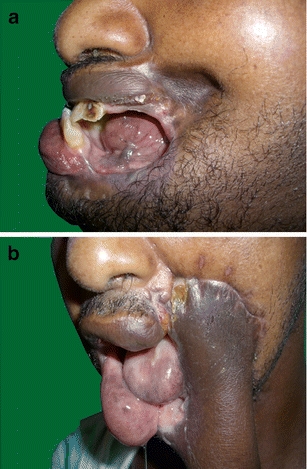
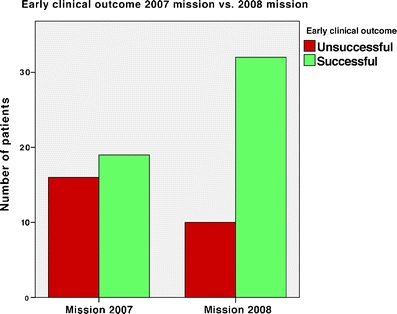
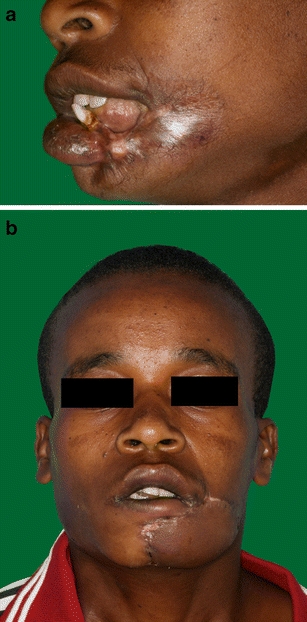
Every year, many medical missions are undertaken in the developing world but there is almost a universal lack of outcome data on the quality of these missions. The present study compares early clinical outcome and complication rate in two consecutive missions (facial reconstruction) undertaken to Ethiopia in 2007 and 2008. The object was to establish if measures adopted following feedback from the first mission led to improvement of the results. A significant improvement was observed in early clinical outcome and there were less severe complications in the 2008 compared to the 2007 mission. On both occasions, significantly more complications were experienced after complex compared to simple procedures. Despite improved outcome in 2008, 50% of the complex cases had an unfavourable clinical result. The data suggest that early outcome studies are a useful method of critically evaluating the quality of surgical mission. The unsatisfactory outcome of complex procedures underlines the need for feedback on the quality of these missions.
每年,在发展中世界都要开展许多医疗援助任务,但几乎普遍缺乏关于这些任务质量的结果数据。本研究比较了2007年和2008年连续两次前往埃塞俄比亚执行的任务(面部重建)的早期临床结果和并发症发生率。目的是确定根据第一次任务的反馈采取的措施是否导致了结果的改善。观察到早期临床结果有显著改善,与2007年的任务相比,2008年的严重并发症较少。在这两次任务中,复杂手术比简单手术的并发症明显更多。尽管2008年的结果有所改善,但50%的复杂病例临床结果不佳。数据表明,早期结果研究是严格评估外科援助任务质量的有用方法。复杂手术的不理想结果凸显了对这些任务质量进行反馈的必要性。