Laboratory of Sensorimotor Research, National Eye Institute, Bethesda, MD 20892, USA.
Neuron. 2010 Aug 12;67(3):499-510. doi: 10.1016/j.neuron.2010.06.031.
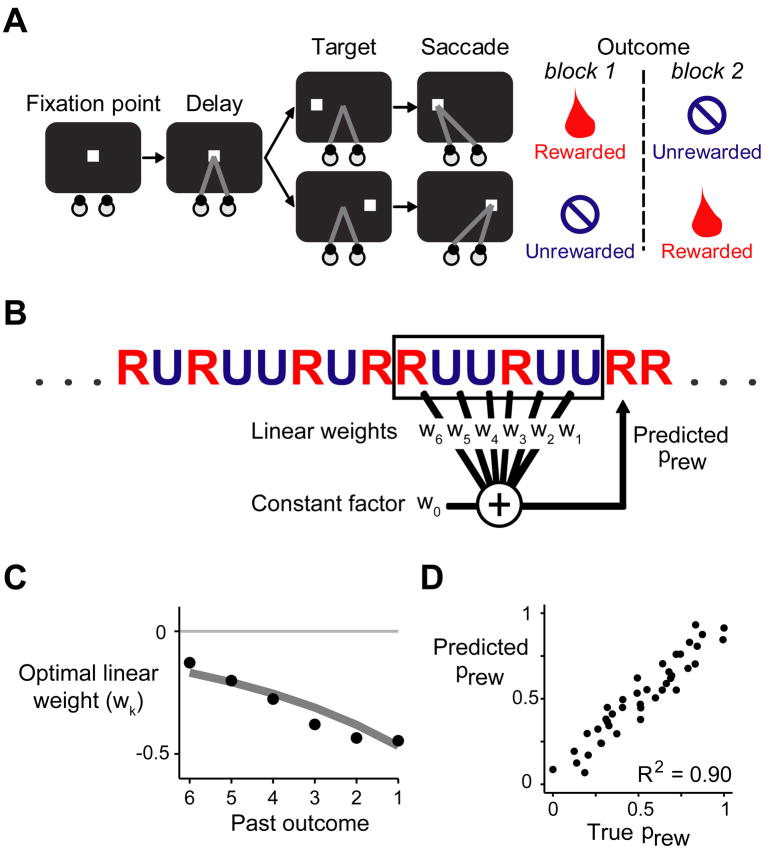
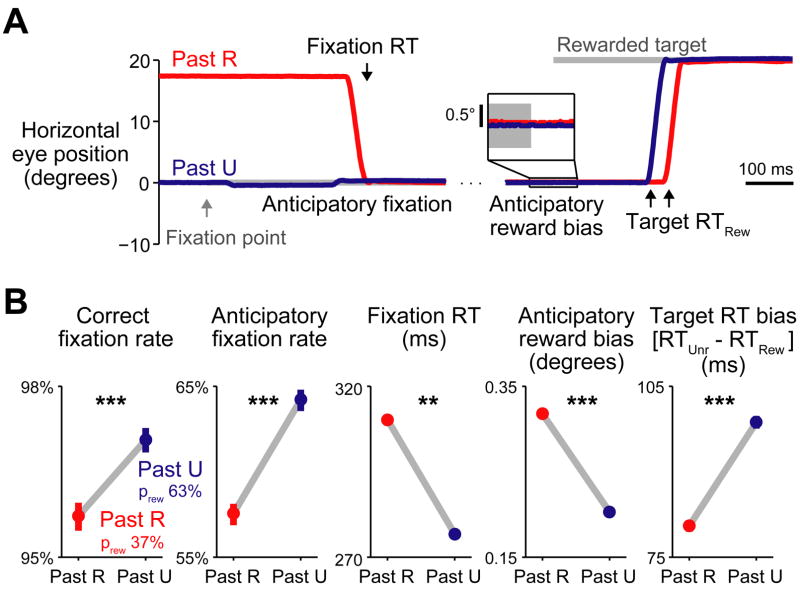
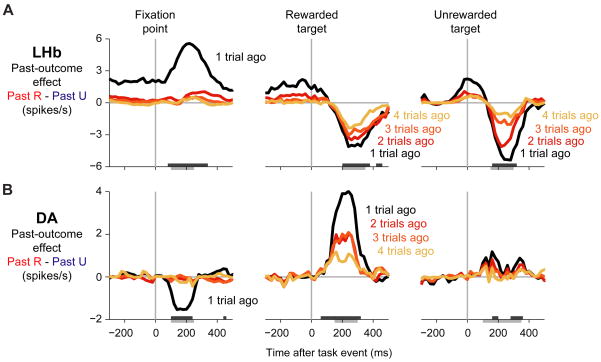
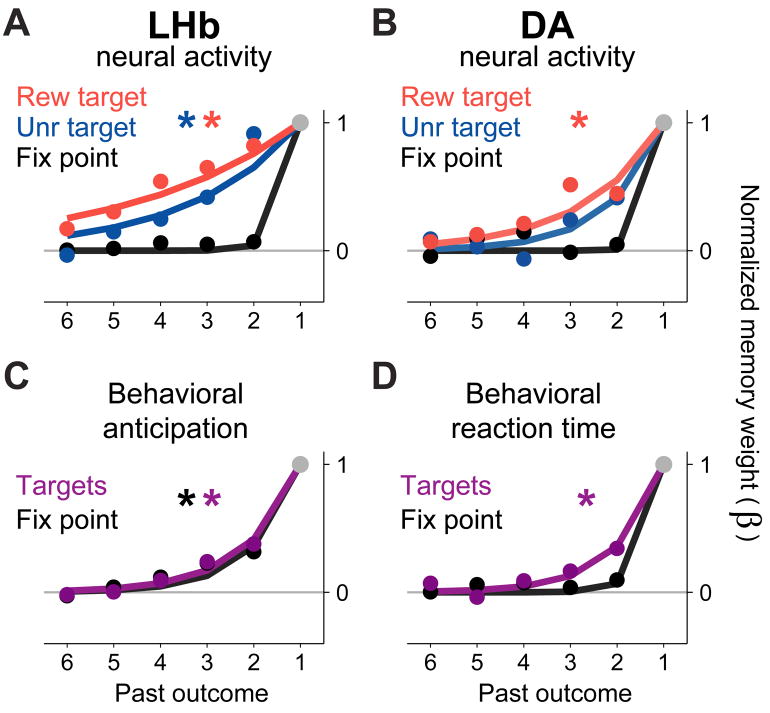
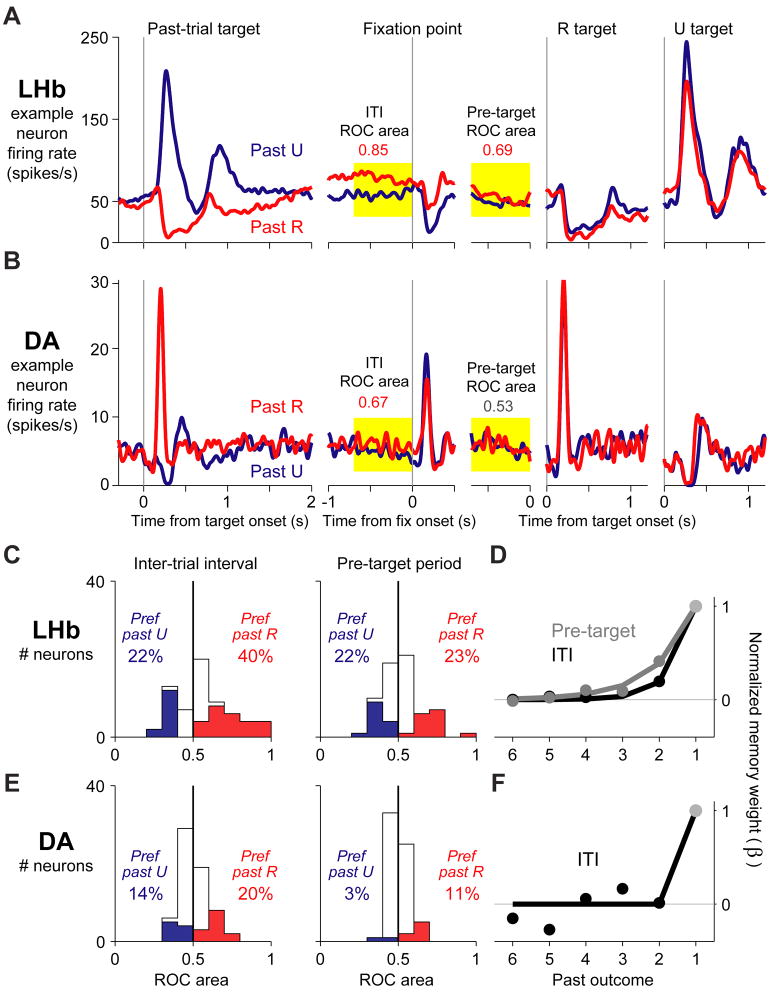
Midbrain dopamine neurons are thought to signal predictions about future rewards based on the memory of past rewarding experience. Little is known about the source of their reward memory and the factors that control its timescale. Here we recorded from dopamine neurons, as well as one of their sources of input, the lateral habenula, while animals predicted upcoming rewards based on the past reward history. We found that lateral habenula and dopamine neurons accessed two distinct reward memories: a short-timescale memory expressed at the start of the task and a near-optimal long-timescale memory expressed when a future reward outcome was revealed. The short- and long-timescale memories were expressed in different forms of reward-oriented eye movements. Our data show that the habenula-dopamine pathway contains multiple timescales of memory and provide evidence for their role in motivated behavior.
中脑多巴胺神经元被认为根据过去的奖励经验来预测未来的奖励,但其奖励记忆的来源以及控制其时间尺度的因素知之甚少。在这里,我们在动物根据过去的奖励历史预测即将到来的奖励时,记录了多巴胺神经元及其输入源之一外侧缰核的活动。我们发现,外侧缰核和多巴胺神经元访问了两种不同的奖励记忆:一种是在任务开始时表达的短时间尺度记忆,另一种是在未来奖励结果出现时表达的接近最优的长时间尺度记忆。短时间和长时间尺度的记忆以不同形式的奖励导向眼球运动来表达。我们的数据表明,缰核-多巴胺通路包含多个时间尺度的记忆,并为它们在动机行为中的作用提供了证据。