Department of Neurobiology, Institute of Pharmacology Polish Academy of Sciences, Smętna 12, 31-343, Kraków, Poland.
Psychopharmacology (Berl). 2010 Dec;212(4):523-35. doi: 10.1007/s00213-010-1978-5. Epub 2010 Aug 12.
Several studies have suggested that modulation of the glutamatergic system could be a new, efficient way to achieve antidepressant activity. Behavioral data showed that group II mGlu receptor antagonists (i.e., (1R, 2R, 3R, 5R, 6R)-2-amino-3-(3,4-dichlorobenzyloxy)-6-fluorobicyclo[3.1.0]hexane-2,6-dicarboxylic acid (MGS0039) and (2S)-2-amino-2-[(1S,2S)-2-carboxycycloprop-1-yl]-3-(xan th-9-yl) propanoic acid (LY341495)) elicited antidepressant activity in several animal models of depression in rats and/or mice. Although the antidepressant-like activity of MGS0039 and LY341495 is well documented, the mechanism of the antidepressant action of these compounds is still not clear.
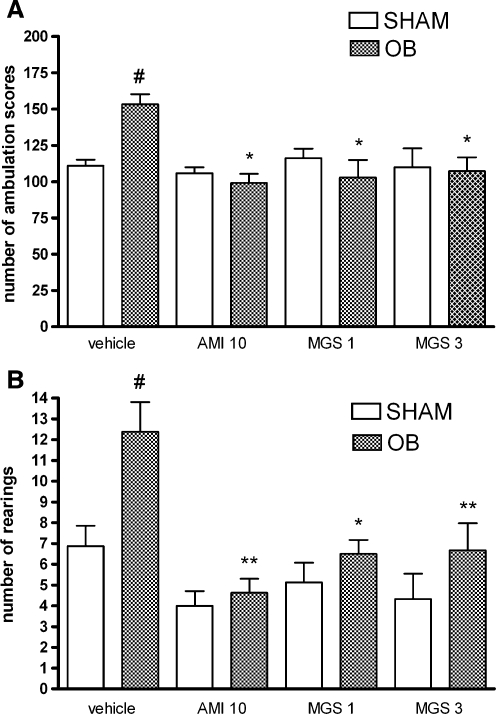
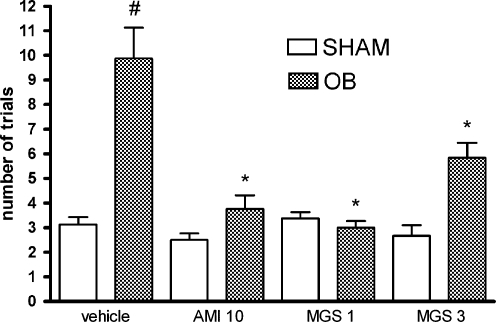
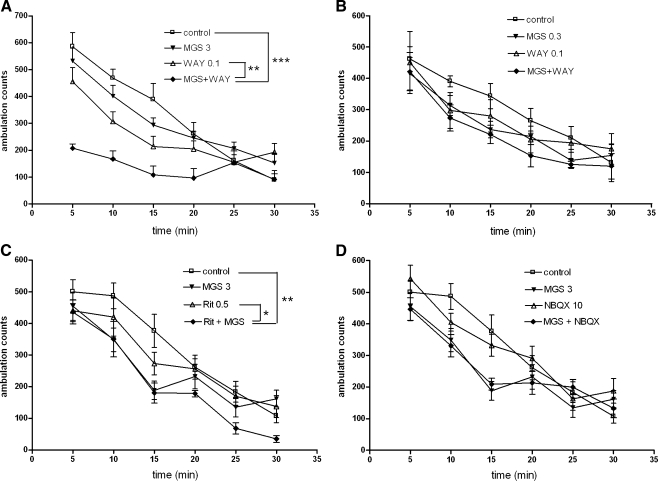
The aim of the present study was to specify the role of the serotonergic system in the mechanism of the antidepressant-like activity of group II mGlu receptor ligands by using the tail suspension test (TST) in mice; the role of AMPA receptors was also investigated. Furthermore, the possible antidepressant-like action of MGS0039 using the olfactory bulbectomy (OB) model of depression in rats was investigated.
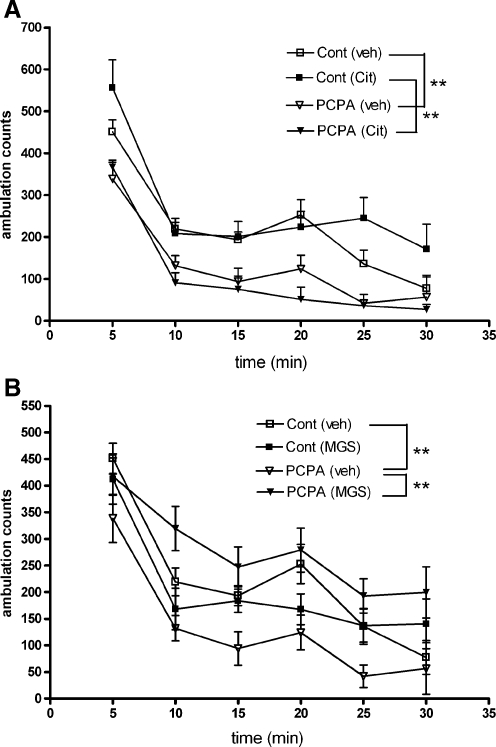
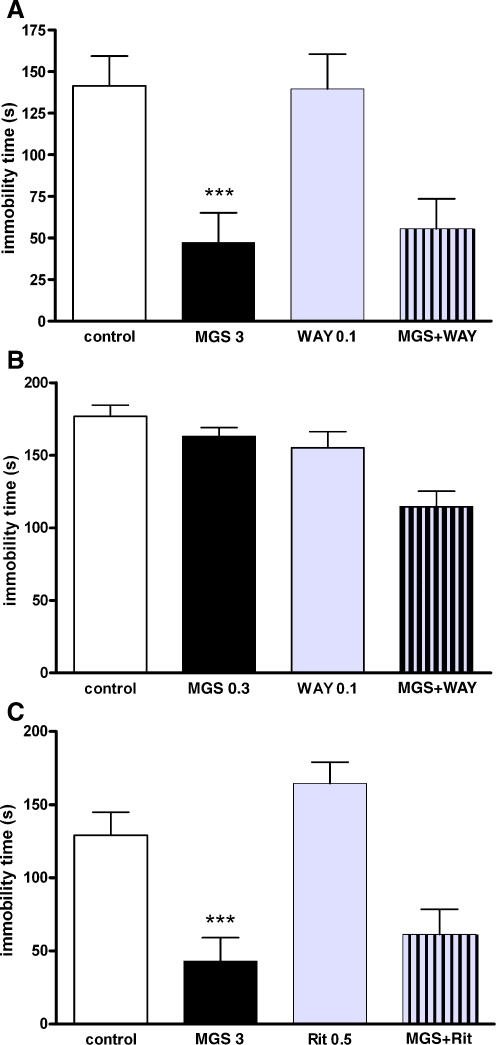
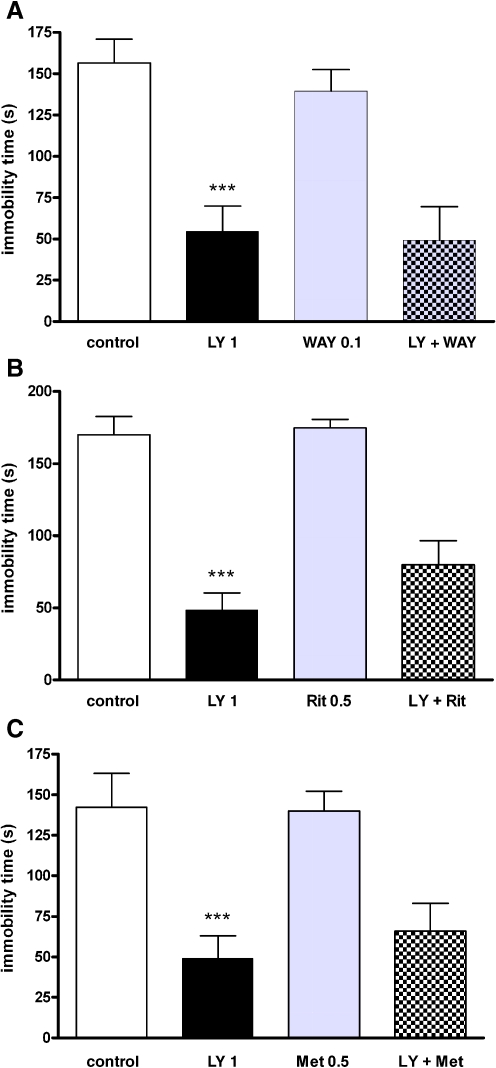
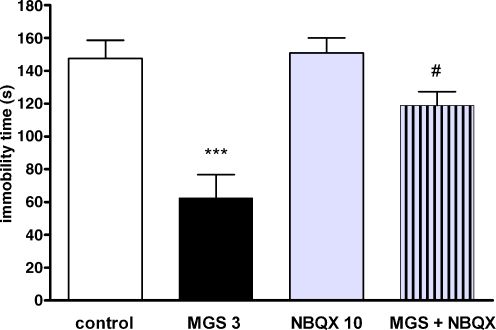
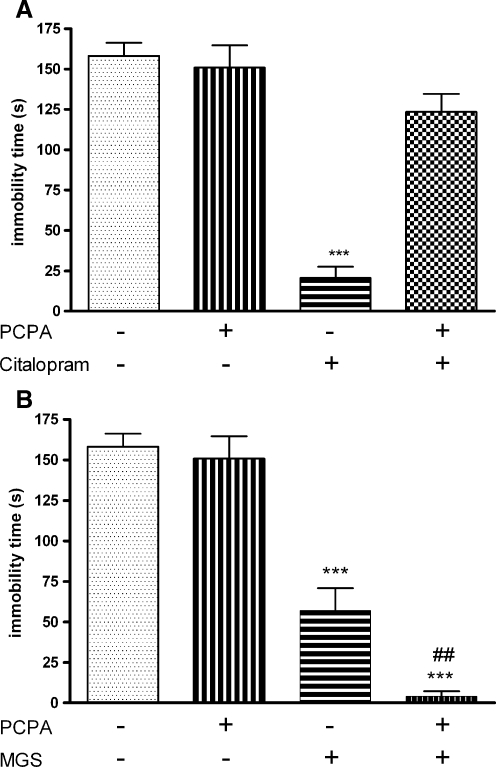
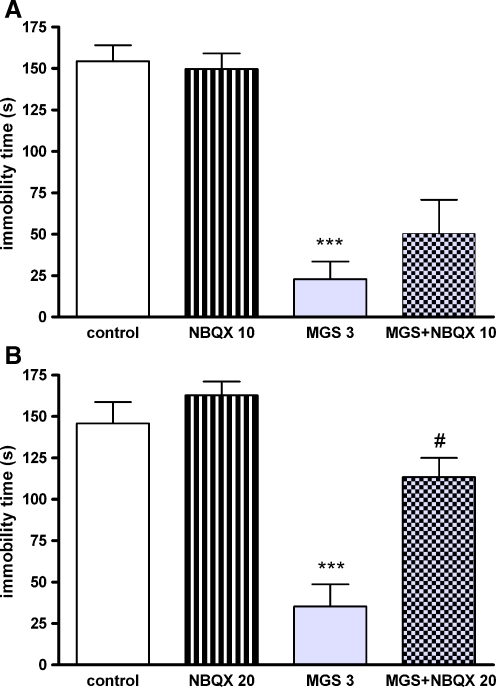
The results of the TST studies showed that antidepressant-like action of group II mGlu receptor antagonists does not depend on serotonergic system activation. However, the AMPA receptor seems to play a key role in the antidepressant-like action of these compounds. Moreover, we have shown that repeated administration of MGS0039 attenuated OB-related deficits, confirming antidepressant-like activity of the tested compound.
The results suggest that the blockade of group II mGlu receptors may be effective in the treatment of depression. Moreover, we have found that the mechanism of action of group II mGlu receptor antagonists differs from that of typical antidepressants, such as SSRIs.
多项研究表明,调节谷氨酸能系统可能是一种新的、有效的实现抗抑郁活性的方法。行为数据表明,II 组 mGlu 受体拮抗剂(即(1R,2R,3R,5R,6R)-2-氨基-3-(3,4-二氯苄氧基)-6-氟双环[3.1.0]己烷-2,6-二羧酸(MGS0039)和(2S)-2-氨基-2-[(1S,2S)-2-羧基环丙-1-基]-3-(吖啶-9-基)丙氨酸(LY341495))在大鼠和/或小鼠的几种抑郁动物模型中表现出抗抑郁活性。尽管 MGS0039 和 LY341495 的抗抑郁样活性已有充分的文献记载,但这些化合物的抗抑郁作用机制仍不清楚。
本研究旨在通过小鼠悬尾试验(TST)明确 II 组 mGlu 受体配体的抗抑郁样作用机制中 5-羟色胺能系统的作用,同时研究 AMPA 受体的作用。此外,还研究了 MGS0039 在大鼠嗅球切除术(OB)抑郁模型中的可能抗抑郁作用。
TST 研究结果表明,II 组 mGlu 受体拮抗剂的抗抑郁样作用不依赖于 5-羟色胺能系统的激活。然而,AMPA 受体似乎在这些化合物的抗抑郁样作用中发挥关键作用。此外,我们已经表明,MGS0039 的重复给药减轻了 OB 相关的缺陷,证实了测试化合物的抗抑郁样活性。
研究结果表明,阻断 II 组 mGlu 受体可能对抑郁症的治疗有效。此外,我们发现 II 组 mGlu 受体拮抗剂的作用机制与 SSRIs 等典型抗抑郁药不同。