Gekas Christos, Rhodes Katrin E, Van Handel Ben, Chhabra Akanksha, Ueno Masaya, Mikkola Hanna K A
University of California Los Angeles, Los Angeles, CA 90095, USA.
Int J Dev Biol. 2010;54(6-7):1089-98. doi: 10.1387/ijdb.103070cg.
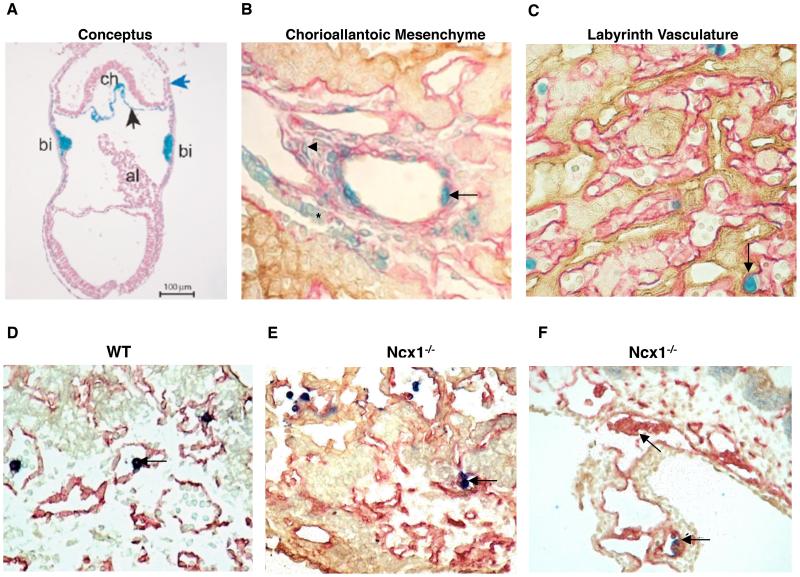
The placenta is a highly vascularized organ that mediates fetal-maternal exchange during pregnancy and is thereby vital for the survival and growth of the developing embryo. In addition to having this well-established role in supporting pregnancy, the placenta was recently shown to function as a hematopoietic organ. The placenta is unique among other fetal hematopoietic organs, as it is capable of both generating multipotential hematopoietic cells de novo and establishing a major hematopoietic stem cell (HSC) pool in the conceptus, while protecting HSCs from premature differentiation. The mouse placenta contains two distinct vascular regions that support hematopoiesis: the large vessels in the chorionic plate where HSCs/progenitors are thought to emerge and the labyrinth vasculature where nascent HSCs/progenitors may colonize for expansion and possible functional maturation. Defining how this cytokine- and growth factor rich organ supports HSC generation, maturation and expansion may ultimately help to establish culture protocols for HSC expansion or de novo generation from pluripotent cells.
胎盘是一个高度血管化的器官,在怀孕期间介导胎儿与母体之间的物质交换,因此对于发育中胚胎的存活和生长至关重要。除了在支持妊娠方面具有这一公认的作用外,胎盘最近还被证明具有造血器官的功能。胎盘在其他胎儿造血器官中是独一无二的,因为它既能从头生成多能造血细胞,又能在胎儿体内建立一个主要的造血干细胞(HSC)库,同时保护造血干细胞不发生过早分化。小鼠胎盘包含两个支持造血的不同血管区域:绒毛膜板中的大血管,造血干细胞/祖细胞被认为在此处产生;以及迷路血管系统,新生的造血干细胞/祖细胞可能在此处定植以进行扩增和可能的功能成熟。确定这个富含细胞因子和生长因子的器官如何支持造血干细胞的产生、成熟和扩增,最终可能有助于建立从多能细胞扩增造血干细胞或从头生成造血干细胞的培养方案。