Department of Electronic Engineering, Chung Yuan Christian University, Taiwan.
J Neuroeng Rehabil. 2010 Sep 14;7:45. doi: 10.1186/1743-0003-7-45.
A challenge to individuals with cognitive impairments in wayfinding is how to remain oriented, recall routines, and travel in unfamiliar areas in a way relying on limited cognitive capacity. While people without disabilities often use maps or written directions as navigation tools or for remaining oriented, this cognitively-impaired population is very sensitive to issues of abstraction (e.g. icons on maps or signage) and presents the designer with a challenge to tailor navigation information specific to each user and context.
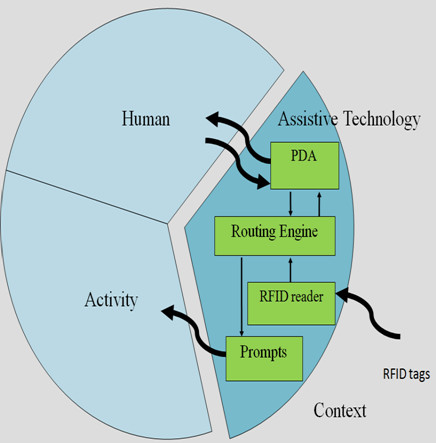
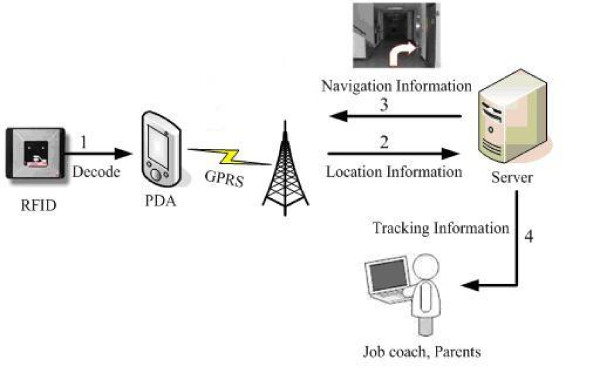
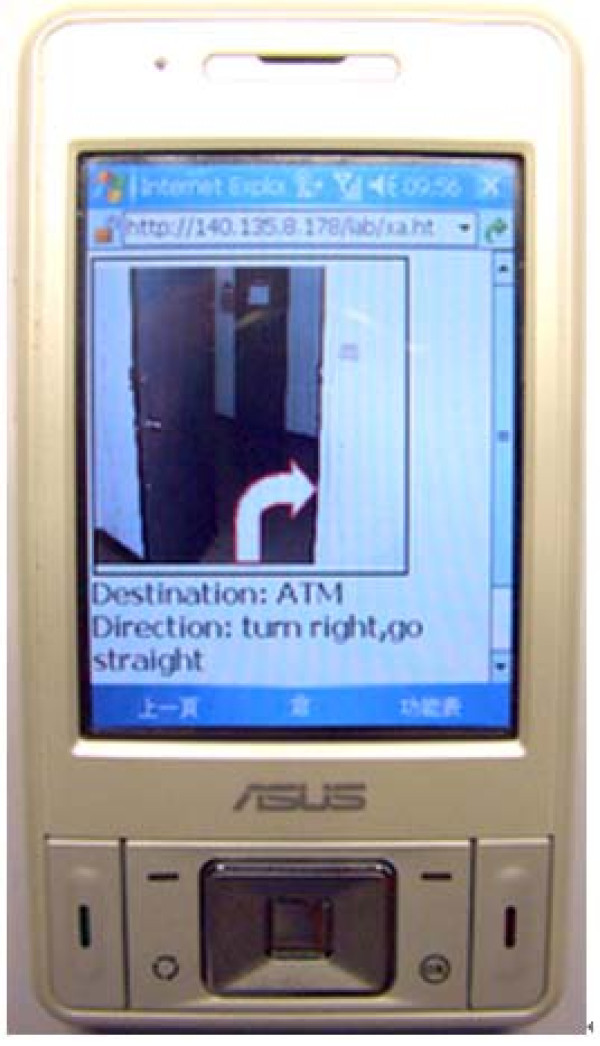
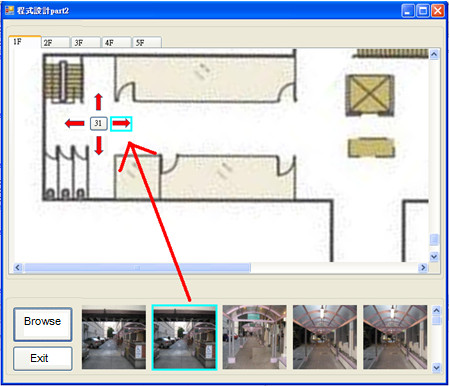
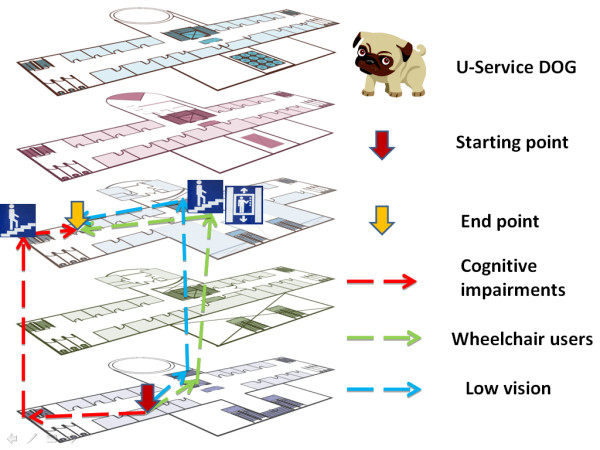
This paper describes an approach to providing distributed cognition support of travel guidance for persons with cognitive disabilities. A solution is proposed based on passive near-field RFID tags and scanning PDAs. A prototype is built and tested in field experiments with real subjects. The unique strength of the system is the ability to provide unique-to-the-user prompts that are triggered by context. The key to the approach is to spread the context awareness across the system, with the context being flagged by the RFID tags and the appropriate response being evoked by displaying the appropriate path guidance images indexed by the intersection of specific end-user and context ID embedded in RFID tags.
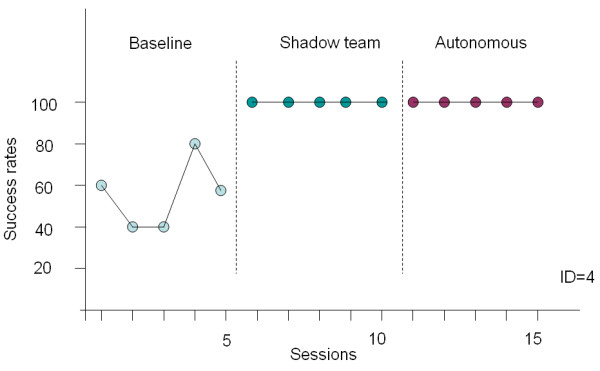
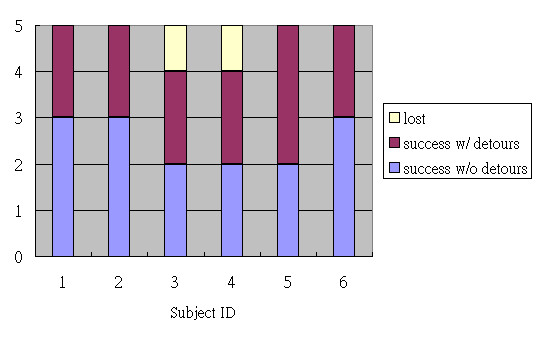
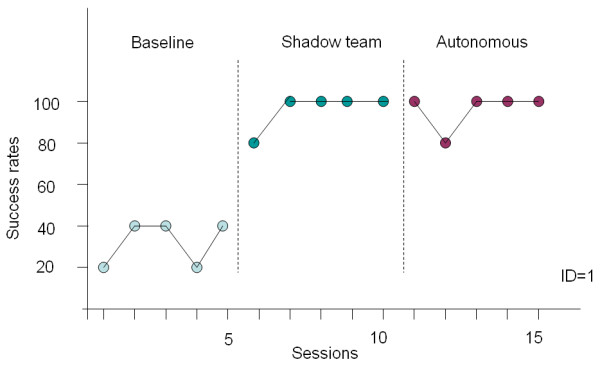
We found that passive RFIDs generally served as good context for triggering navigation prompts, although individual differences in effectiveness varied. The results of controlled experiments provided more evidence with regard to applicabilities of the proposed autonomous indoor wayfinding method.
Our findings suggest that the ability to adapt indoor wayfinding devices for appropriate timing of directions and standing orientation will be particularly important.
对于有认知障碍的人来说,寻路的一个挑战是如何在依赖有限认知能力的情况下保持方向感、回忆日常活动路线并在不熟悉的区域中行进。虽然没有残疾的人通常会使用地图或书面指示作为导航工具或保持方向感,但这群认知障碍人士对抽象问题(例如地图上的图标或标识)非常敏感,这给设计师带来了一个挑战,即根据每个用户和上下文的具体情况来定制导航信息。
本文描述了一种为认知障碍人士提供旅行指南分布式认知支持的方法。该解决方案基于被动近场 RFID 标签和扫描式 PDA 提出。构建了一个原型,并在真实用户的现场实验中进行了测试。该系统的独特优势是能够提供针对用户的独特提示,这些提示是由上下文触发的。该方法的关键是在整个系统中传播上下文意识,通过 RFID 标签标记上下文,并通过显示由特定最终用户和上下文 ID 的交叉索引的相应路径引导图像来调用适当的响应,这些 ID 嵌入在 RFID 标签中。
我们发现被动 RFIDs 通常可以很好地作为触发导航提示的上下文,尽管有效性存在个体差异。对照实验的结果提供了更多关于所提出的自主室内寻路方法适用性的证据。
我们的发现表明,适应室内导航设备以实现方向和站立位置的适当提示时间的能力将尤为重要。