Department of Orthodontics, Dental School, Tongji University, Shanghai, China.
PLoS One. 2010 Sep 10;5(9):e12678. doi: 10.1371/journal.pone.0012678.
It is well known that genetic components play an important role in the etiology of mandibular prognathism, but few susceptibility loci have been mapped.
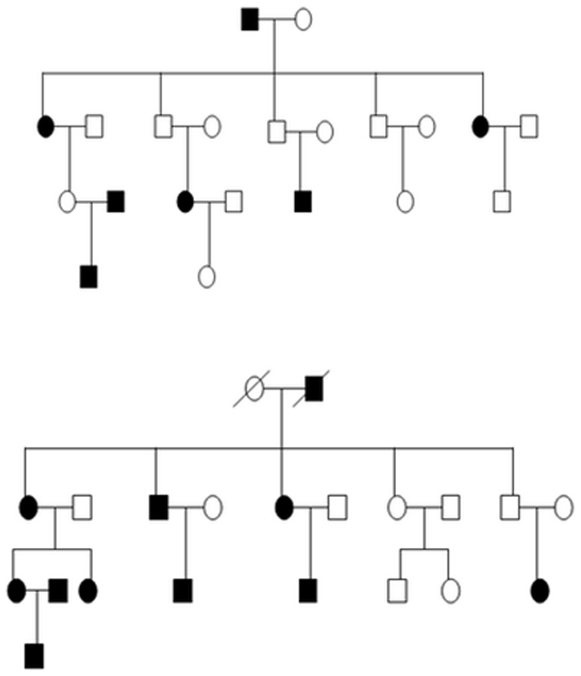
In order to identify linkage regions for mandibular prognathism, we analyzed two Chinese pedigrees with 6,090 genome-wide single-nucleotide polymorphism (SNP) markers from Illumina Linkage-12 DNA Analysis Kit (average spacing 0.58 cM). Multipoint parametric and non-parametric (model-free) linkage analyses were used for the pedigrees.
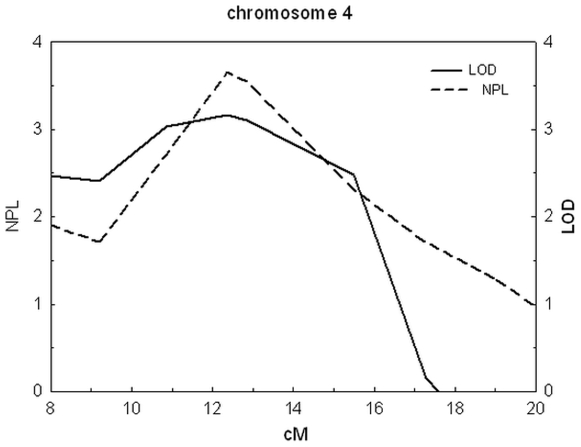
The most statistically significant linkage results were with markers on chromosome 4 (LOD=3.166 and NPL=3.65 with rs 875864, 4p16.1, 8.38 cM). Candidate genes within the 4p16.1 include EVC, EVC2.
We detected a novel suggestive linkage locus for mandibular prognathism in two Chinese pedigrees, and this linkage region provides target for susceptibility gene identification, a process that will provide important insights into the molecular and cellular basis of mandibular prognathism.
众所周知,遗传因素在下颌前突的发病机制中起着重要作用,但很少有易感基因座被定位。
为了确定下颌前突的连锁区域,我们分析了两个具有 6090 个全基因组单核苷酸多态性(SNP)标记的中国家系,这些标记来自 Illumina Linkage-12 DNA 分析试剂盒(平均间距为 0.58 cM)。采用多点参数和非参数(无模型)连锁分析对家系进行分析。
最具统计学意义的连锁结果与染色体 4 上的标记有关(rs 875864、4p16.1、8.38 cM 处的 LOD=3.166 和 NPL=3.65)。4p16.1 内的候选基因包括 EVC、EVC2。
我们在两个中国家系中检测到下颌前突的一个新的提示性连锁区域,该连锁区域为易感基因鉴定提供了目标,这一过程将为下颌前突的分子和细胞基础提供重要的见解。