Department of Biochemistry and Molecular Biology, University of Texas Medical Branch, Galveston, TX 77555-1079, USA.
Oncogene. 2011 Jan 27;30(4):482-93. doi: 10.1038/onc.2010.435. Epub 2010 Sep 20.
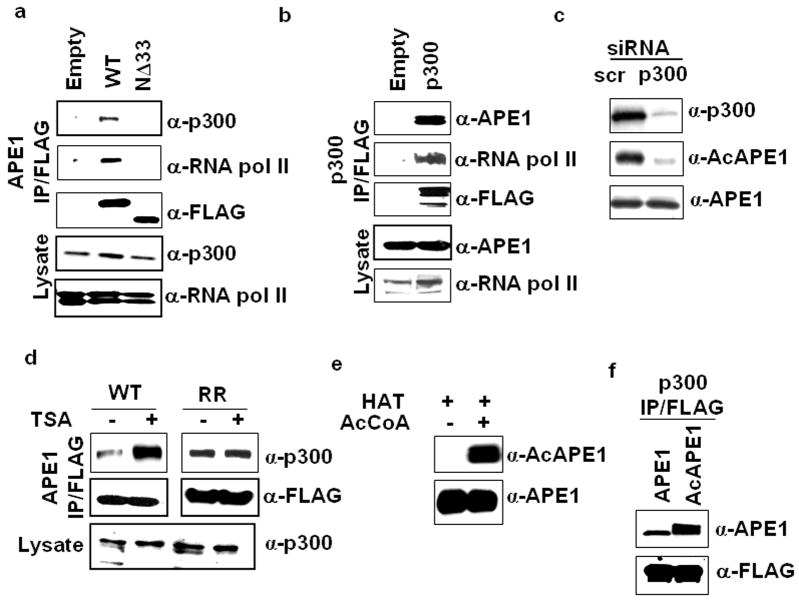
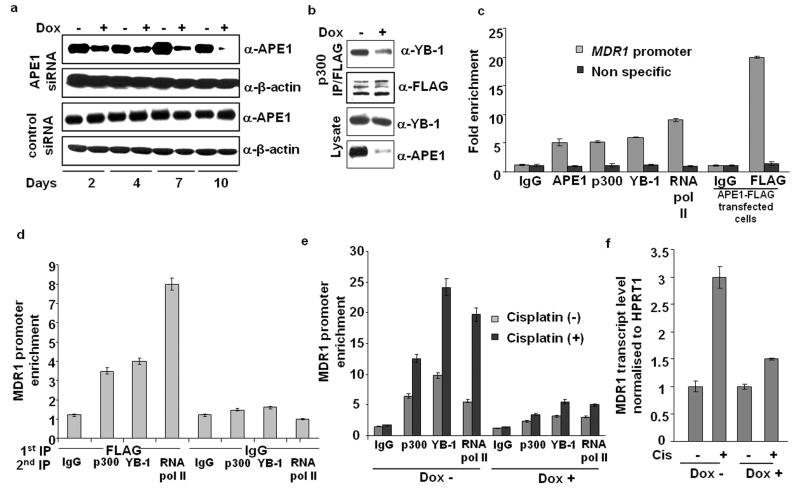
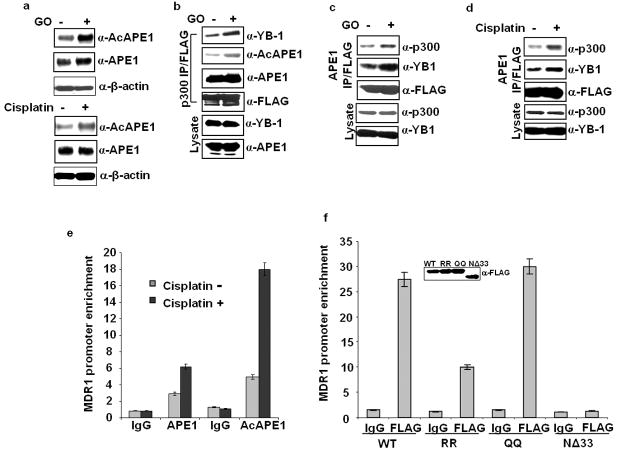
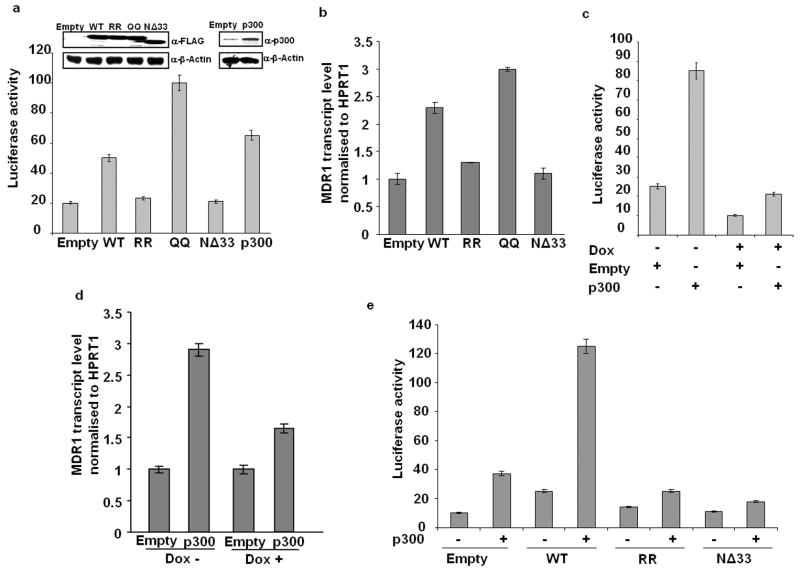
The overexpression of human apurinic/apyrimidinic (AP) endonuclease 1 (APE1/Ref-1), a key enzyme in the DNA base excision repair (BER) pathway, is often associated with tumor cell resistance to various anticancer drugs. In this study, we examined the molecular basis of transcriptional regulatory (nonrepair) function of APE1 in promoting resistance to certain types of drugs. We have recently shown that APE1 stably interacts with Y-box-binding protein 1 (YB-1), and acts as its coactivator for the expression of multidrug resistance gene MDR1, thereby causing drug resistance. In this study, we show, to the best of our knowledge, for the first time that APE1 is stably associated with the basic transcription factor RNA polymerase II (RNA pol II) and the coactivator p300 on the endogenous MDR1 promoter. The depletion of APE1 significantly reduces YB-1-p300 recruitment to the promoter, resulting in reduced RNA pol II loading. Drug-induced APE1 acetylation, which is mediated by p300, enhances formation of acetylated APE1 (AcAPE1)-YB-1-p300 complex on the MDR1 promoter. Enhanced recruitment of this complex increases MDR1 promoter-dependent luciferase activity and its endogenous expression. Using APE1-downregulated cells and cells overexpressing wild-type APE1 or its nonacetylable mutant, we have demonstrated that the loss of APE1's acetylation impaired MDR1 activation and sensitizes the cells to cisplatin or etoposide. We have thus established the basis for APE1's acetylation-dependent regulatory function in inducing MDR1-mediated drug resistance.
人嘌呤切除修复内切酶 1(APE1/Ref-1)的过表达,这种酶是 DNA 碱基切除修复(BER)途径中的关键酶,通常与肿瘤细胞对各种抗癌药物的耐药性有关。在这项研究中,我们研究了 APE1 在促进对某些类型药物的耐药性方面的转录调控(非修复)功能的分子基础。我们最近表明,APE1 与 Y 盒结合蛋白 1(YB-1)稳定相互作用,并作为其共激活因子,促进多药耐药基因 MDR1 的表达,从而导致耐药性。在这项研究中,我们首次表明,APE1 与基本转录因子 RNA 聚合酶 II(RNA pol II)和共激活因子 p300 稳定相关,在 MDR1 启动子上发挥作用。APE1 的耗尽显著降低了 YB-1-p300 对启动子的募集,导致 RNA pol II 加载减少。p300 介导的 APE1 乙酰化增强了乙酰化 APE1(AcAPE1)-YB-1-p300 复合物在 MDR1 启动子上的形成。这种复合物的募集增加增强了 MDR1 启动子依赖性荧光素酶活性及其内源性表达。使用 APE1 下调的细胞和过表达野生型 APE1 或其非乙酰化突变体的细胞,我们证明 APE1 的乙酰化缺失会损害 MDR1 的激活,并使细胞对顺铂或依托泊苷敏感。因此,我们建立了 APE1 乙酰化依赖性调节功能在诱导 MDR1 介导的耐药性中的基础。