Department of Pathology, Leiden University Medical Center, Leiden, The Netherlands.
Mol Cancer. 2010 Sep 23;9:257. doi: 10.1186/1476-4598-9-257.
Myxoid liposarcoma is a relatively common malignant soft tissue tumor, characterized by a (12;16) translocation resulting in a FUS-DDIT3 fusion gene playing a pivotal role in its tumorigenesis. Treatment options in patients with inoperable or metastatic myxoid liposarcoma are relatively poor though being developed and new hope is growing.
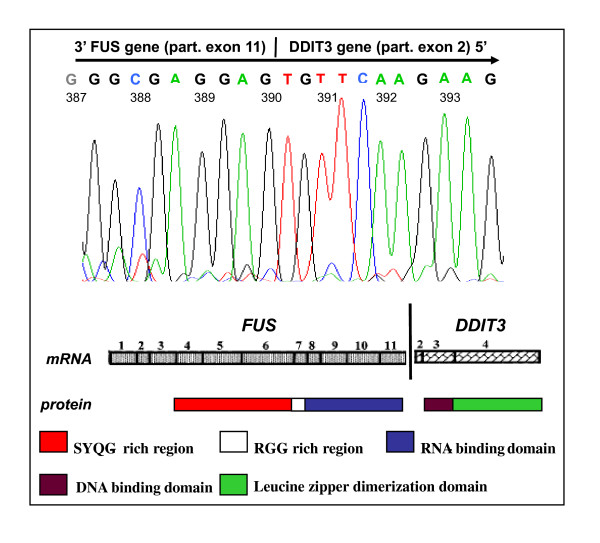
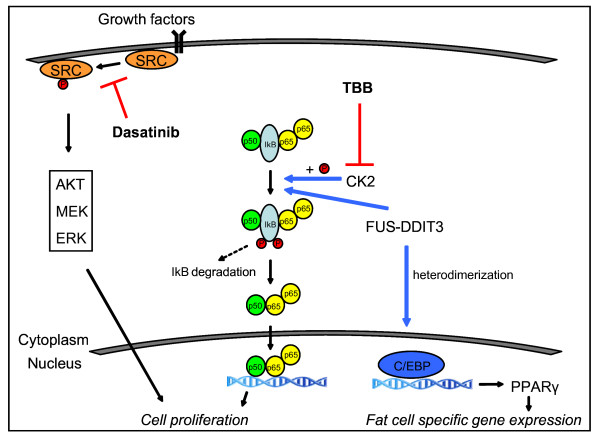
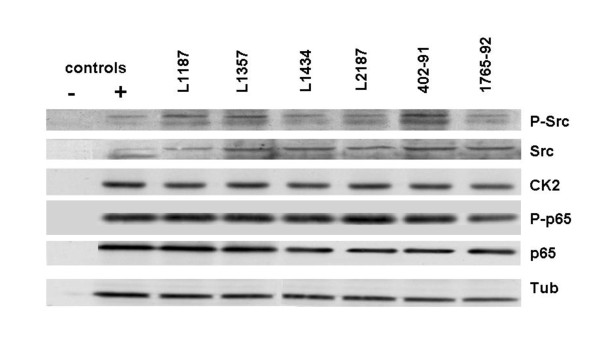
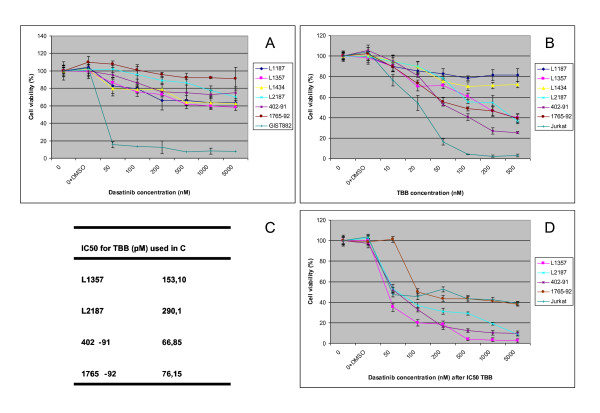
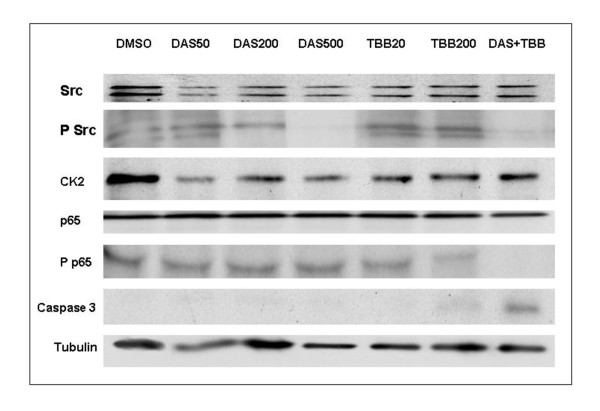
Using kinome profiling and subsequent pathway analysis in two cell lines and four primary cultures of myxoid liposarcomas, all of which demonstrated a FUS-DDIT3 fusion gene including one new fusion type, we aimed at identifying new molecular targets for systemic treatment. Protein phosphorylation by activated kinases was verified by Western Blot and cell viability was measured before and after treatment of the myxoid liposarcoma cells with kinase inhibitors. We found kinases associated with the atypical nuclear factor-kappaB and Src pathways to be the most active in myxoid liposarcoma. Inhibition of Src by the small molecule tyrosine kinase inhibitor dasatinib showed only a mild effect on cell viability of myxoid liposarcoma cells. In contrast, inhibition of the nuclear factor-kappaB pathway, which is regulated by the FUS-DDIT3 fusion product, in myxoid liposarcoma cells using casein kinase 2 inhibitor 4,5,6,7-tetrabromobenzotriazole (TBB) showed a significant decrease in cell viability, decreased phosphorylation of nuclear factor-kappaB pathway proteins, and caspase 3 mediated apoptosis. Combination of dasatinib and TBB showed an enhanced effect.
Kinases associated with activation of the atypical nuclear factor-kappaB and the Src pathways are the most active in myxoid liposarcoma in vitro and inhibition of nuclear factor-kappaB pathway activation by inhibiting casein kinase 2 using TBB, of which the effect is enhanced by Src inhibition using dasatinib, offers new potential therapeutic strategies for myxoid liposarcoma patients with advanced disease.
黏液样脂肪肉瘤是一种相对常见的恶性软组织肿瘤,其特征在于(12;16)易位导致 FUS-DDIT3 融合基因在其肿瘤发生中起关键作用。尽管正在开发新的治疗方法,但对于无法手术或转移性黏液样脂肪肉瘤患者的治疗选择仍然较差,新的希望正在增加。
使用激酶组谱分析和随后对两条细胞系和四条黏液样脂肪肉瘤原代培养物的途径分析,所有这些细胞系均显示出 FUS-DDIT3 融合基因,包括一种新的融合类型,我们旨在确定用于全身治疗的新分子靶标。通过 Western Blot 验证了激活激酶的蛋白质磷酸化,并在使用激酶抑制剂处理黏液样脂肪肉瘤细胞前后测量了细胞活力。我们发现与非典型核因子-κB 和Src 途径相关的激酶在黏液样脂肪肉瘤中最为活跃。小分子酪氨酸激酶抑制剂 dasatinib 抑制 Src 对黏液样脂肪肉瘤细胞活力的影响仅为轻度。相比之下,使用酪蛋白激酶 2 抑制剂 4,5,6,7-四溴苯并三唑(TBB)抑制 FUS-DDIT3 融合产物调节的核因子-κB 途径在黏液样脂肪肉瘤细胞中的活性,显示出细胞活力显着降低,核因子-κB 途径蛋白磷酸化减少,以及 caspase 3 介导的细胞凋亡。 dasatinib 和 TBB 的联合使用显示出增强的效果。
与非典型核因子-κB 和 Src 途径激活相关的激酶在体外黏液样脂肪肉瘤中最为活跃,通过抑制酪蛋白激酶 2 抑制 TBB 激活核因子-κB 途径,使用 dasatinib 抑制 Src 可增强其作用,为晚期疾病的黏液样脂肪肉瘤患者提供了新的潜在治疗策略。