University Medical Center Utrecht, The Netherlands.
Eur J Epidemiol. 2010 Oct;25(10):751-8. doi: 10.1007/s10654-010-9514-9. Epub 2010 Oct 2.
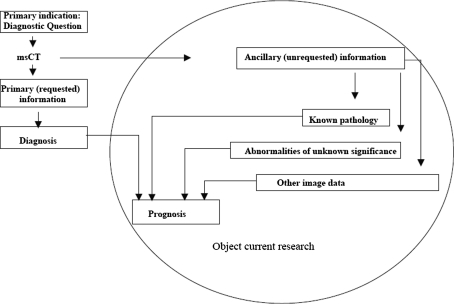
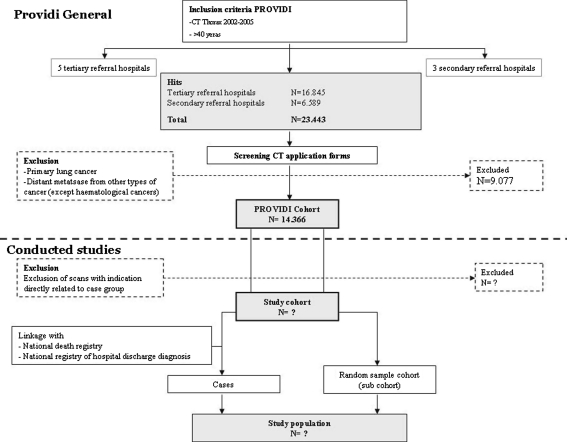
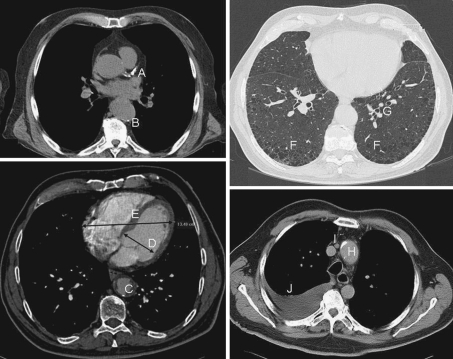
We describe the rationale for a new study examining the prognostic value of unrequested findings in diagnostic imaging. The deployment of more advanced imaging modalities in routine care means that such findings are being detected with increasing frequency. However, as the prognostic significance of many types of unrequested findings is unknown, the optimal response to such findings remains uncertain and in many cases an overly defensive approach is adopted, to the detriment of patient-care. Additionally, novel and promising image findings that are newly available on many routine scans cannot be used to improve patient care until their prognostic value is properly determined. The PROVIDI study seeks to address these issues using an innovative multi-center case-cohort study design. PROVIDI is to consist of a series of studies investigating specific, selected disease entities and clusters. Computed Tomography images from the participating hospitals are reviewed for unrequested findings. Subsequently, this data is pooled with outcome data from a central population registry. Study populations consist of patients with endpoints relevant to the (group of) disease(s) under study along with a random control sample from the cohort. This innovative design allows PROVIDI to evaluate selected unrequested image findings for their true prognostic value in a series of manageable studies. By incorporating unrequested image findings and outcomes data relevant to patients, truly meaningful conclusions about the prognostic value of unrequested and emerging image findings can be reached and used to improve patient-care.
我们描述了一项新研究的基本原理,该研究旨在检查诊断影像中未请求发现的预后价值。在常规护理中部署更先进的成像方式意味着越来越频繁地检测到此类发现。然而,由于许多类型的未请求发现的预后意义尚不清楚,因此对这些发现的最佳反应尚不确定,在许多情况下,采用了过于防御性的方法,从而损害了患者的护理。此外,许多常规扫描中提供的新的有前途的新型影像发现,在其预后价值得到正确确定之前,无法用于改善患者的护理。PROVIDI 研究旨在通过创新的多中心病例队列研究设计来解决这些问题。PROVIDI 将由一系列研究组成,这些研究调查特定的选定疾病实体和聚类。对参与医院的计算机断层扫描图像进行未请求发现的审查。随后,将此数据与来自中央人群登记处的结果数据汇集在一起。研究人群包括与研究中的(组)疾病相关的终点患者以及队列中的随机对照样本。这种创新的设计允许 PROVIDI 在一系列可管理的研究中评估选定的未请求影像发现的真正预后价值。通过整合与患者相关的未请求影像发现和结果数据,可以得出关于未请求和新兴影像发现的预后价值的真正有意义的结论,并用于改善患者的护理。