Solbak Sara M, Reksten Tove R, Wray Victor, Bruns Karsten, Horvli Ole, Raae Arnt J, Henklein Petra, Henklein Peter, Röder Rene, Mitzner David, Schubert Ulrich, Fossen Torgils
Department of Chemistry, University of Bergen, N-5007 Bergen, Norway.
BMC Struct Biol. 2010 Oct 4;10:31. doi: 10.1186/1472-6807-10-31.
Cyclophilin A (CypA) represents a potential target for antiretroviral therapy since inhibition of CypA suppresses human immunodeficiency virus type 1 (HIV-1) replication, although the mechanism through which CypA modulates HIV-1 infectivity still remains unclear. The interaction of HIV-1 viral protein R (Vpr) with the human peptidyl prolyl isomerase CypA is known to occur in vitro and in vivo. However, the nature of the interaction of CypA with Pro-35 of N-terminal Vpr has remained undefined.
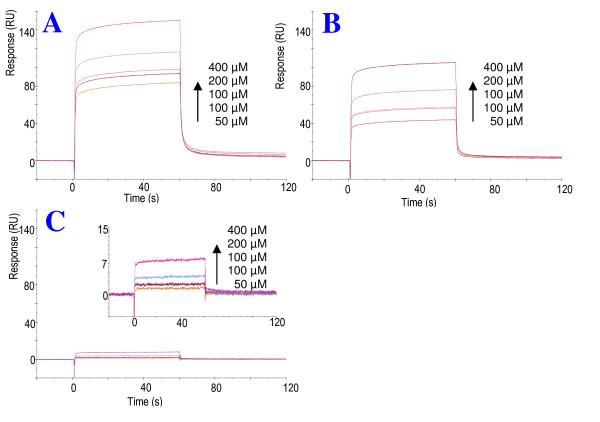
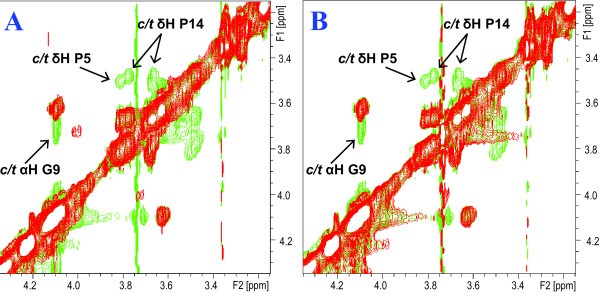
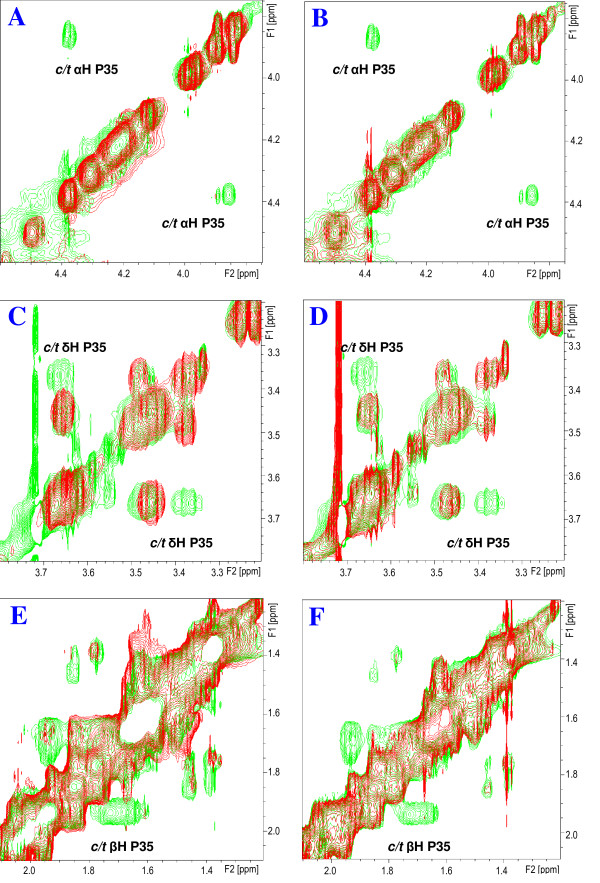
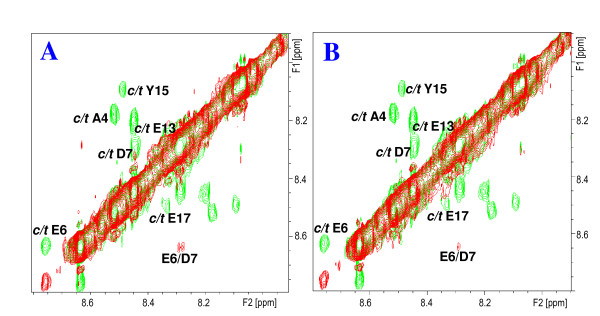
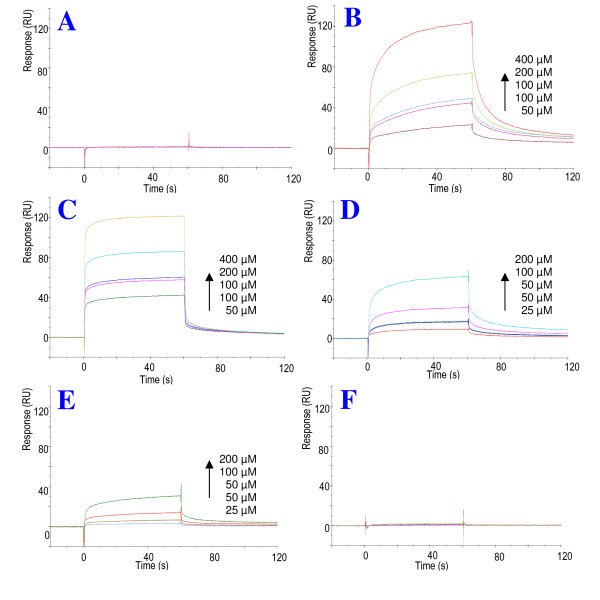
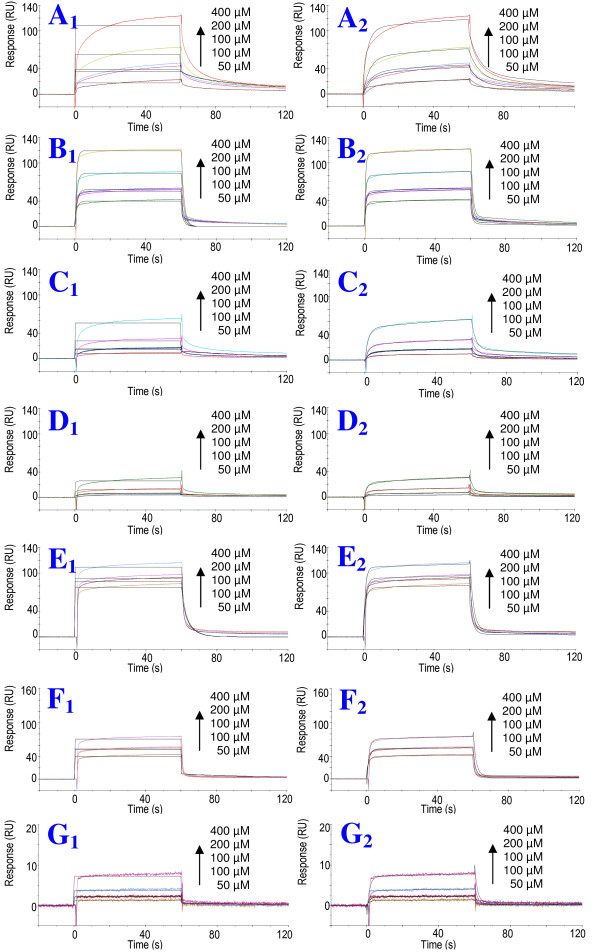
Characterization of the interactions of human CypA with N-terminal peptides of HIV-1 Vpr has been achieved using a combination of nuclear magnetic resonace (NMR) exchange spectroscopy and surface plasmon resonance spectroscopy (SPR). NMR data at atomic resolution indicate prolyl cis/trans isomerisation of the highly conserved proline residues Pro-5, -10, -14 and -35 of Vpr are catalyzed by human CypA and require only very low concentrations of the isomerase relative to that of the peptide substrates. Of the N-terminal peptides of Vpr only those containing Pro-35 bind to CypA in a biosensor assay. SPR studies of specific N-terminal peptides with decreasing numbers of residues revealed that a seven-residue motif centred at Pro-35 consisting of RHFPRIW, which under membrane-like solution conditions comprises the loop region connecting helix 1 and 2 of Vpr and the two terminal residues of helix 1, is sufficient to maintain strong specific binding.
Only N-terminal peptides of Vpr containing Pro-35, which appears to be vital for manifold functions of Vpr, bind to CypA in a biosensor assay. This indicates that Pro-35 is essential for a specific CypA-Vpr binding interaction, in contrast to the general prolyl cis/trans isomerisation observed for all proline residues of Vpr, which only involve transient enzyme-substrate interactions. Previously suggested models depicting CypA as a chaperone that plays a role in HIV-1 virulence are now supported by our data. In detail the SPR data of this interaction were compatible with a two-state binding interaction model that involves a conformational change during binding. This is in accord with the structural changes observed by NMR suggesting CypA catalyzes the prolyl cis/trans interconversion during binding to the RHFP35RIW motif of N-terminal Vpr.
亲环素A(CypA)是抗逆转录病毒疗法的一个潜在靶点,因为抑制CypA可抑制1型人类免疫缺陷病毒(HIV-1)复制,尽管CypA调节HIV-1感染性的机制仍不清楚。已知HIV-1病毒蛋白R(Vpr)与人肽基脯氨酰异构酶CypA在体外和体内均会发生相互作用。然而,CypA与Vpr N端第35位脯氨酸的相互作用性质仍不明确。
通过结合核磁共振(NMR)交换光谱和表面等离子体共振光谱(SPR),实现了对人CypA与HIV-1 Vpr N端肽段相互作用的表征。原子分辨率的NMR数据表明,Vpr高度保守的脯氨酸残基Pro-5、-10、-14和-35的脯氨酰顺/反异构化由人CypA催化,相对于肽底物,仅需要极低浓度的异构酶。在生物传感器分析中,Vpr的N端肽段中只有那些含有Pro-35的肽段能与CypA结合。对残基数量逐渐减少的特定N端肽段的SPR研究表明,以Pro-35为中心的由RHFPRIW组成的七肽基序,在类膜溶液条件下包括连接Vpr螺旋1和螺旋2的环区以及螺旋1的两个末端残基,足以维持强烈的特异性结合。
在生物传感器分析中,只有含有对Vpr多种功能似乎至关重要的Pro-35的Vpr N端肽段能与CypA结合。这表明Pro-35对于特定的CypA-Vpr结合相互作用至关重要,这与Vpr所有脯氨酸残基普遍观察到的脯氨酰顺/反异构化不同,后者仅涉及短暂的酶-底物相互作用。我们的数据现在支持了之前提出的将CypA描述为在HIV-1毒力中起作用的伴侣蛋白的模型。具体而言,这种相互作用的SPR数据与涉及结合过程中构象变化的双态结合相互作用模型相符。这与NMR观察到的结构变化一致,表明CypA在与N端Vpr的RHFP35RIW基序结合过程中催化脯氨酰顺/反互变。