Department of Pharmacology, School of Medicine, University of California, Irvine, California 92697, USA.
Synapse. 2011 Jun;65(6):479-89. doi: 10.1002/syn.20864. Epub 2010 Nov 9.
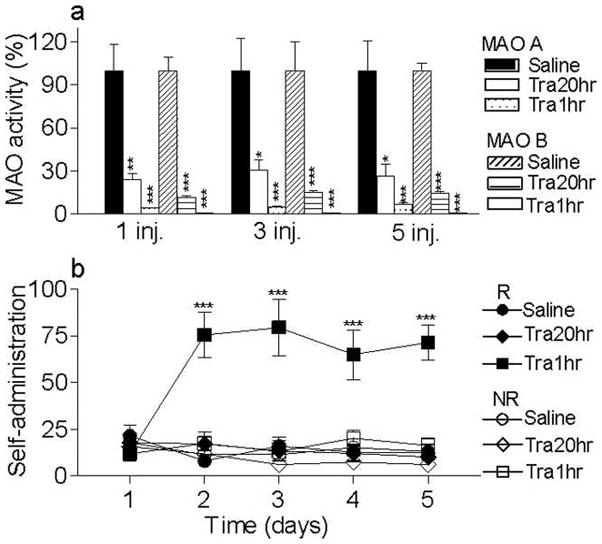
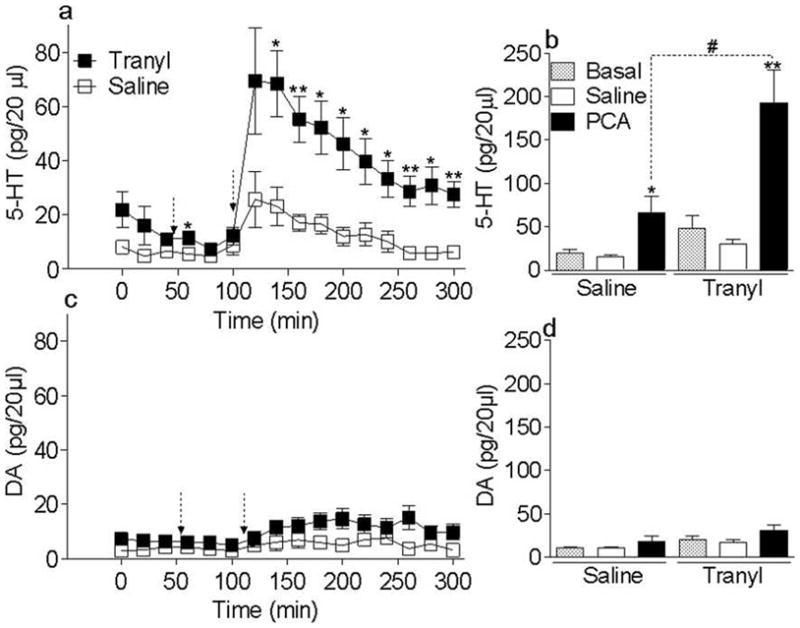
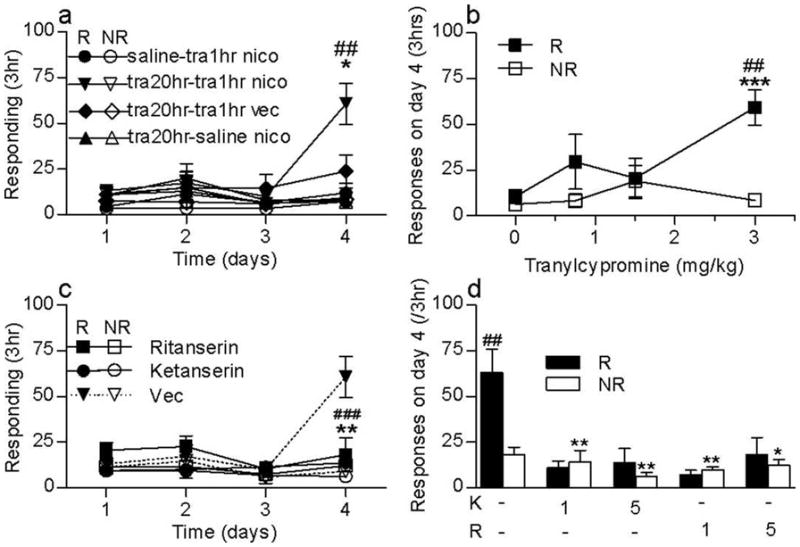
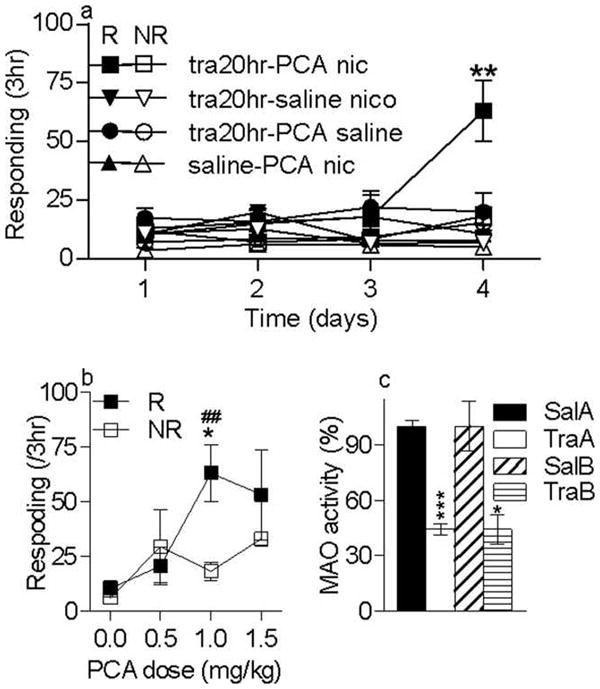
Although nicotine is generally considered to be the main psychoactive component of tobacco, growing evidence highlights the importance of nonnicotine compounds in smoking reinforcement. Monoamine oxidase (MAO) inhibition is a major consequence of smoking and MAO inhibitors, such as tranylcypromine, increase nicotine reinforcement. Tranylcypromine has multiple pharmacological effects, increasing monoamine release for a few hours immediately after its administration and blocking MAO activity for several days. To assess the relative role of these two actions, adult male rats were tested in consecutive daily 3-h sessions for self-administration of nicotine (3 μg kg⁻¹) inj⁻¹, i.v.) either 20 or 1 h following administration of tranylcypromine (3 mg kg⁻¹). Both paradigms were shown to produce highly significant inhibition of MAO activity. However, whereas animals readily acquired self-administration when pretreated with tranylcypromine 1 h prior to testing, they did not with the longer pretreatment interval. Such animals did immediately acquire nicotine self-administration when the tranylcypromine pretreatment interval was switched to 1 h prior to testing on Day 4, indicating that an acute effect of the MAO inhibitor was responsible for enhanced nicotine reinforcement. Several lines of evidence implicate serotonin (5-HT) as the mediator of this enhancement: (1) Tranyclypromine-enhanced nicotine reinforcement was blocked by the 5-HT₂ receptor antagonists, ritanserin and ketanserin; (2) parachloroamphetamine (PCA), a 5-HT releaser, also enhanced nicotine self-administration in animals in which MAO activity was inhibited; (3) pretreatment with tranylcypromine increased PCA-induced 5-HT overflow in the nucleus accumbens. These findings suggest that MAO inhibition enhances serotonergic transmission, which serves a critical role in the reinforcing effects of nicotine.
尽管尼古丁通常被认为是烟草中的主要精神活性成分,但越来越多的证据强调了非尼古丁化合物在吸烟强化中的重要性。单胺氧化酶(MAO)抑制是吸烟的主要后果,而 MAO 抑制剂,如反苯环丙胺,会增加尼古丁的强化作用。反苯环丙胺具有多种药理学作用,可在给药后立即增加数小时的单胺释放,并在数天内阻断 MAO 活性。为了评估这两种作用的相对作用,成年雄性大鼠在连续的每日 3 小时的会话中接受测试,以静脉内注射尼古丁(3μgkg-1)。),要么在反苯环丙胺(3mgkg-1)给药后 20 或 1 小时。这两种方案都显示出对 MAO 活性的高度显著抑制。然而,当动物在测试前 1 小时用反苯环丙胺预处理时,它们很容易获得自我给药,但当预处理间隔延长至 1 小时时,它们就不会了。当第 4 天的测试前将反苯环丙胺预处理间隔切换到 1 小时时,这些动物立即获得了尼古丁的自我给药,表明 MAO 抑制剂的急性作用负责增强尼古丁的强化作用。有几条证据表明 5-羟色胺(5-HT)是这种增强的介导物:(1)反苯环丙胺增强的尼古丁强化作用被 5-HT2 受体拮抗剂利坦色林和酮色林阻断;(2)对氯苯丙胺(PCA),一种 5-HT 释放剂,也增强了 MAO 活性被抑制的动物中的尼古丁自我给药;(3)反苯环丙胺预处理增加了伏隔核中 PCA 诱导的 5-HT 溢出。这些发现表明,MAO 抑制增强了 5-羟色胺能传递,这在尼古丁的强化作用中起着关键作用。