Yao Yihong, Higgs Brandon W, Morehouse Chris, de Los Reyes Melissa, Trigona Wendy, Brohawn Philip, White Wendy, Zhang Jianliang, White Barbara, Coyle Anthony J, Kiener Peter A, Jallal Bahija
MedImmune, LLC., One MedImmune Way, Gaithersburg, MD 20878, USA.
Hum Genomics Proteomics. 2009 Nov 17;2009:374312. doi: 10.4061/2009/374312.
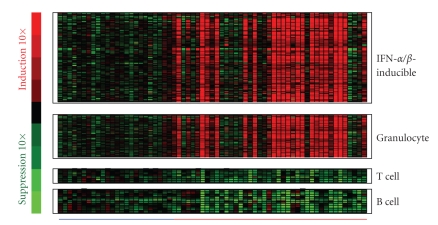
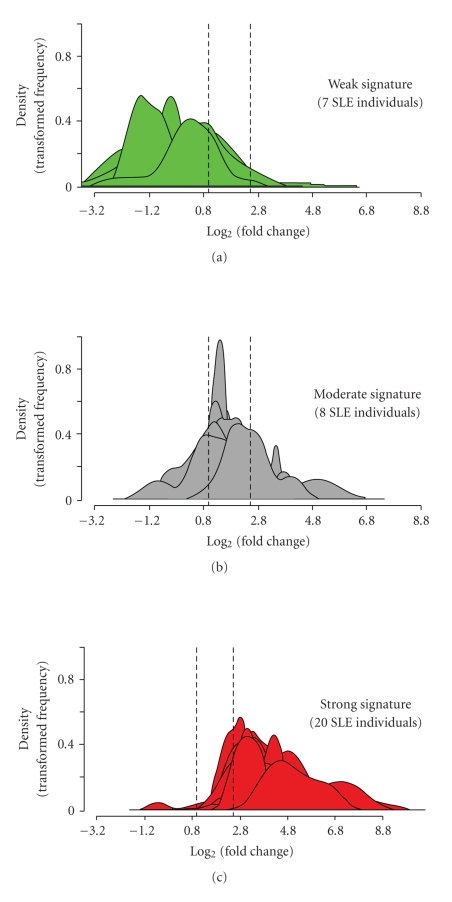
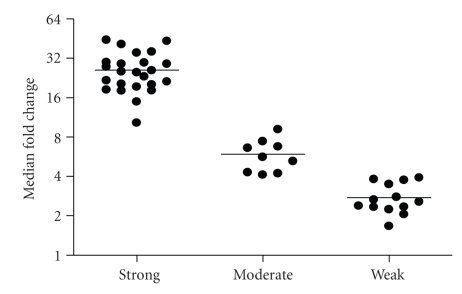
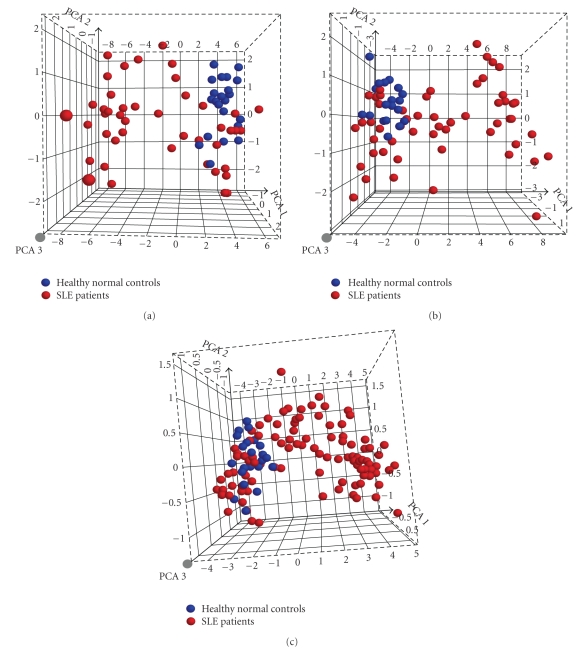
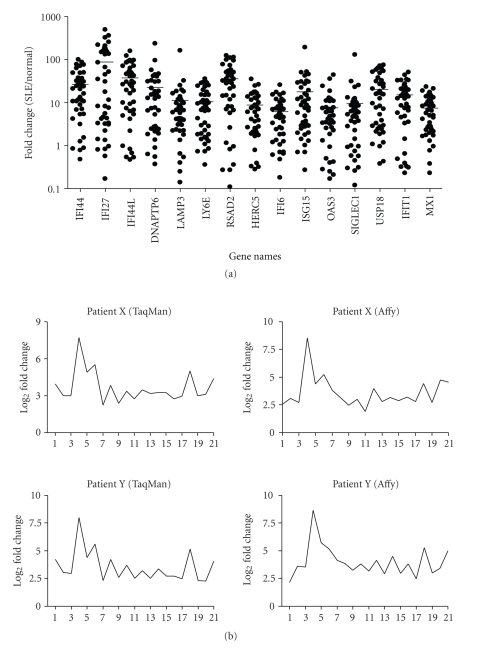
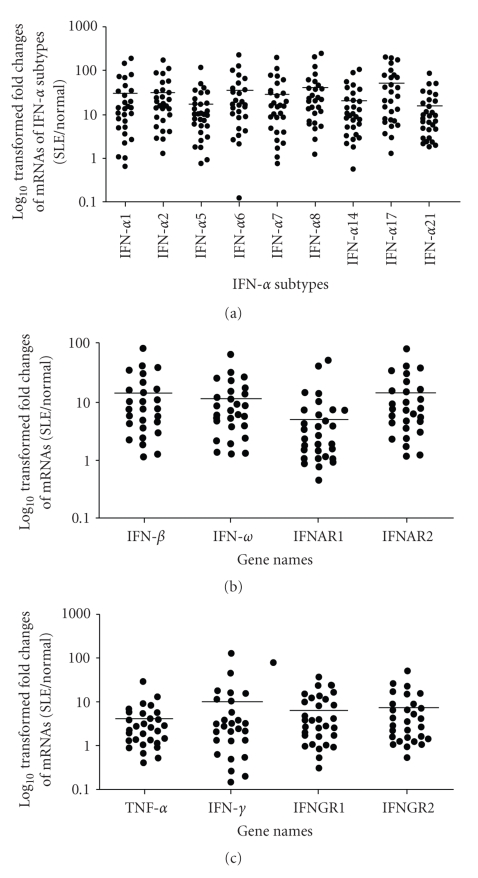
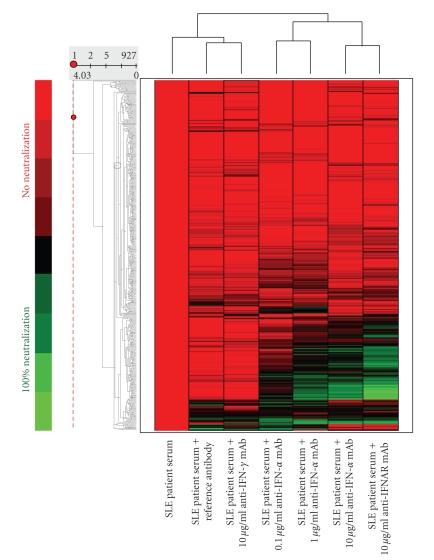
To identify potential pharmacodynamic biomarkers to guide dose selection in clinical trials using anti-interferon-alpha (IFN-α) monoclonal antibody (mAb) therapy for systemic lupus erythematosus (SLE), we used an Affymetrix human genome array platform and identified 110 IFN-α/β-inducible transcripts significantly upregulated in whole blood (WB) of 41 SLE patients. The overexpression of these genes was confirmed prospectively in 54 additional SLE patients and allowed for the categorization of the SLE patients into groups of high, moderate, and weak overexpressers of IFN-α/β-inducible genes. This approach could potentially allow for an accurate assessment of drug target neutralization in early trials of anti-IFN-α mAb therapy for SLE. Furthermore, ex vivo stimulation of healthy donor peripheral blood mononuclear cells with SLE patient serum and subsequent neutralization with anti-IFN-α mAb or anti-IFN-α receptor mAb showed that anti-IFN-α mAb has comparable effects of neutralizing the overexpression of type I IFN-inducible genes as that of anti-IFNAR mAb. These results suggest that IFN-α, and not other members of type I IFN family in SLE patients, is mainly responsible for the induction of type I IFN-inducible genes in WB of SLE patients. Taken together, these data strengthen the view of IFN-α as a therapeutic target for SLE.
为了识别潜在的药效学生物标志物,以指导在使用抗干扰素-α(IFN-α)单克隆抗体(mAb)治疗系统性红斑狼疮(SLE)的临床试验中进行剂量选择,我们使用了Affymetrix人类基因组阵列平台,并在41例SLE患者的全血(WB)中鉴定出110个显著上调的IFN-α/β诱导转录本。这些基因的过表达在另外54例SLE患者中得到前瞻性证实,并可将SLE患者分为IFN-α/β诱导基因高、中、低过表达组。这种方法可能有助于在抗IFN-α mAb治疗SLE的早期试验中准确评估药物靶点中和情况。此外,用SLE患者血清对健康供体外周血单个核细胞进行体外刺激,随后用抗IFN-α mAb或抗IFN-α受体mAb进行中和,结果表明抗IFN-α mAb在中和I型IFN诱导基因过表达方面与抗IFNAR mAb具有相当的效果。这些结果表明,在SLE患者中,主要是IFN-α而非I型IFN家族的其他成员负责诱导SLE患者WB中I型IFN诱导基因的表达。综上所述,这些数据强化了IFN-α作为SLE治疗靶点的观点。