Department of Orthopaedic Surgery and Traumatology, Atrium Medical Centre, PO Box 4446, 6401 CX, Heerlen, The Netherlands.
Knee Surg Sports Traumatol Arthrosc. 2011 Jun;19(6):943-51. doi: 10.1007/s00167-010-1292-0. Epub 2010 Oct 17.
In total knee arthroplasty, tissue-sparing techniques are considered more important, as functional gain could become more advantageous when early mobilization is commenced. The parapatellar approach is most often used, whereas the subvastus approach is a suitable alternative. Presently, it is unknown, according to true objective measurements, which of the two is most advantageous.
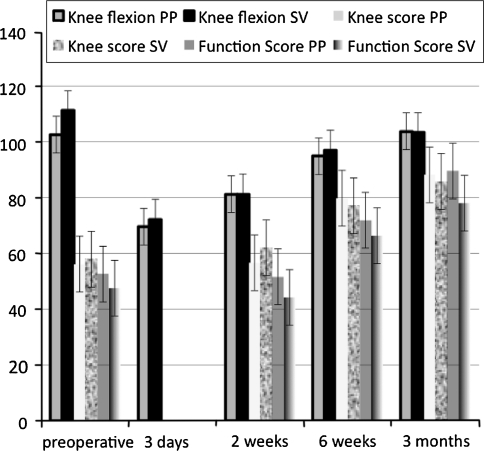
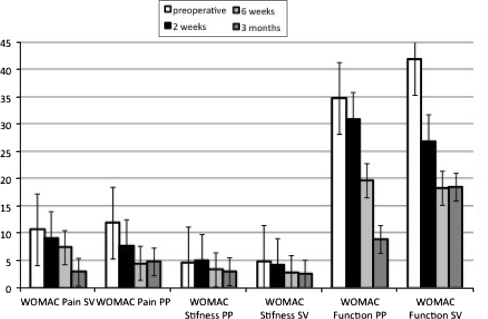
In this prospective randomized double-blind, short-term trial measurements (KSS, WOMAC, PDI, VAS, ability to perform) were obtained at day 1, day 3, 1 week, 6 weeks, and 3 months.
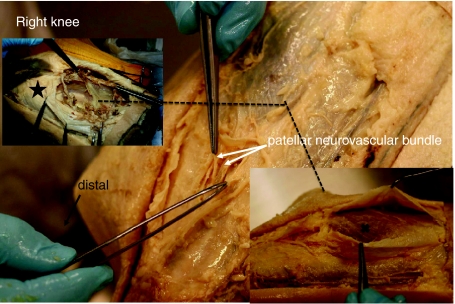
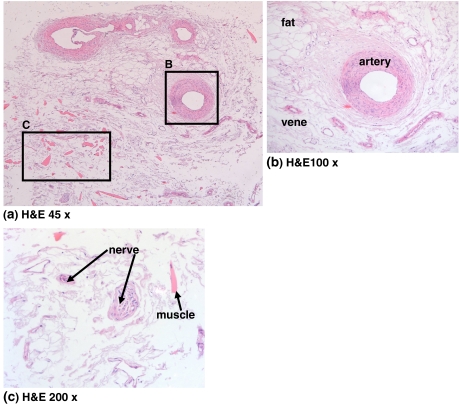
The subvastus group (n=20) showed only significantly less extension lag direct postoperative (P=0.04) compared with the parapatellar group (n=20). Other scores were not significantly different. The Dynaport®knee test, an objective performance-based tool, could not demonstrate significant differences. A blunt anatomical dissection was carried out in both observational and histological to support findings. A dense innervation of the distal vastus medialis was found. This is at risk employing the subvastus approach. Both approaches harm the suprapatellar bursa. The vastus medialis sheath must be detached distally to open the knee joint. No true separate vastus medialis obliquus could be identified.
Comparable to literature, only mild advantage employing the subvastus approach was found, but only early postoperative and not objectively. As this approach is also not suitable in every case, we will continue to use the parapatellar approach.
在全膝关节置换术中,组织节约技术被认为更为重要,因为早期开始活动时,功能的获得可能更具优势。髌旁入路是最常用的方法,而股四头肌下入路是一种合适的替代方法。目前,根据真实的客观测量结果,尚不清楚这两种方法中哪一种更具优势。
在这项前瞻性随机双盲短期试验中,在第 1 天、第 3 天、第 1 周、第 6 周和第 3 个月进行了测量(KSS、WOMAC、PDI、VAS、活动能力)。
股四头肌下入路组(n=20)仅在术后直接时表现出显著较少的伸展滞后(P=0.04),与髌旁入路组(n=20)相比。其他评分无显著差异。Dynaport®膝关节测试,一种客观的基于表现的工具,无法证明显著差异。进行了钝性解剖以支持发现。发现股四头肌内侧远端有密集的神经支配。在采用股四头肌下入路时,这是有风险的。两种方法都会损伤髌上囊。必须在远端切断股四头肌内侧鞘以打开膝关节。无法真正识别出单独的股四头肌内侧斜肌。
与文献相比,仅发现采用股四头肌下入路有轻度优势,但仅在术后早期且不具有客观性。由于这种方法也不是在每种情况下都适用,我们将继续使用髌旁入路。