The University of Queensland Diamantina Institute, Princess Alexandra Hospital, Brisbane, Australia.
Diabetes. 2011 Jan;60(1):248-57. doi: 10.2337/db10-0104. Epub 2010 Oct 27.
The effectiveness of tolerizing immunotherapeutic strategies, such as anti-CD40L or dendritic cells (DCs), is greater when administered to young nonobese diabetic (NOD) mice than at peak insulitis. RelB(lo) DCs, generated in the presence of an nuclear factor-κB inhibitor, induce T-regulatory (Treg) cells and suppress inflammation in a model of rheumatoid arthritis. Interleukin (IL)-1β is overexpressed in humans and mice at risk of type 1 diabetes, dysregulates Treg cells, and accelerates diabetes in NOD mice. We investigated the relationship between IL-1β production and the response to RelB(lo) DCs in the prediabetic period.
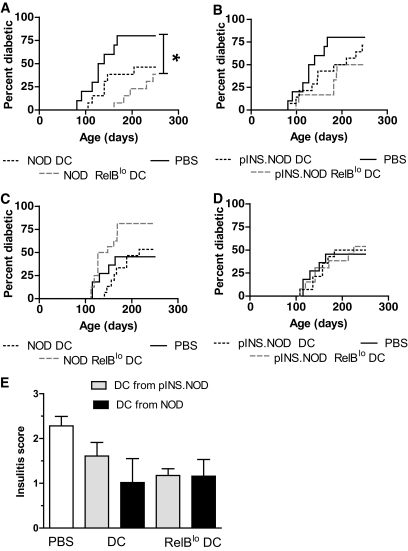
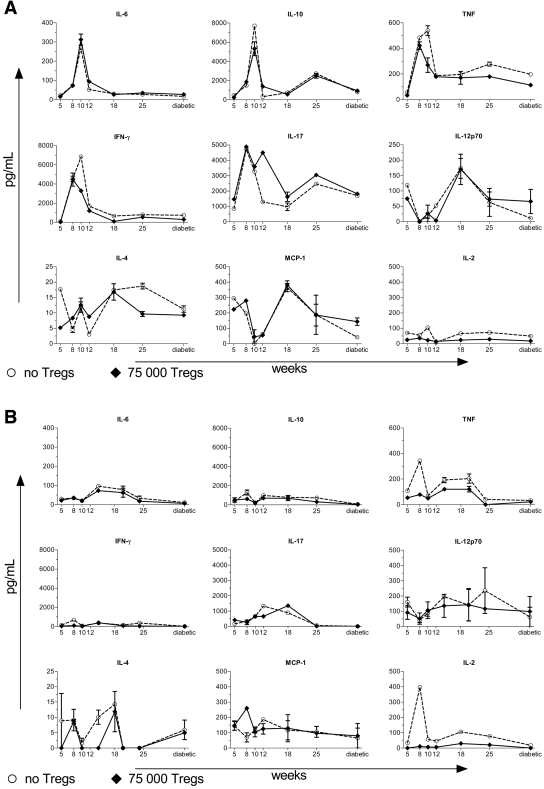
We injected RelB(lo) DCs subcutaneously into 4- or 14-week-old NOD mice and tracked the incidence of diabetes and effect on Treg cell function. We measured the expression of proinflammatory cytokines by stimulated splenocytes and unstimulated islets from mice of different ages and strains and proliferative and cytokine responses of T effectors to Treg in vitro.
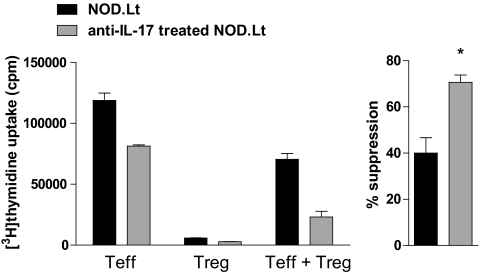
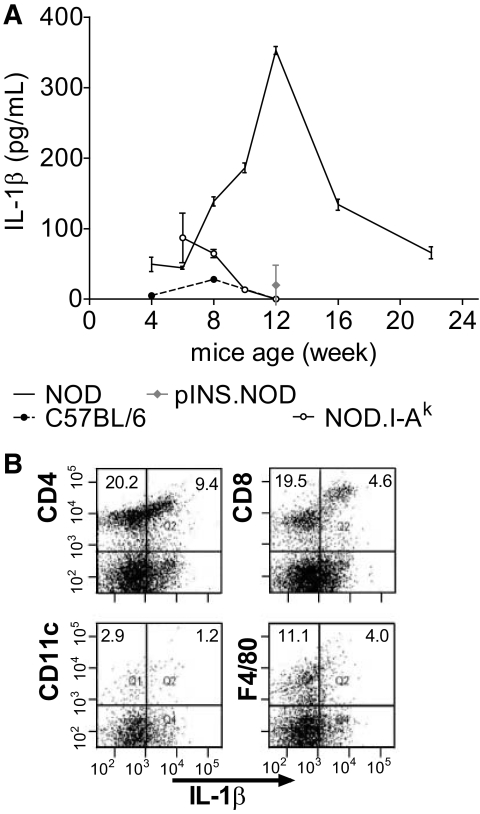
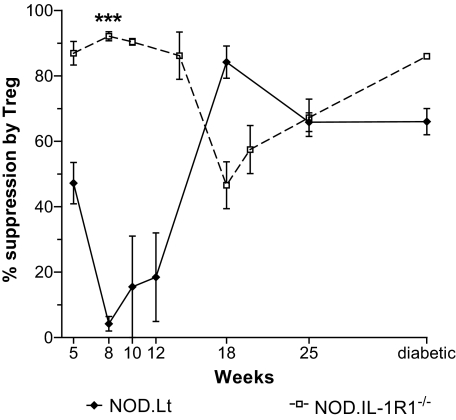
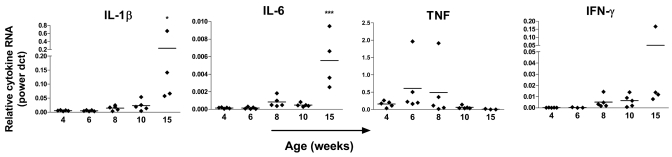
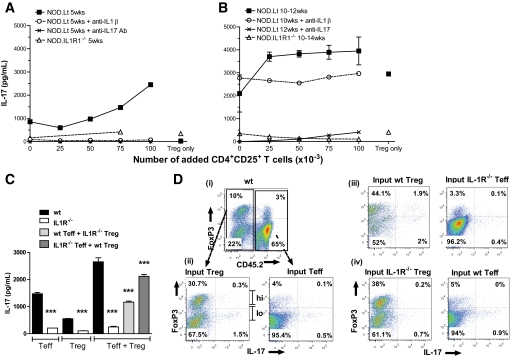
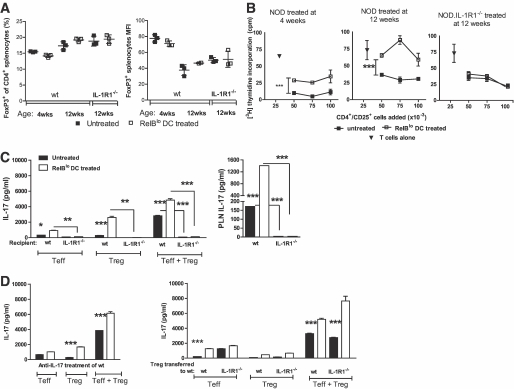
Tolerizing RelB(lo) DCs significantly inhibited diabetes progression when administered to 4-week-old but not 14-week-old mice. IL-1β production by NOD splenocytes and mRNA expression by islets increased from 6 to 16 weeks of age when major histocompatibility complex (MHC)-restricted islet antigen presentation to autoreactive T-cells occurred. IL-1 reduced the capacity of Treg cells to suppress effector cells and promoted their conversion to Th17 cells. RelB(lo) DCs exacerbated the IL-1-dependent decline in Treg function and promoted Th17 conversion.
IL-1β, generated by islet-autoreactive cells in MHC-susceptible mice, accelerates diabetes by differentiating Th17 at the expense of Treg. Tolerizing DC therapies can regulate islet autoantigen priming and prevent diabetes, but progression past the IL-1β/IL-17 checkpoint signals the need for other strategies.
与抗 CD40L 或树突状细胞 (DC) 等耐受免疫治疗策略相比,在年轻非肥胖型糖尿病 (NOD) 小鼠的胰岛炎高峰期之前给予这些策略,效果更佳。在核因子-κB 抑制剂存在的情况下产生的 RelB(lo) DC 可诱导 T 调节 (Treg) 细胞,并在类风湿关节炎模型中抑制炎症。白细胞介素 (IL)-1β 在易患 1 型糖尿病的人类和小鼠中过度表达,可使 Treg 细胞失活,并加速 NOD 小鼠的糖尿病发生。我们研究了胰岛炎前期 IL-1β 产生与 RelB(lo) DC 反应之间的关系。
我们将 RelB(lo) DC 皮下注射到 4 或 14 周龄的 NOD 小鼠中,并跟踪糖尿病的发病率以及对 Treg 细胞功能的影响。我们测量了不同年龄和品系小鼠的刺激脾细胞和未刺激胰岛中促炎细胞因子的表达,以及体外 T 效应细胞对 Treg 的增殖和细胞因子反应。
在给予 4 周龄而非 14 周龄的小鼠时,耐受 RelB(lo) DC 可显著抑制糖尿病的进展。从 6 至 16 周龄时,NOD 脾细胞产生 IL-1β,胰岛的 mRNA 表达增加,此时主要组织相容性复合物 (MHC)-限制性胰岛抗原呈递给自身反应性 T 细胞。IL-1 降低了 Treg 细胞抑制效应细胞的能力,并促进了它们向 Th17 细胞的转化。RelB(lo) DC 加剧了依赖于 IL-1 的 Treg 功能下降,并促进了 Th17 的转化。
在 MHC 易感小鼠中,胰岛自身反应性细胞产生的 IL-1β 通过牺牲 Treg 来分化 Th17,从而加速糖尿病的发生。耐受的 DC 治疗可调节胰岛自身抗原的启动并预防糖尿病,但在 IL-1β/IL-17 检查点之后进展表明需要其他策略。