Vazquez Debra, Takagi Shozo, Frukhtbeyn Stan, Chow Laurence C
National Institute of Standards and Technology, Gaithersburg, MD 20899-0001.
J Res Natl Inst Stand Technol. 2010 Jul-Aug;115(4):225-232. doi: 10.6028/jres.115.016. Epub 2010 Aug 1.
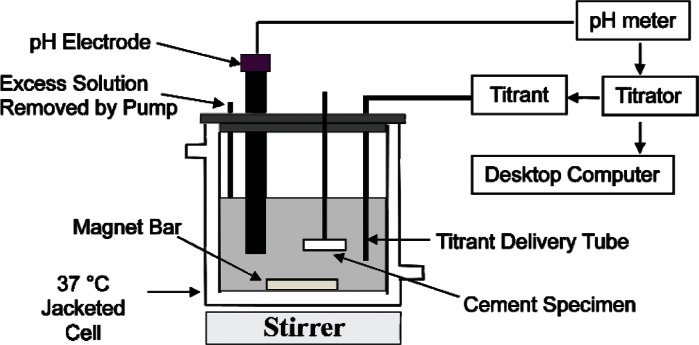
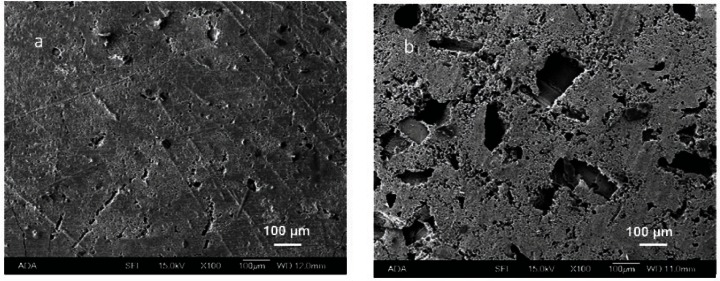
The bone defect repair functions of calcium phosphate cement (CPC) are related to its osteoconductivity and its gradual replacement by new bone. Adding mannitol to CPC may enhance its bone repair potential by increasing CPCs macroporosity and dissolution rate. The objective of the study was to assess microporosity and macroporosity and dissolution rates for CPC mixed with mannitol. Three groups of CPC discs were prepared by combining an equimolar mixture of tetracalcium phosphate and anhydrous dicalcium phosphate with (0 %, 10 %, or 50 %) mass fraction (hereafter expressed as mass %) of mannitol. Macroporosity and microporosity of the samples were calculated from volume and mass measurements of the discs. Discs were then placed in a pH 3.0 demineralizing solution simulating acidified physiological solution, and dissolution rates were measured by a previously described constant-composition titration method. Pure CPC exhibited no macropores and microporosity (mean ± s.d.; n = 5) of (46.8 ± 0.8) % volume fraction (hereafter expressed as vol %). Adding 10 mass % mannitol resulted in 15.6 ± 3.9 vol % macroporosity and 39.4 ± 1.8 vol % microporosity, and adding 50 mass % mannitol produced 54.7 ± 0.8 vol % macroporosity and 21.1 ± 0.4 vol % microporosity. The dissolution rates (mean ± s.d.; n = 5) of CPC with (0, 10, and 50) mass % mannitol incorporation were (30.6 ± 3.4, 44.8 ± 10.2, and 54.7 ± 3.6, respectively) μg · cm(-2) · min(-1), or (0.018 ± 0.002, 0.032 ± 0.007, and 0.072 ± 0.005, respectively) μL · cm(-2) · min(-1). Adding either 10 mass % or 50 mass % mannitol into CPC significantly (p < 0.05) increased CPC dissolution rates. Adding mannitol readily increased macroporosity and dissolution rate of CPC, which may enhance the capacity of CPC to be osteoconductive.
磷酸钙骨水泥(CPC)的骨缺损修复功能与其骨传导性以及被新骨逐渐替代有关。向CPC中添加甘露醇可能通过增加CPC的大孔隙率和溶解速率来增强其骨修复潜力。本研究的目的是评估与甘露醇混合的CPC的微孔率、大孔隙率和溶解速率。通过将磷酸四钙和无水磷酸二钙的等摩尔混合物与质量分数为(0%、10%或50%)(以下表示为质量%)的甘露醇混合,制备了三组CPC圆盘。根据圆盘的体积和质量测量值计算样品的大孔隙率和微孔率。然后将圆盘置于模拟酸化生理溶液的pH 3.0脱矿质溶液中,并通过先前描述的恒组成滴定法测量溶解速率。纯CPC没有大孔,微孔率(平均值±标准差;n = 5)为(46.8 ± 0.8)%体积分数(以下表示为体积%)。添加10质量%的甘露醇导致大孔隙率为15.6 ± 3.9体积%,微孔率为39.4 ± 1.8体积%,添加50质量%的甘露醇产生大孔隙率为54.7 ± 0.8体积%,微孔率为21.1 ± 0.4体积%。掺入(0、10和50)质量%甘露醇的CPC的溶解速率(平均值±标准差;n = 5)分别为(30.6 ± 3.4、44.8 ± 10.2和54.7 ± 3.6)μg·cm⁻²·min⁻¹,或分别为(0.018 ± 0.002、0.032 ± 0.007和0.072 ± 0.005)μL·cm⁻²·min⁻¹。向CPC中添加10质量%或50质量%的甘露醇均显著(p < 0.05)提高了CPC的溶解速率。添加甘露醇很容易增加CPC的大孔隙率和溶解速率,这可能会增强CPC的骨传导能力。