Computer Engineering and Computer Science Department, Speed School of Engineering, University of Louisville, Louisville, KY 40292, USA.
BMC Bioinformatics. 2010 Oct 28;11 Suppl 9(Suppl 9):S12. doi: 10.1186/1471-2105-11-S9-S12.
In humans, copies of the Long Interspersed Nuclear Element 1 (LINE-1) retrotransposon comprise 21% of the reference genome, and have been shown to modulate expression and produce novel splice isoforms of transcripts from genes that span or neighbor the LINE-1 insertion site.
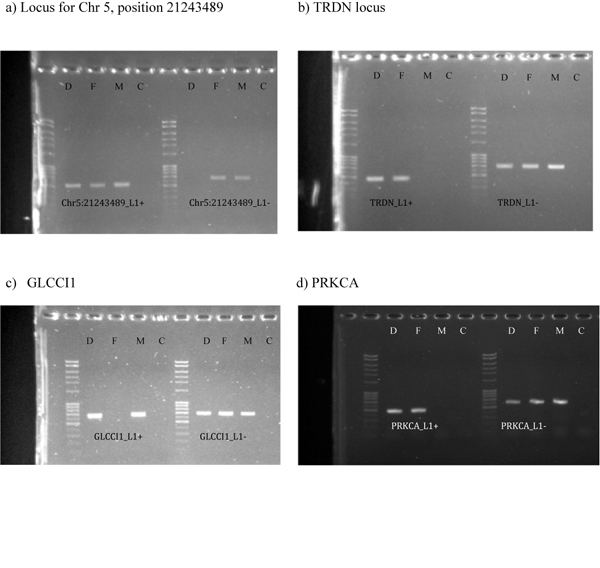
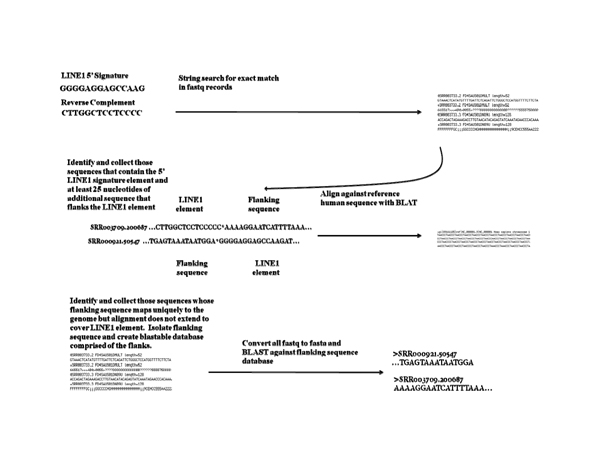
In this work, newly released pilot data from the 1000 Genomes Project is analyzed to detect previously unreported full length insertions of the retrotransposon LINE-1. By direct analysis of the sequence data, we have identified 22 previously unreported LINE-1 insertion sites within the sequence data reported for a mother/father/daughter trio.
It is demonstrated here that next generation sequencing data, as well as emerging high quality datasets from individual genome projects allow us to assess the amount of heterogeneity with respect to the LINE-1 retrotransposon amongst humans, and provide us with a wealth of testable hypotheses as to the impact that this diversity may have on the health of individuals and populations.
在人类中,长散布核元件 1(LINE-1)逆转录转座子的副本占参考基因组的 21%,并已被证明可以调节表达,并产生跨越或邻近 LINE-1 插入位点的基因的新型剪接异构体。
在这项工作中,分析了 1000 基因组计划新发布的试点数据,以检测以前未报告的逆转录转座子 LINE-1 的全长插入。通过对序列数据的直接分析,我们在为母亲/父亲/女儿三人组报告的序列数据中鉴定出了 22 个以前未报告的 LINE-1 插入位点。
这里证明,下一代测序数据以及来自个体基因组计划的新兴高质量数据集使我们能够评估人类中 LINE-1 逆转录转座子的异质性程度,并为我们提供了大量可测试的假设,即这种多样性可能对个人和人群的健康产生影响。