Skaggs School of Pharmacy and Pharmaceutical Sciences, University of California, San Diego, La Jolla, CA 92093, USA.
Neuropeptides. 2010 Dec;44(6):457-66. doi: 10.1016/j.npep.2010.08.003. Epub 2010 Nov 2.
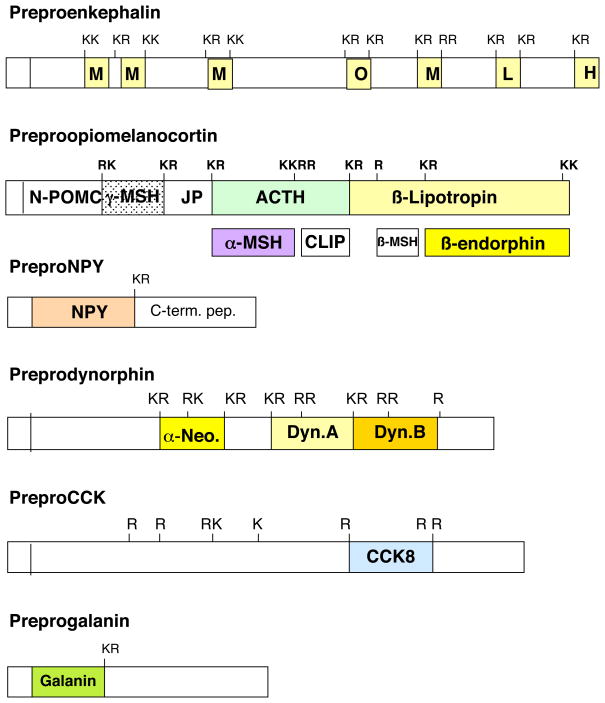
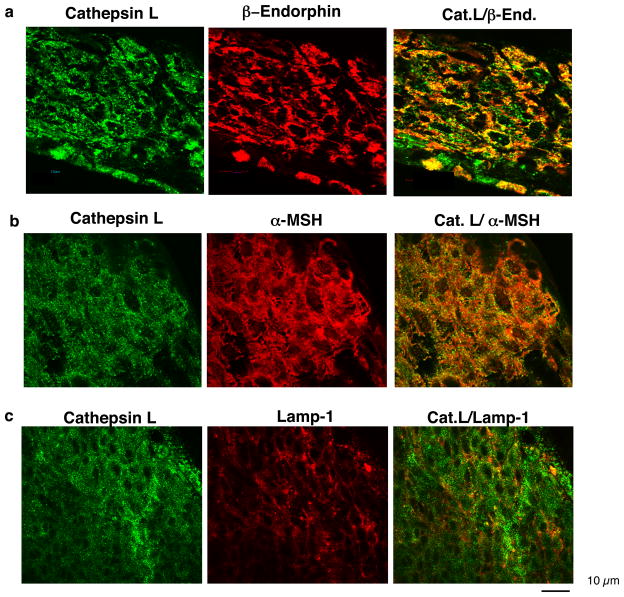
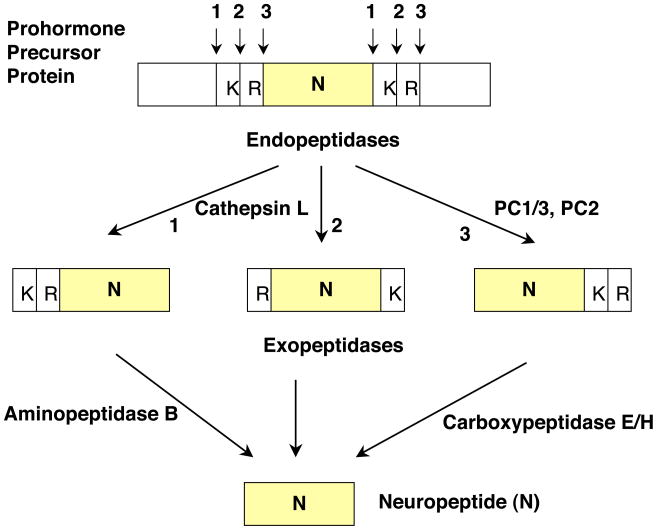
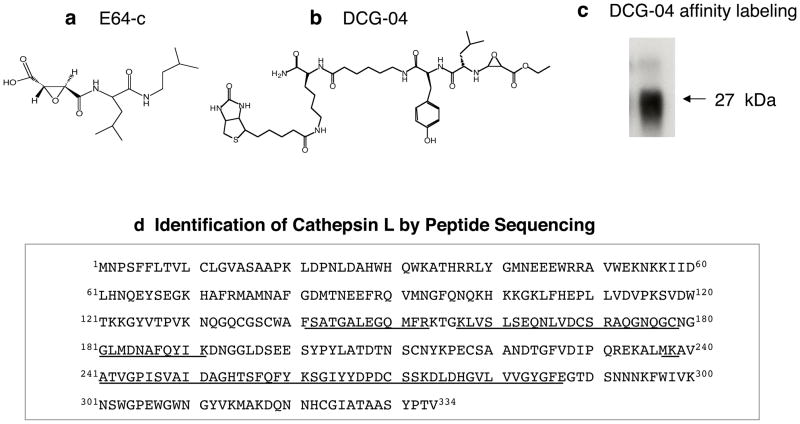
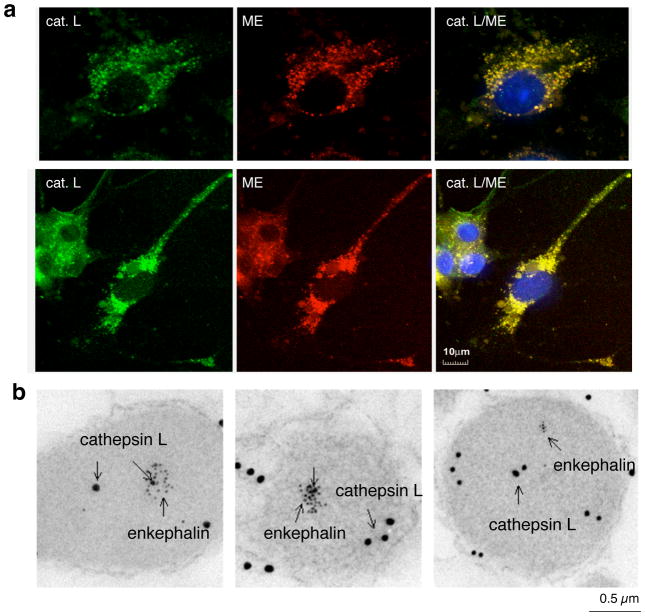
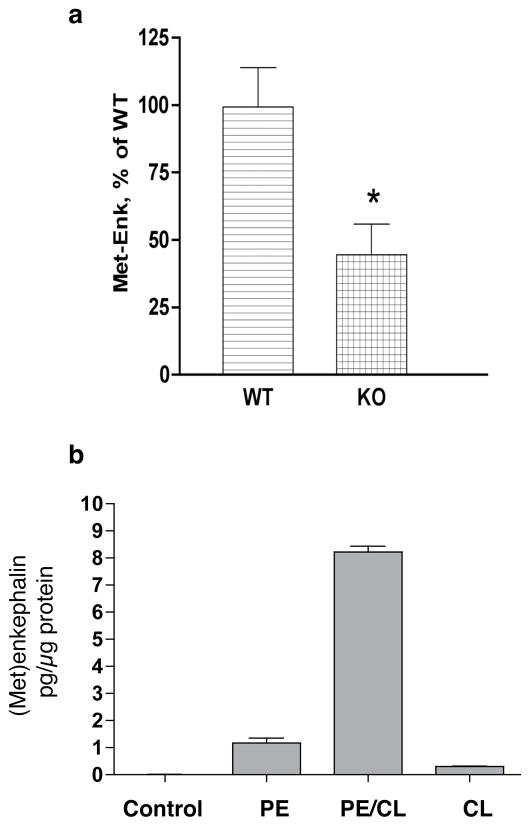
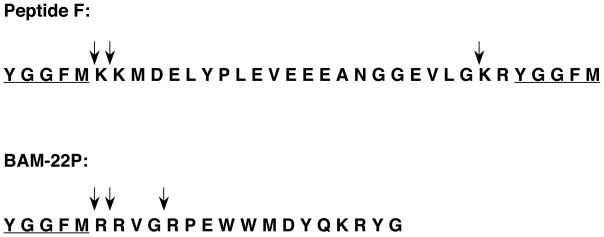
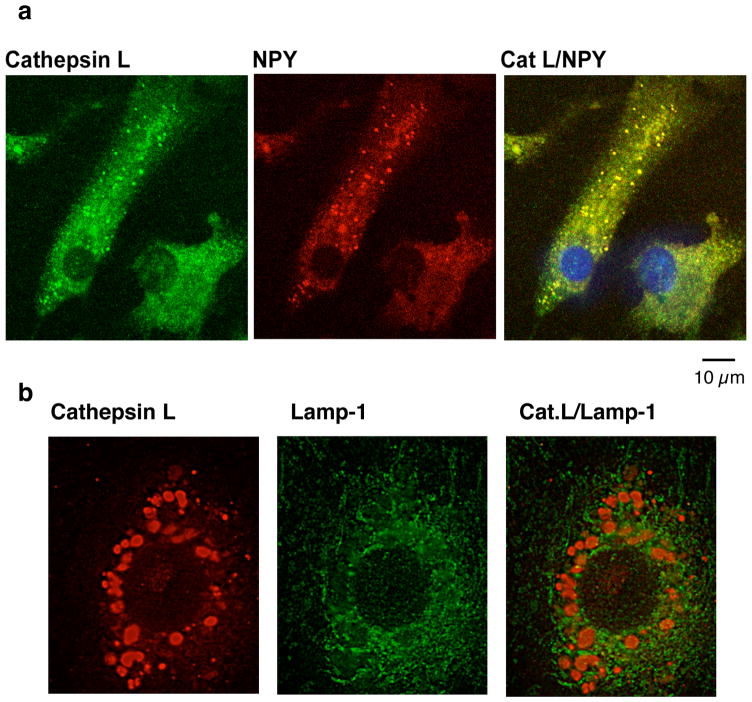
Neuropeptides are essential for cell-cell communication in the nervous and neuroendocrine systems. Production of active neuropeptides requires proteolytic processing of proneuropeptide precursors in secretory vesicles that produce, store, and release neuropeptides that regulate physiological functions. This review describes recent findings indicating the prominent role of cathepsin L in secretory vesicles for production of neuropeptides from their protein precursors. The role of cathepsin L in neuropeptide production was discovered using the strategy of activity-based probes for proenkephalin-cleaving activity for identification of the enzyme protein by mass spectrometry. The novel role of cathepsin L in secretory vesicles for neuropeptide production has been demonstrated in vivo by cathepsin L gene knockout studies, cathepsin L gene expression in neuroendocrine cells, and notably, cathepsin L localization in neuropeptide-containing secretory vesicles. Cathepsin L is involved in producing opioid neuropeptides consisting of enkephalin, β-endorphin, and dynorphin, as well as in generating the POMC-derived peptide hormones ACTH and α-MSH. In addition, NPY, CCK, and catestatin neuropeptides utilize cathepsin L for their biosynthesis. The neuropeptide-synthesizing functions of cathepsin L represent its unique activity in secretory vesicles, which contrasts with its role in lysosomes. Interesting evaluations of protease gene knockout studies in mice that lack cathepsin L compared to those lacking PC1/3 and PC2 (PC, prohormone convertase) indicate the key role of cathepsin L in neuropeptide production. Therefore, dual cathepsin L and prohormone convertase protease pathways participate in neuropeptide production. Significantly, the recent new findings indicate cathepsin L as a novel 'proprotein convertase' for production of neuropeptides that mediate cell-cell communication in health and disease.
神经肽对于神经系统和神经内分泌系统中的细胞间通讯至关重要。活性神经肽的产生需要在分泌小泡中对前神经肽前体进行蛋白水解加工,这些小泡产生、储存和释放调节生理功能的神经肽。本文综述了最近的发现,表明组织蛋白酶 L 在分泌小泡中对于从蛋白质前体产生神经肽具有重要作用。组织蛋白酶 L 在神经肽产生中的作用是通过活性探针策略发现的,该策略用于鉴定蛋白前啡肽切割活性的酶蛋白,通过质谱法进行鉴定。组织蛋白酶 L 在神经内分泌细胞中的基因表达,以及特别地,组织蛋白酶 L 在含有神经肽的分泌小泡中的定位,都证明了组织蛋白酶 L 在体内对于神经肽产生的新型作用。组织蛋白酶 L 参与产生包括脑啡肽、β-内啡肽和强啡肽在内的阿片类神经肽,以及产生 POMC 衍生的肽激素 ACTH 和 α-MSH。此外,NPY、CCK 和 catestatin 神经肽利用组织蛋白酶 L 进行其生物合成。组织蛋白酶 L 的神经肽合成功能代表了其在分泌小泡中的独特活性,与在溶酶体中的作用形成对比。有趣的是,对缺乏组织蛋白酶 L 而不是缺乏 PC1/3 和 PC2(PC,前激素转化酶)的小鼠进行蛋白酶基因敲除研究的评估表明,组织蛋白酶 L 在神经肽产生中起着关键作用。因此,双组织蛋白酶 L 和前激素转化酶蛋白酶途径参与神经肽的产生。重要的是,最近的新发现表明组织蛋白酶 L 是一种新型的“蛋白原转化酶”,用于产生介导健康和疾病中细胞间通讯的神经肽。