Department of Biochemistry and Molecular Biology, Mayo Clinic College of Medicine, Rochester, Minnesota 55905, United States.
Biochemistry. 2010 Nov 30;49(47):10198-207. doi: 10.1021/bi101303t. Epub 2010 Nov 4.
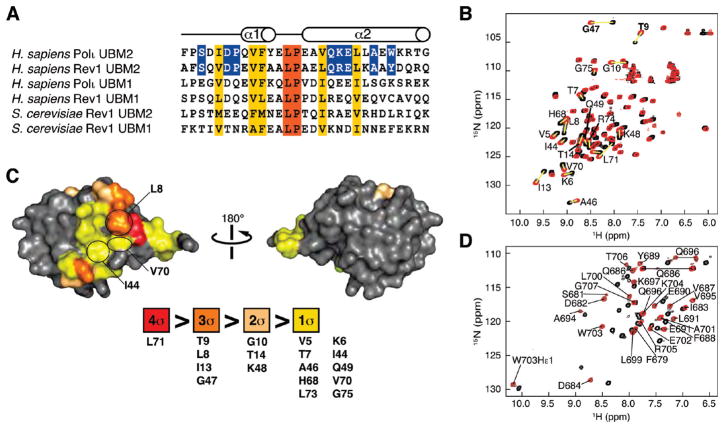
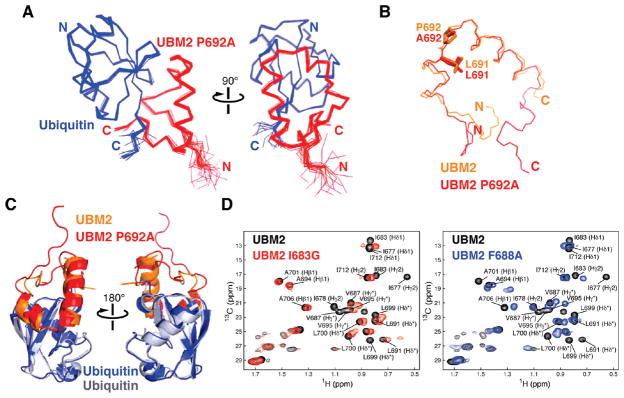
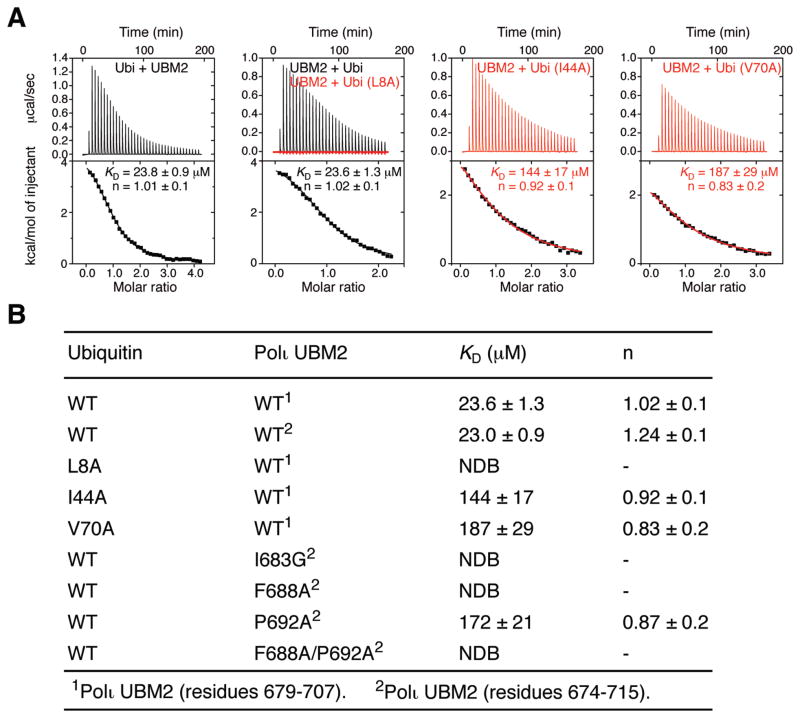
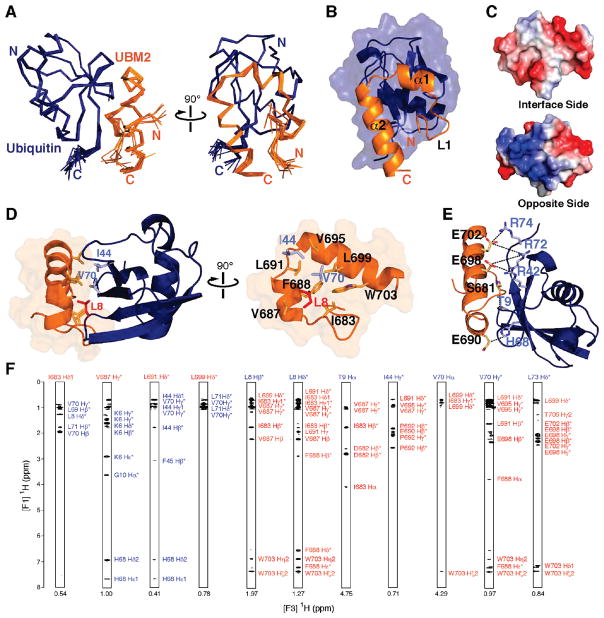
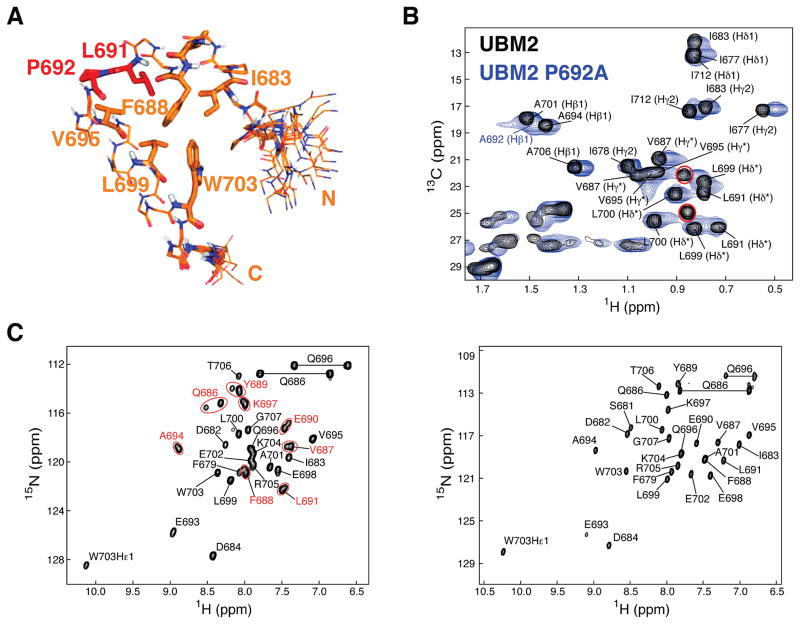
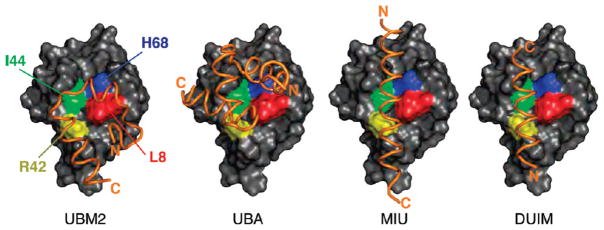
Cells have evolved mutagenic bypass mechanisms that prevent stalling of the replication machinery at DNA lesions. This process, translesion DNA synthesis (TLS), involves switching from high-fidelity DNA polymerases to specialized DNA polymerases that replicate through a variety of DNA lesions. In eukaryotes, polymerase switching during TLS is regulated by the DNA damage-triggered monoubiquitylation of PCNA. How the switch operates is unknown, but all TLS polymerases of the so-called Y-family possess PCNA and ubiquitin-binding domains that are important for their function. To gain insight into the structural mechanisms underlying the regulation of TLS by ubiquitylation, we have probed the interaction of ubiquitin with a conserved ubiquitin-binding motif (UBM2) of Y-family polymerase Polι. Using NMR spectroscopy, we have determined the structure of a complex of human Polι UBM2 and ubiquitin, revealing a novel ubiquitin recognition fold consisting of two α-helices separated by a central trans-proline residue conserved in all UBMs. We show that, different from the majority of ubiquitin complexes characterized to date, ubiquitin residue Ile44 only plays a modest role in the association of ubiquitin with Polι UBM2. Instead, binding of UBM2 is centered on the recognition of Leu8 in ubiquitin, which is essential for the interaction.
细胞已经进化出诱变旁路机制,以防止复制机器在 DNA 损伤处停滞。这个过程称为跨损伤 DNA 合成(TLS),涉及从高保真 DNA 聚合酶切换到专门的 DNA 聚合酶,这些聚合酶通过多种 DNA 损伤进行复制。在真核生物中,TLS 期间的聚合酶切换受 DNA 损伤触发的 PCNA 单泛素化调节。开关的工作原理尚不清楚,但所谓 Y 家族的所有 TLS 聚合酶都具有 PCNA 和泛素结合结构域,这对其功能很重要。为了深入了解泛素化对 TLS 调节的结构机制,我们研究了泛素与 Y 家族聚合酶 Polι 的保守泛素结合基序(UBM2)的相互作用。使用 NMR 光谱学,我们确定了人 Polι UBM2 和泛素复合物的结构,揭示了一种新的泛素识别折叠,由两个α-螺旋组成,中间由所有 UBM 中保守的中央反式脯氨酸残基隔开。我们表明,与迄今为止表征的大多数泛素复合物不同,泛素残基 Ile44 仅在泛素与 Polι UBM2 结合中发挥适度作用。相反,UBM2 的结合集中在泛素中 Leu8 的识别上,这对于相互作用至关重要。