Division of Rheumatology, Department of Internal Medicine, Keio University School of Medicine, 35 Shinanomachi, Shinjuku-ku, Tokyo 160-8582, Japan.
Arthritis Res Ther. 2010;12(6):R205. doi: 10.1186/ar3180. Epub 2010 Nov 4.
Microvasculopathy is one of the characteristic features in patients with systemic sclerosis (SSc), but underlying mechanisms still remain uncertain. In this study, we evaluated the potential involvement of monocytic endothelial progenitor cells (EPCs) in pathogenic processes of SSc vasculopathy, by determining their number and contribution to blood vessel formation through angiogenesis and vasculogenesis.
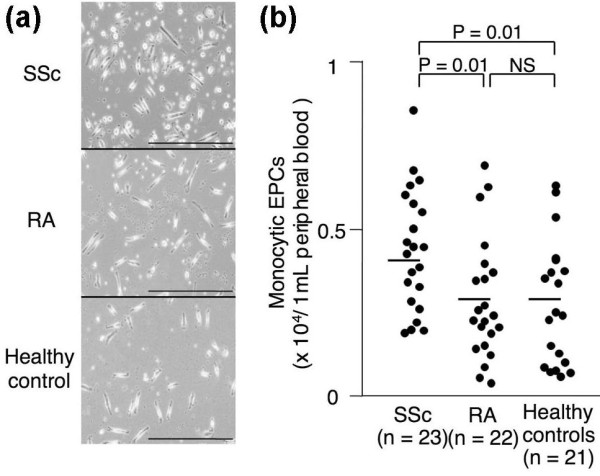
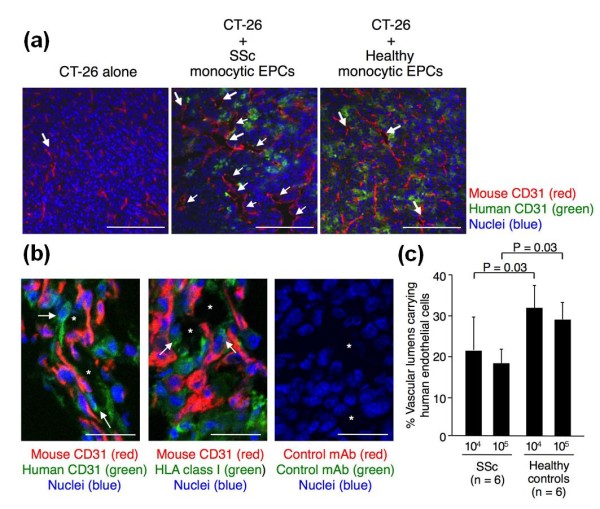
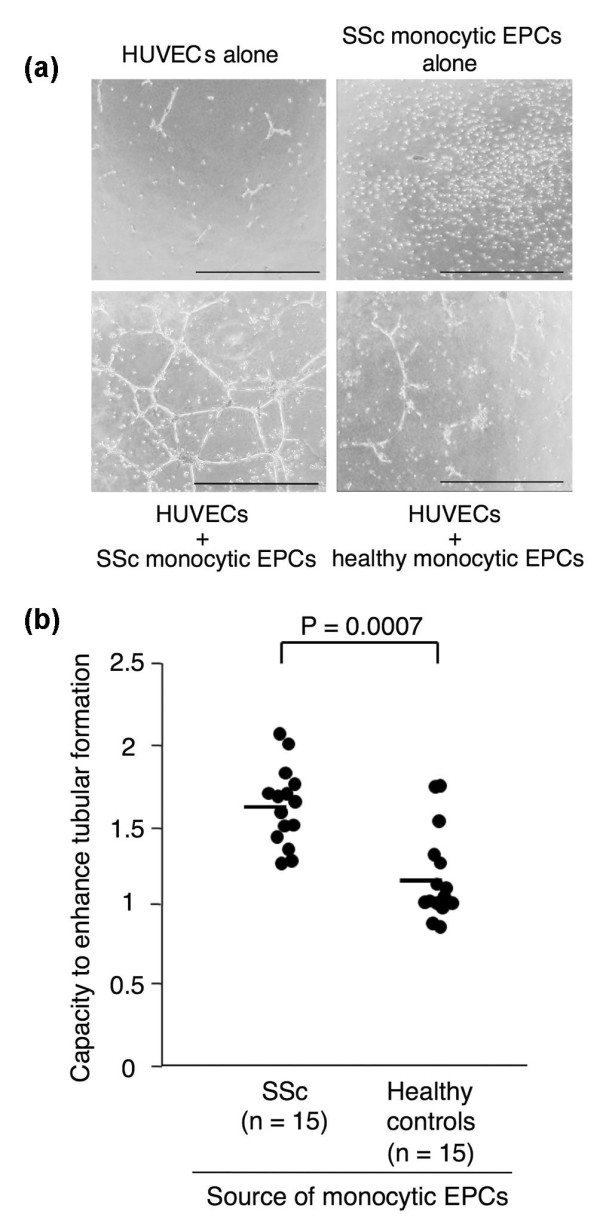
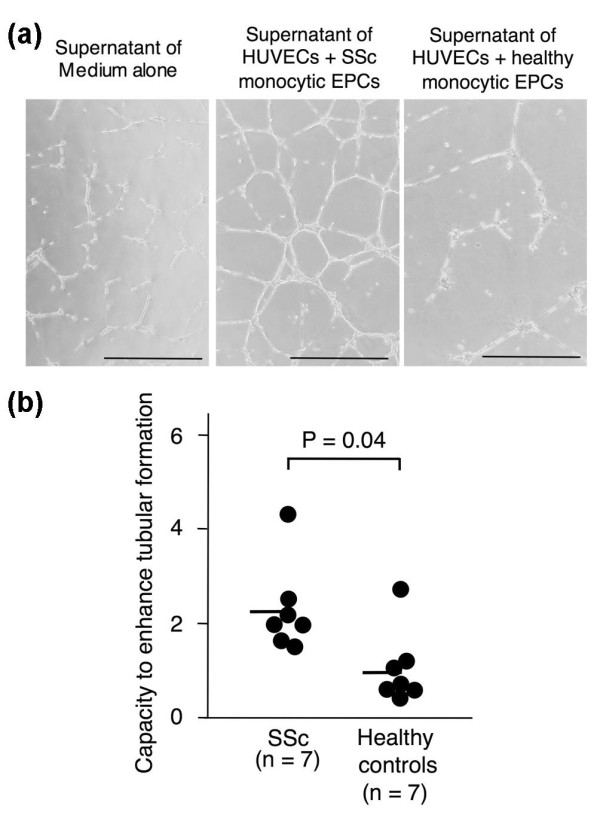
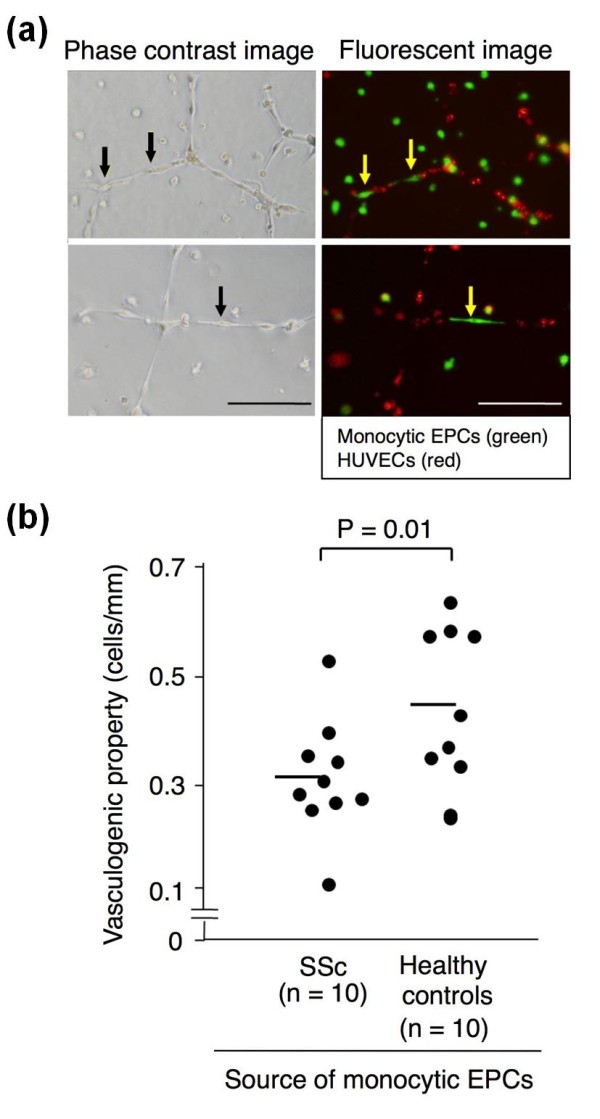
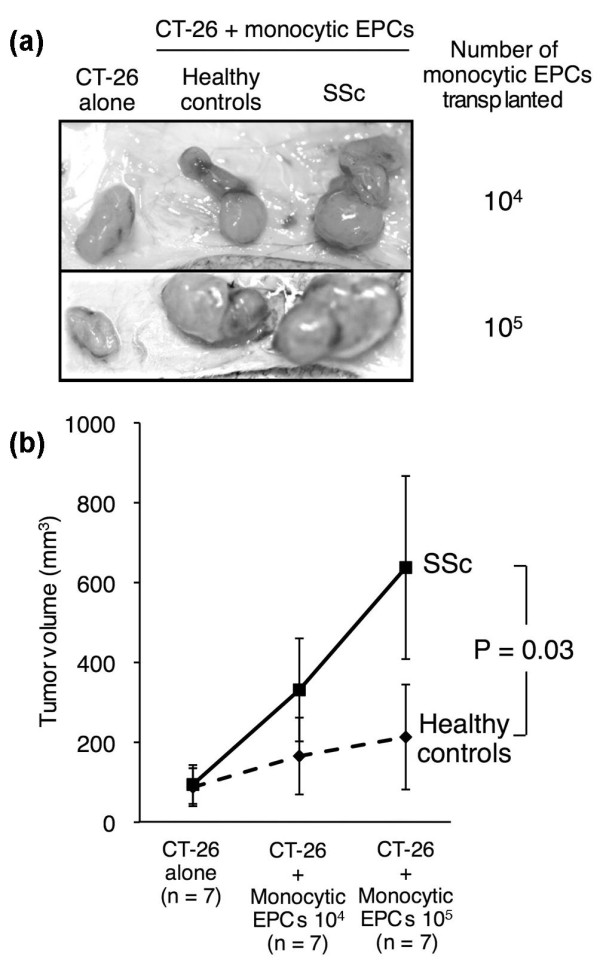
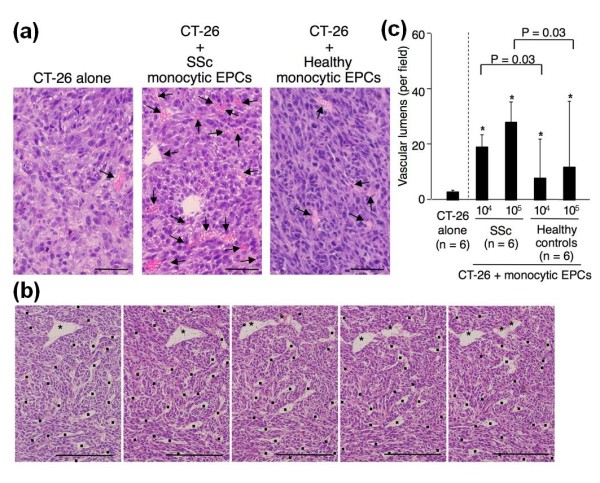
Monocytic EPCs were enriched and enumerated using a culture of peripheral blood mononuclear cells and platelets on fibronectin in 23 patients with SSc, 22 patients with rheumatoid arthritis (RA), and 21 healthy controls. To assess the capacity of monocytic EPCs to promote vascular formation and the contribution of vasculogenesis to this process, we used an in vitro co-culture system with human umbilical vein endothelial cells (HUVECs) on Matrigel® and an in vivo murine tumor neovascularization model.
Monocytic EPCs were significantly increased in SSc patients than in RA patients or healthy controls (P = 0.01 for both comparisons). Monocytic EPCs derived from SSc patients promoted tubular formation in Matrigel® cultures more than those from healthy controls (P = 0.007). Transplantation of monocytic EPCs into immunodeficient mice resulted in promotion of tumor growth and blood vessel formation, and these properties were more prominent in SSc than healthy monocytic EPCs (P = 0.03 for both comparisons). In contrast, incorporation of SSc monocytic EPCs into the tubular structure was less efficient in vitro and in vivo, compared with healthy monocytic EPCs.
SSc patients have high numbers of aberrant circulating monocytic EPCs that exert enhanced angiogenesis but are impaired in vasculogenesis. However, these cells apparently cannot overcome the anti-angiogenic environment that characterizes SSc-affected tissues.
微血管病是系统性硬化症(SSc)患者的特征之一,但潜在机制仍不清楚。在这项研究中,我们通过评估单核细胞内皮祖细胞(EPC)在 SSc 血管病变发病机制中的潜在作用,来确定其数量及其通过血管生成和血管发生对血管形成的贡献。
使用纤维连接蛋白培养外周血单个核细胞和血小板从 23 例 SSc 患者、22 例类风湿关节炎(RA)患者和 21 名健康对照者中富集和计数单核细胞 EPC。为了评估单核细胞 EPC 促进血管形成的能力以及血管发生对这一过程的贡献,我们使用了一种在 Matrigel®上与人脐静脉内皮细胞(HUVEC)共培养的体外系统和一种体内鼠肿瘤新生血管形成模型。
与 RA 患者或健康对照者相比,SSc 患者的单核细胞 EPC 明显增加(与两者相比,P = 0.01)。源自 SSc 患者的单核细胞 EPC 在 Matrigel®培养中促进管状形成的能力强于源自健康对照者(P = 0.007)。将单核细胞 EPC 移植到免疫缺陷小鼠中导致肿瘤生长和血管形成的促进,并且这些特性在 SSc 患者中比在健康单核细胞 EPC 中更为明显(与两者相比,P = 0.03)。相比之下,与健康单核细胞 EPC 相比,SSc 单核细胞 EPC 体外和体内对管状结构的整合效率较低。
SSc 患者有大量异常循环的单核细胞 EPC,它们具有增强的血管生成能力,但血管发生受损。然而,这些细胞显然无法克服 SSc 受累组织的抗血管生成环境。