Department of Surgical Oncology, The University of Texas MD Anderson Cancer Center, Houston, TX, USA.
Lab Invest. 2011 Mar;91(3):392-403. doi: 10.1038/labinvest.2010.185. Epub 2010 Nov 8.
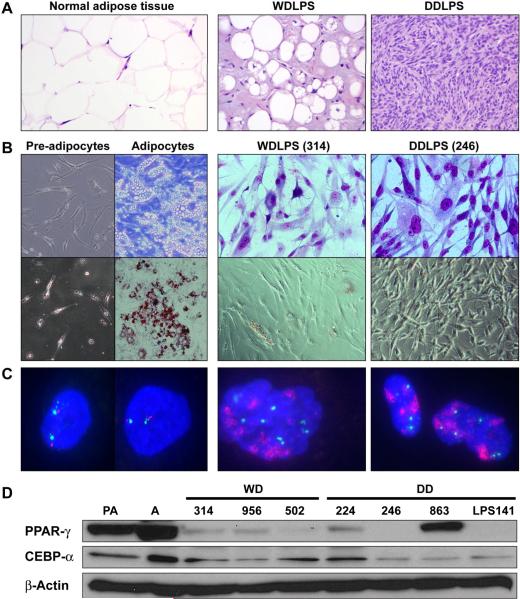
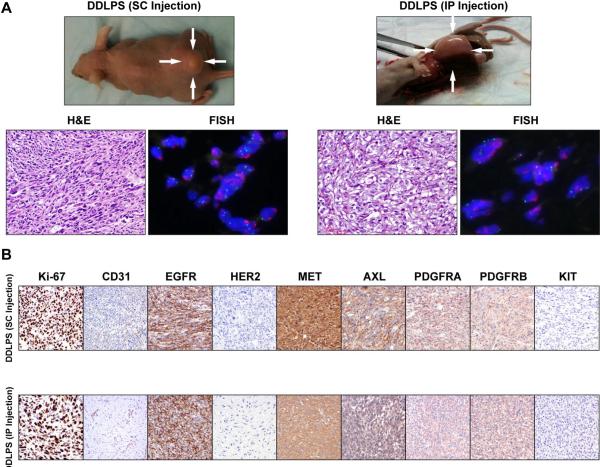
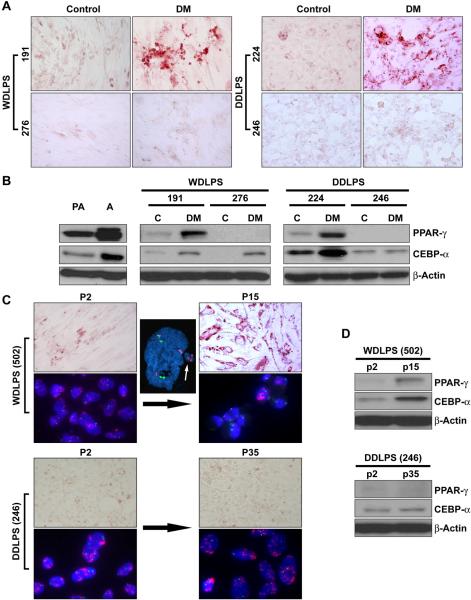
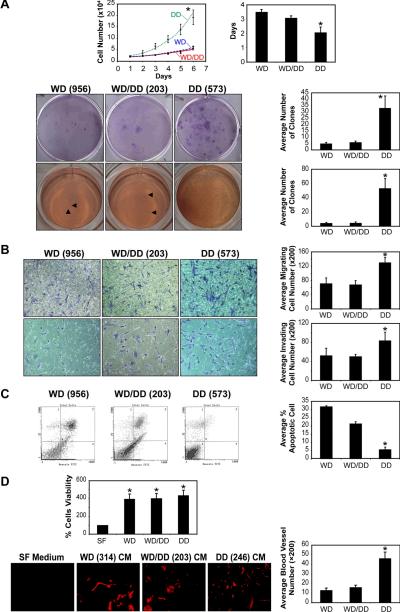
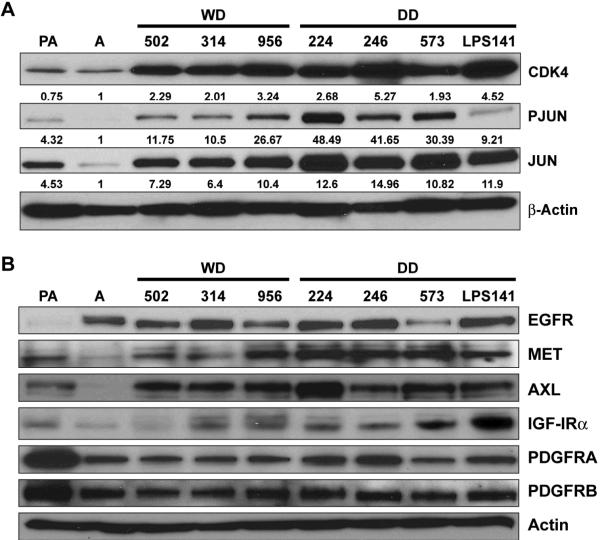
Therapeutic progress in well-differentiated/dedifferentiated liposarcoma (WDLPS/DDLPS) is hampered by lack of relevant experimental models, thereby limiting comprehensive molecularly based investigations. Our goal is to bridge this experimental gap by establishing and characterizing an in vitro/in vivo model useful for examining WDLPS/DDLPS molecular pathogenesis and also therapeutic screening and testing. WDLPS/DDLPS cells were isolated from freshly resected human surgical specimens and were phenotypically and molecularly characterized. MDM2 amplification was determined via FISH analysis. Adipogenic differentiation was evaluated using Oil Red O staining and western blotting (WB). Tyrosine kinase receptors' (TKRs) expression in pre-adipocytes, adipocytes, WDLPS, and DDLPS cells was determined via western blot analysis. SCID mouse xenograft growth was assessed after subcutaneous and/or intraperitoneal tumor cell injection. There was enhanced proliferation, migration, invasion, survival, and pro-angiogenic capacity in DDLPS cells vs WDLPS cells. DDLPS cells formed tumors in SCID mice whereas WDLPS did not. WDLPS/DDLPS cells, especially those that exhibited baseline PPARγ expression, partially retained terminal adipogenic differentiation capacity. MDM2 amplification was found in all WDLPS/DDLPS cell strains, CDK4 overexpression was observed in LPS cells as compared with normal adipocytes, and enhanced JUN expression and phosphorylation was seen in DDLPS cells as compared with WDLPS cells. The TKRs: MET, AXL, KIT, and IGF-1R were overexpressed in LPS cells vs normal adipocytes and pre-adipocytes. In conclusion, these newly established cellular and xenograft models can facilitate investigation of liposarcomagenesis, dedifferentiation, and tumor progression. Further studies of the molecular deregulations so identified may lead to improved therapeutic strategies for patients afflicted by these unfavorable malignancies.
去分化/未分化脂肪肉瘤(WDLPS/DDLPS)的治疗进展受到缺乏相关实验模型的阻碍,从而限制了全面的基于分子的研究。我们的目标是通过建立和表征一种体外/体内模型来弥合这一实验差距,该模型可用于研究 WDLPS/DDLPS 的分子发病机制,以及治疗筛选和测试。从新鲜切除的人类手术标本中分离出 WDLPS/DDLPS 细胞,并对其进行表型和分子特征分析。通过 FISH 分析确定 MDM2 扩增。通过油红 O 染色和 Western blot(WB)评估脂肪生成分化。通过 Western blot 分析确定前脂肪细胞、脂肪细胞、WDLPS 和 DDLPS 细胞中酪氨酸激酶受体(TKRs)的表达。在皮下和/或腹腔注射肿瘤细胞后评估 SCID 小鼠异种移植物生长情况。与 WDLPS 细胞相比,DDLPS 细胞表现出增强的增殖、迁移、侵袭、存活和促血管生成能力。DDLPS 细胞在 SCID 小鼠中形成肿瘤,而 WDLPS 则没有。WDLPS/DDLPS 细胞,尤其是那些表现出基础 PPARγ 表达的细胞,部分保留了终末脂肪生成分化能力。在所有 WDLPS/DDLPS 细胞株中均发现 MDM2 扩增,与正常脂肪细胞相比,LPS 细胞中 CDK4 过表达,与 WDLPS 细胞相比,DDLPS 细胞中 JUN 表达和磷酸化增强。在 LPS 细胞中,TKRs:MET、AXL、KIT 和 IGF-1R 的表达高于正常脂肪细胞和前脂肪细胞。总之,这些新建立的细胞和异种移植模型可以促进脂肪肉瘤发生、去分化和肿瘤进展的研究。对如此确定的分子失调的进一步研究可能会为受这些不良恶性肿瘤影响的患者带来更好的治疗策略。