Department of Neurosciences, Medical University of South Carolina, 96 Jonathan Lucas Street, Charleston, South Carolina 29425, USA.
J Endocrinol. 2011 Feb;208(2):171-82. doi: 10.1677/JOE-10-0338. Epub 2010 Nov 10.
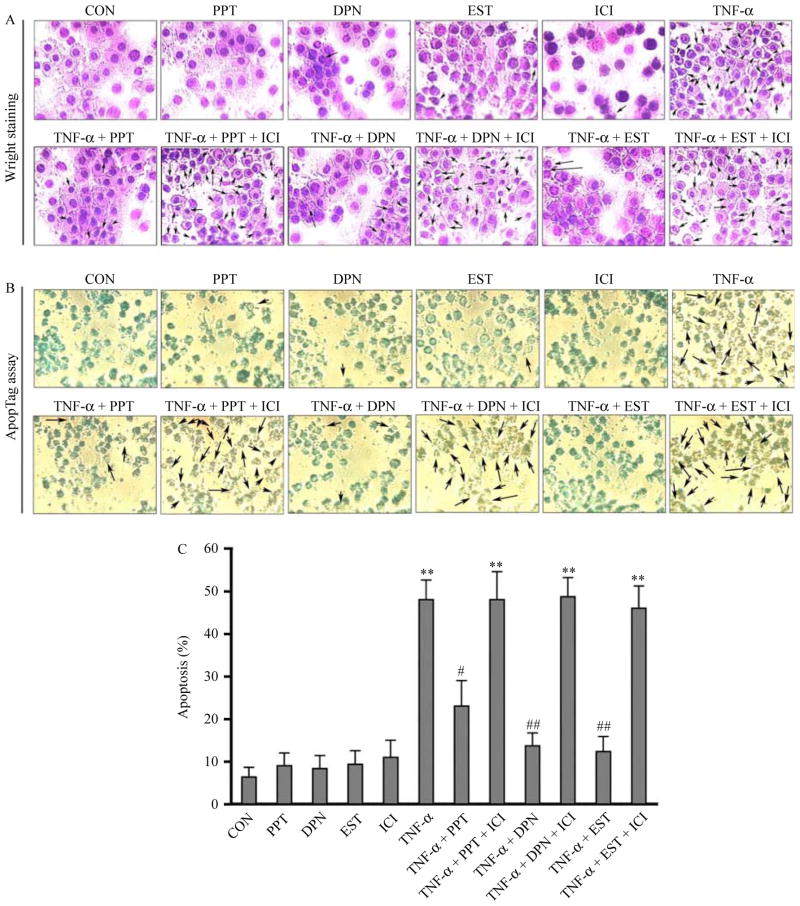
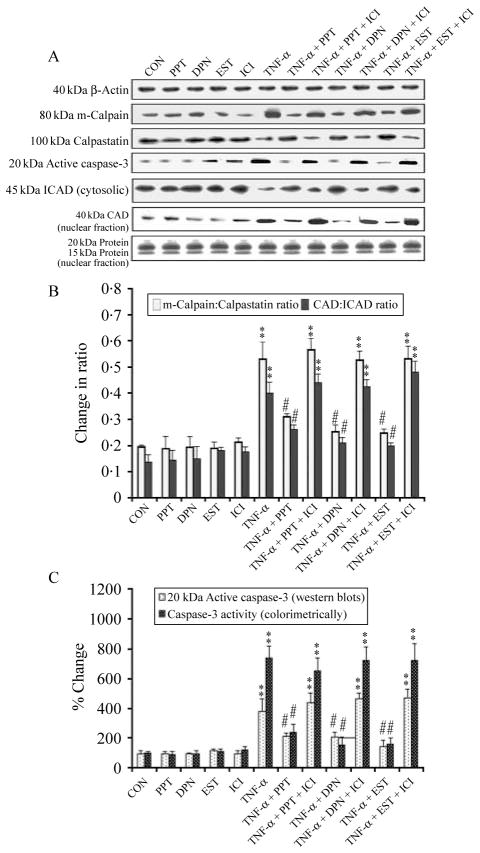
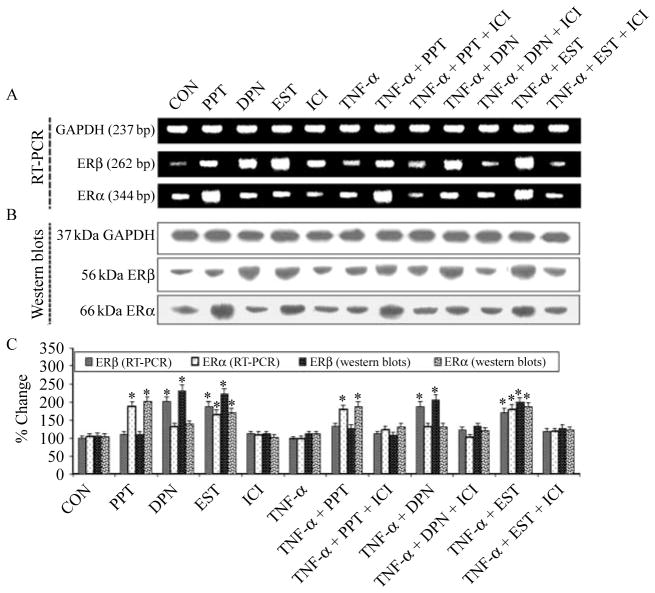
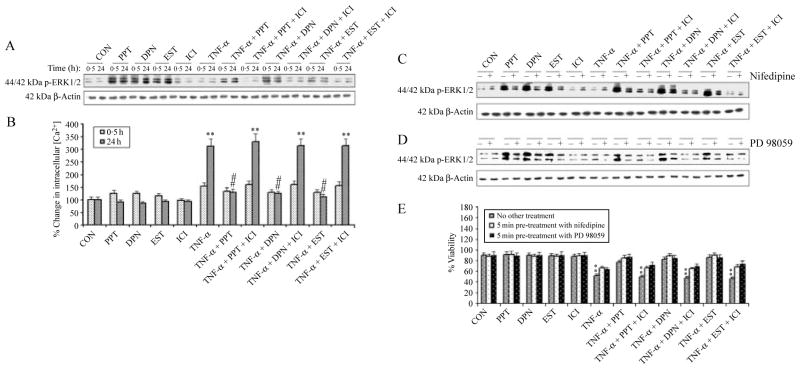
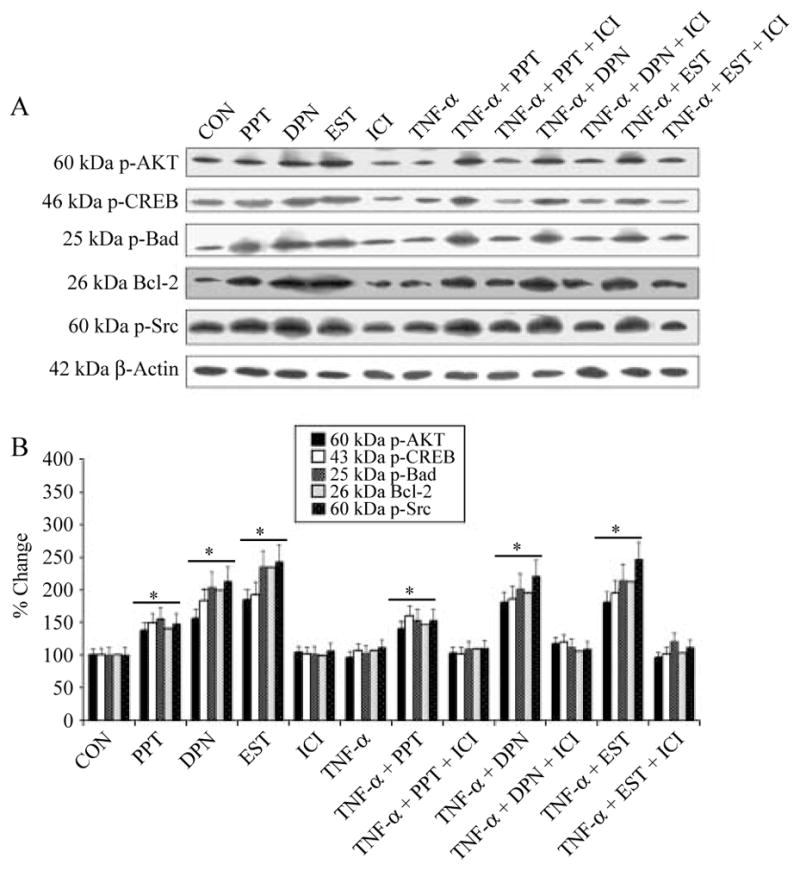
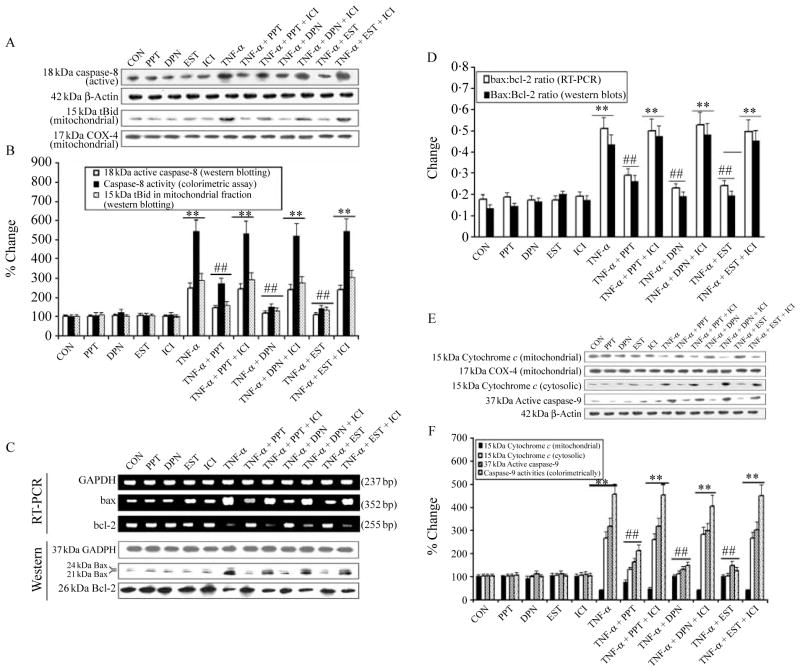
Tumor necrosis factor-alpha (TNF-α) may cause apoptosis and inflammation in amyotrophic lateral sclerosis (ALS) and spinal cord injury (SCI). Recent studies suggest that estrogen (EST) provides neuroprotection against SCI. We tested whether 1,3,5-tris (4-hydroxyphenyl)-4-propyl-1H-pyrazole (PPT) (EST receptor alpha (ERα) agonist), 2,3-bis (4-hydroxyphenyl) propionitrile (DPN) (EST receptor beta (ERβ) agonist), or EST itself would prevent apoptosis in VSC4.1 motoneurons following exposure to TNF-α. Cells were exposed to TNF-α and 15 min later treated with PPT, DPN, or EST. Posttreatment with 50 nM PPT, 50 nM DPN, or 150 nM EST prevented cell death in VSC4.1 motoneurons. Treatment of VSC4.1 motoneurons with PPT, DPN, or EST induced overexpression of ERα, ERβ, or both, which contributed to neuroprotection by upregulating expression of anti-apoptotic proteins (p-AKT, p-CREB, Bcl-2, and p-Src). Our analyses also revealed that EST agonists and EST increased phosphorylation of extracellular signal-regulated kinase (ERK). The L-type Ca(2+) channel inhibitor, nifedipine (10 μM), partially inhibited EST agonist and EST-induced increase in phosphorylated ERK expression. The mitogen-activated protein kinase inhibitor, PD98059 (5 μM), partially prevented ER agonists and EST from providing neuroprotection to TNF-α toxicity. Presence of the nuclear ER antagonist, ICI 182 780 (10 μM), blocked the neuroprotection provided by all three ER agonists tested. Taken together, our data indicate that both ERα and ERβ contribute to PPT, DPN, or EST-mediated neuroprotection with similar signaling profiles. Our data strongly imply that PPT, DPN, or EST can be used as effective neuroprotective agents to attenuate motoneuron death in ALS and SCI.
肿瘤坏死因子-α(TNF-α)可能导致肌萎缩侧索硬化症(ALS)和脊髓损伤(SCI)中的细胞凋亡和炎症。最近的研究表明,雌激素(EST)提供对 SCI 的神经保护作用。我们测试了 1,3,5-三(4-羟苯基)-4-丙基-1H-吡唑(PPT)(EST 受体 α(ERα)激动剂)、2,3-双(4-羟苯基)丙腈(DPN)(EST 受体 β(ERβ)激动剂)或 EST 本身是否会防止 TNF-α 暴露后 VSC4.1 运动神经元的凋亡。将细胞暴露于 TNF-α 中,15 分钟后用 PPT、DPN 或 EST 处理。用 50 nM PPT、50 nM DPN 或 150 nM EST 处理后可防止 VSC4.1 运动神经元的细胞死亡。用 PPT、DPN 或 EST 处理 VSC4.1 运动神经元可诱导 ERα、ERβ 或两者的过表达,这有助于通过上调抗凋亡蛋白(p-AKT、p-CREB、Bcl-2 和 p-Src)的表达来提供神经保护作用。我们的分析还表明,EST 激动剂和 EST 增加细胞外信号调节激酶(ERK)的磷酸化。L 型钙(Ca2+)通道抑制剂硝苯地平(10 μM)部分抑制了 EST 激动剂和 EST 诱导的 ERK 表达磷酸化的增加。丝裂原活化蛋白激酶抑制剂 PD98059(5 μM)部分阻止 ER 激动剂和 EST 为 TNF-α 毒性提供神经保护作用。核 ER 拮抗剂 ICI 182780(10 μM)的存在阻断了所有三种经测试的 ER 激动剂提供的神经保护作用。总之,我们的数据表明,ERα 和 ERβ 都有助于 PPT、DPN 或 EST 介导的神经保护作用,具有相似的信号转导谱。我们的数据强烈表明,PPT、DPN 或 EST 可作为有效的神经保护剂,减轻 ALS 和 SCI 中的运动神经元死亡。