Laboratory of Vascular Oncology, Institute for Cancer Research and Treatment, Candiolo, Torino, Italy.
J Cell Mol Med. 2011 Oct;15(10):2200-15. doi: 10.1111/j.1582-4934.2010.01209.x.
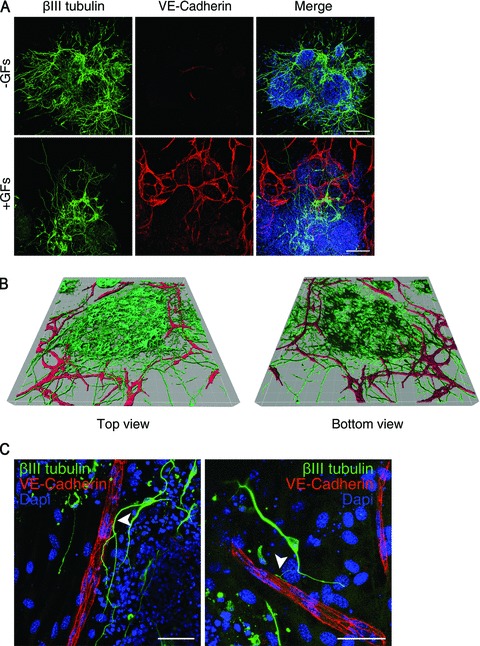
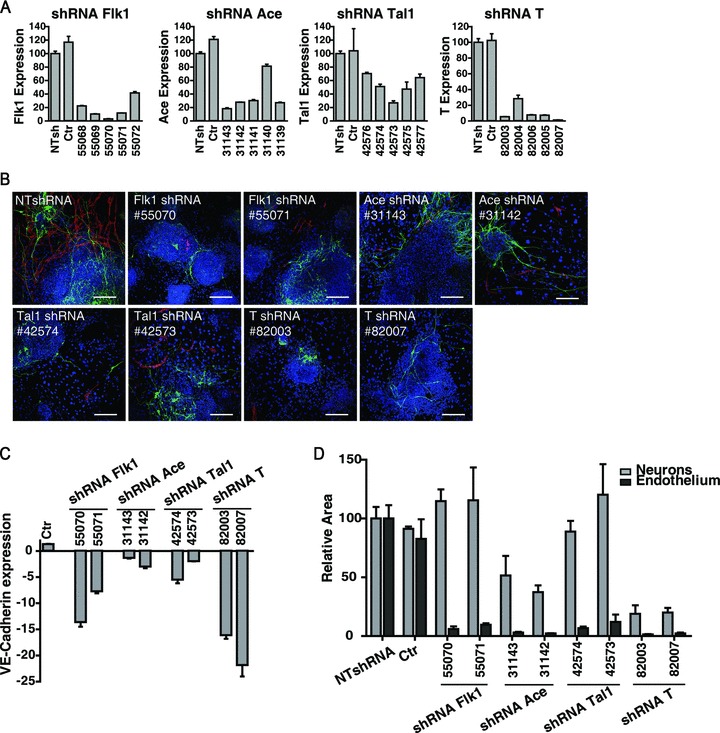
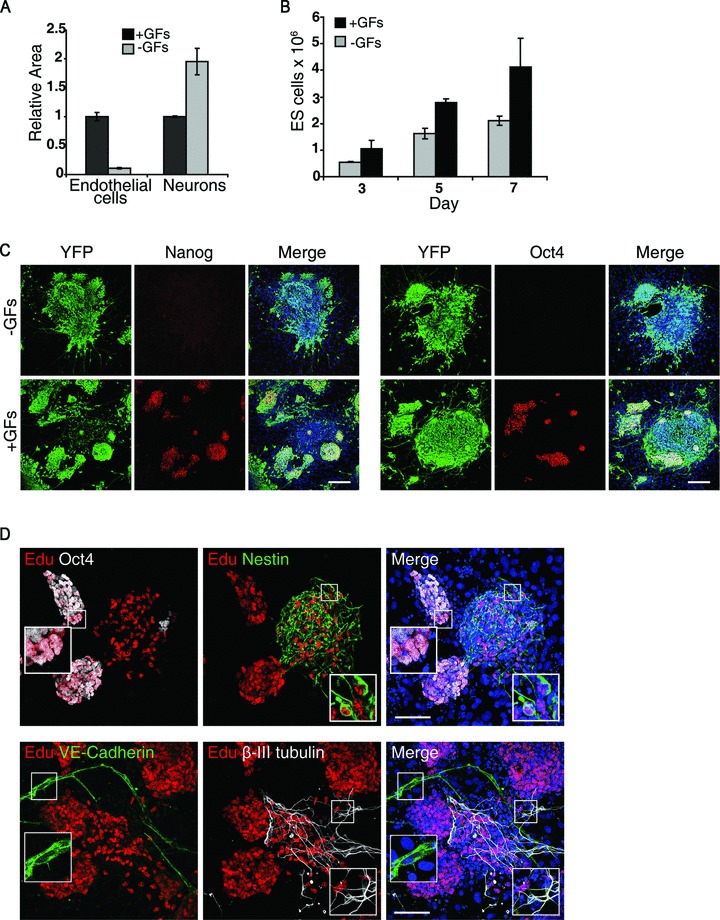
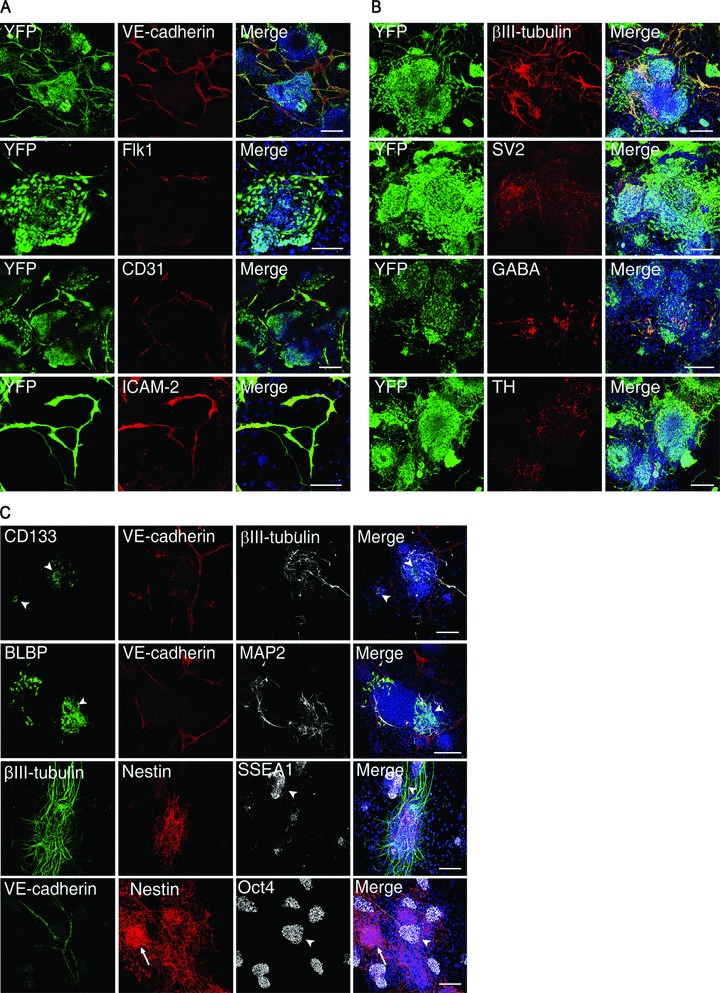
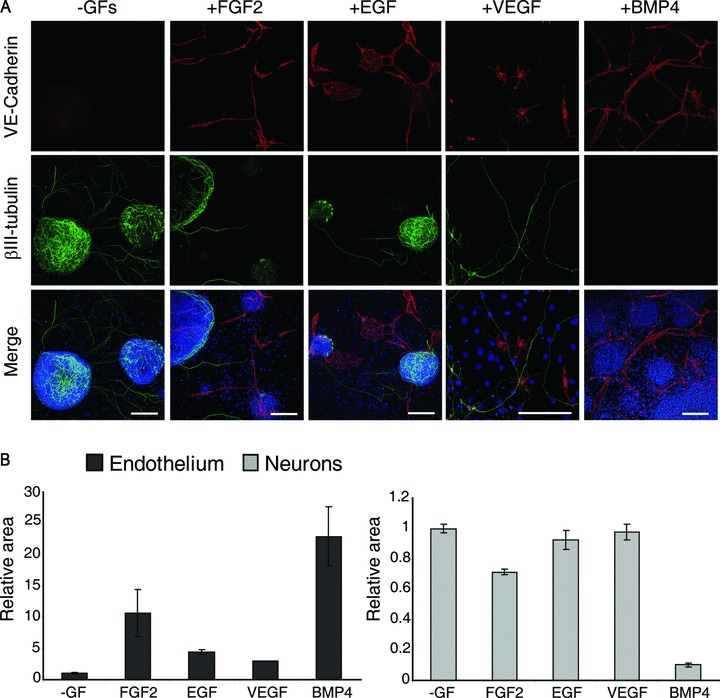
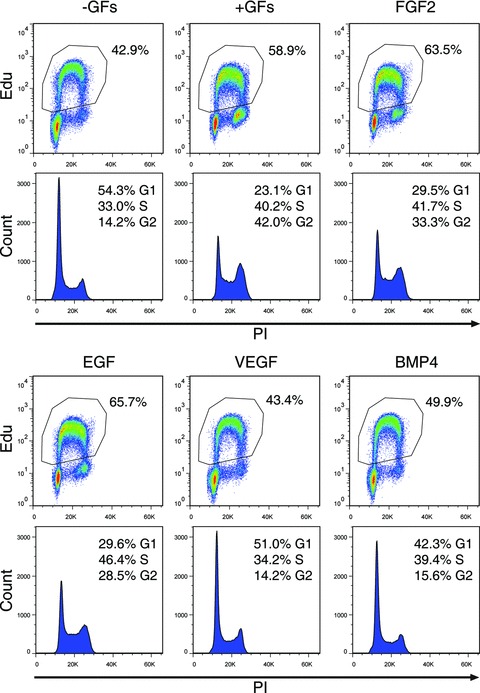
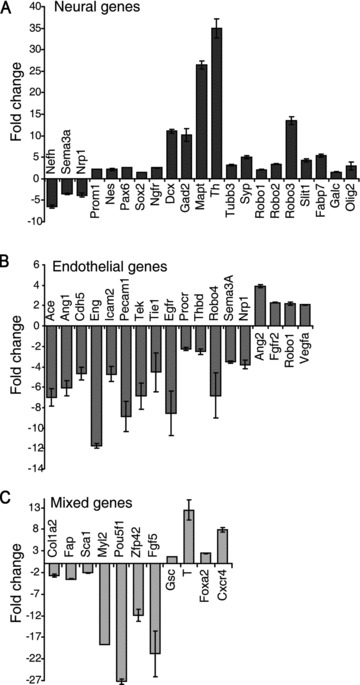
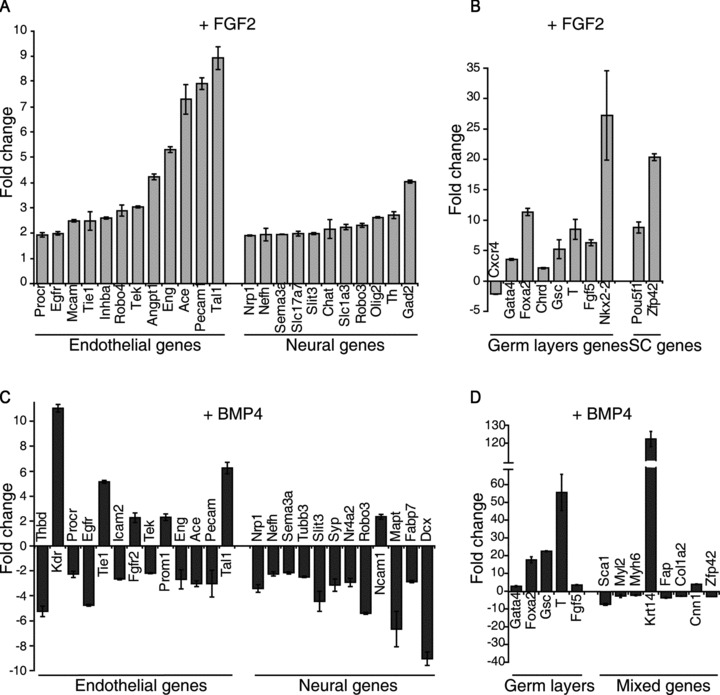
The connections existing between vessels and nerves go beyond the structural architecture of vascular and nervous systems to comprise cell fate determination. The analysis of functional/molecular links that interconnect endothelial and neural commitments requires a model in which the two differentiation programs take place at the same time in an artificial controllable environment. To this regard, this work presents an in vitro model to differentiate embryonic stem (ES) cells simultaneously into mature neurons and endothelial cells. Murine ES cells are differentiated within an artificial environment composed of PA6 stromal cells and a serum-free medium. Upon these basal culture conditions ES cells preferentially differentiate into neurons. The addition of basic fibroblast growth factor (FGF2) to the medium allows the simultaneous maturation of neurons and endothelial cells, whereas bone morphogenetic protein (BMP)4 drives endothelial differentiation to the disadvantage of neural commitment. The responsiveness of the system to exogenous cytokines was confirmed by genes expression analysis that revealed a significant up-regulation of endothelial genes in presence of FGF2 and a massive down-regulation of the neural markers in response to BMP4. Furthermore, the role played by single genes in determining endothelial and neural fate can be easily explored by knocking down the expression of the target gene with lentiviruses carrying the corresponding shRNA sequence. The possibility to address the neural and the endothelial fate separately or simultaneously by exogenous stimuli combined with an efficient gene silencing strategy make this model an optimal tool to identify environmental signals and genes pathways involved in both endothelial and neural specification.
血管和神经之间的联系不仅存在于血管和神经系统的结构架构中,还涉及细胞命运的决定。分析内皮细胞和神经细胞之间的功能/分子联系需要一种模型,在这种模型中,两个分化程序同时在一个人工可控的环境中进行。为此,本工作提出了一种体外模型,可同时将胚胎干细胞(ES 细胞)分化为成熟神经元和内皮细胞。在由 PA6 基质细胞和无血清培养基组成的人工环境中对鼠 ES 细胞进行分化。在这些基本培养条件下,ES 细胞优先分化为神经元。向培养基中添加碱性成纤维细胞生长因子(FGF2)可同时使神经元和内皮细胞成熟,而骨形态发生蛋白 4(BMP4)则促进内皮细胞分化,不利于神经分化。通过基因表达分析证实了该系统对外源细胞因子的反应,结果表明,FGF2 存在时内皮基因显著上调,而 BMP4 则大量下调神经标记物。此外,通过携带相应 shRNA 序列的慢病毒敲低靶基因,可以很容易地探索单个基因在决定内皮和神经命运中的作用。通过外源刺激分别或同时处理神经和内皮命运的可能性,结合有效的基因沉默策略,使该模型成为鉴定参与内皮和神经特化的环境信号和基因途径的理想工具。