Department of Bioengineering, Stanford University, James H. Clark Center, 318 Campus Drive, Stanford, CA 94305-5450, USA.
Am J Sports Med. 2011 Mar;39(3):590-8. doi: 10.1177/0363546510384233. Epub 2010 Nov 12.
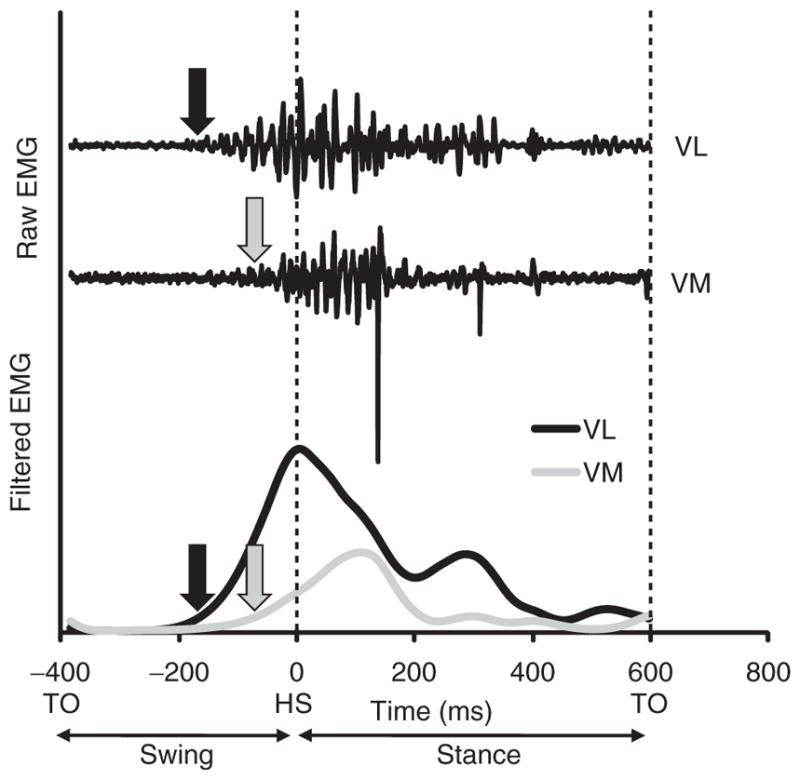
Delayed onset of vastus medialis (VM) activity compared with vastus lateralis activity is a reported cause for patellofemoral pain. The delayed onset of VM activity in patellofemoral pain patients likely causes an imbalance in muscle forces and lateral maltracking of the patella; however, evidence relating VM activation delay to patellar maltracking is sparse. The aim of this study was to investigate the relationship between VM activation delay and patellar maltracking measures in pain-free controls and patellofemoral pain patients.
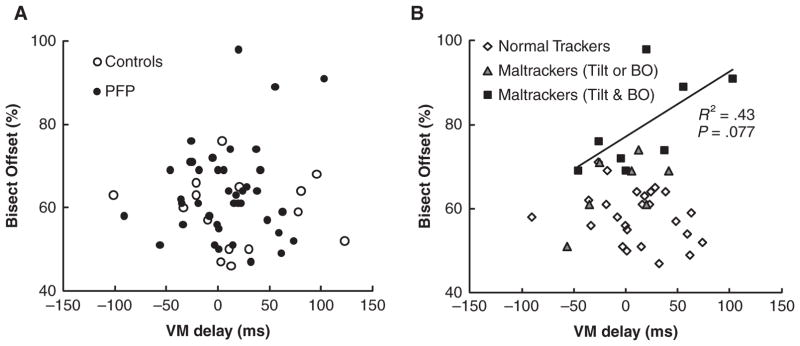
Patellar tilt and bisect offset, measures of patellar tracking, correlate with VM activation delay in patellofemoral pain patients classified as maltrackers.
Case control study; Level of evidence, 3.
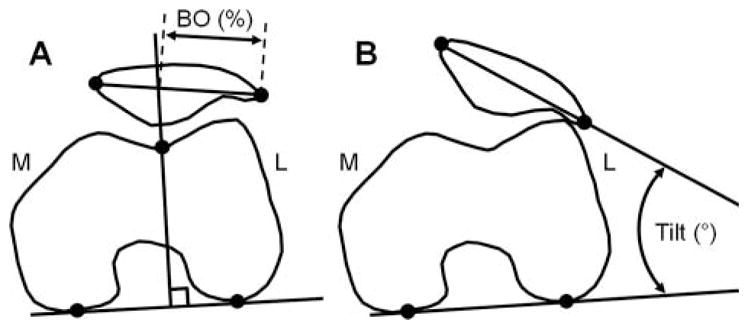
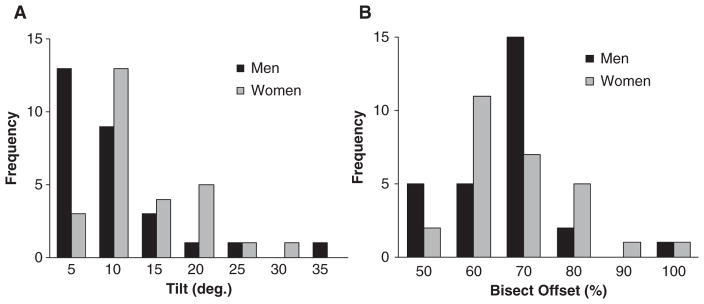
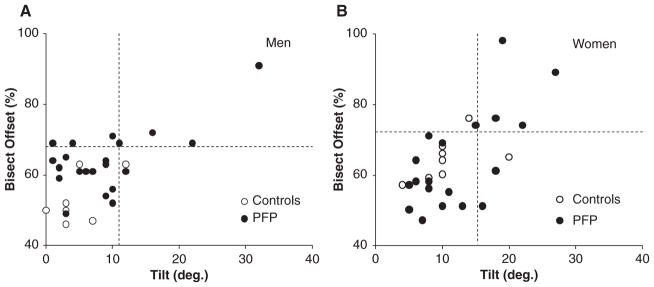
Vasti muscle activations were recorded in pain-free (n = 15) and patellofemoral pain (n = 40) participants during walking and jogging. All participants were scanned in an open-configuration magnetic resonance scanner in an upright weightbearing position to acquire the position of the patella with respect to the femur. Patellar tilt and bisect offset were measured, and patellofemoral pain participants were classified into normal tracking and maltracking groups.
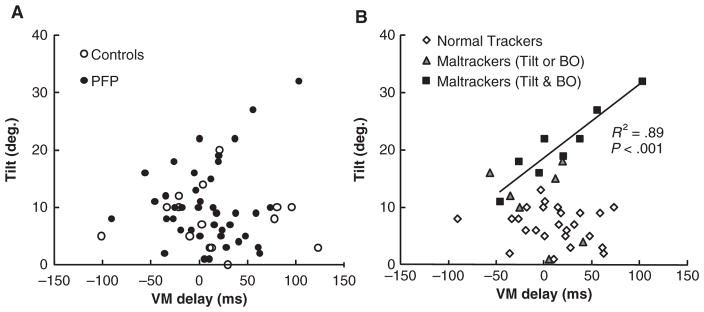
Correlations between VM activation delay and patellar maltracking measures were statistically significant in only the patellofemoral pain participants classified as maltrackers with both abnormal tilt and abnormal bisect offset (R(2) = .89, P < .001, with patellar tilt during walking; R(2) = .75, P = .012, with bisect offset during jogging). There were no differences between the means of activation delays in pain-free and all patellofemoral pain participants during walking (P = .516) or jogging (P = .731).
There was a relationship between VM activation delay and patellar maltracking in the subgroup of patellofemoral pain participants classified as maltrackers with both abnormal tilt and abnormal bisect offset.
A clinical intervention such as VM retraining may be effective in only a subset of patellofemoral pain participants-namely, those with excessive tilt and excessive bisect offset measures. The results highlight the importance of appropriate classification of patellofemoral pain patients before selection of a clinical intervention.
与股外侧肌相比,股内侧肌(VM)活动延迟是髌股疼痛的一个已知原因。髌股疼痛患者的 VM 活动延迟可能导致肌肉力量失衡和髌骨外侧轨迹不良;然而,与 VM 激活延迟与髌骨轨迹不良相关的证据很少。本研究旨在探讨无痛对照组和髌股疼痛患者中 VM 激活延迟与髌骨轨迹不良测量值之间的关系。
髌股倾斜和等分偏移,髌骨轨迹的测量值,与被归类为轨迹不良的髌股疼痛患者的 VM 激活延迟相关。
病例对照研究;证据水平,3 级。
在步行和慢跑过程中,记录无痛(n=15)和髌股疼痛(n=40)患者的 vasti 肌肉激活。所有参与者均在直立承重位的开放式磁共振扫描仪中进行扫描,以获取髌骨相对于股骨的位置。测量髌股倾斜和等分偏移,并将髌股疼痛患者分为正常轨迹和轨迹不良组。
仅在被归类为轨迹不良的髌股疼痛患者中,VM 激活延迟与髌骨轨迹不良测量值之间的相关性具有统计学意义,这些患者的髌股倾斜和等分偏移均异常(R2=0.89,P<.001,在步行时的髌股倾斜;R2=0.75,P=.012,在慢跑时的等分偏移)。在步行(P=.516)或慢跑(P=.731)时,无痛和所有髌股疼痛患者的激活延迟均值之间无差异。
在被归类为轨迹不良的髌股疼痛患者亚组中,VM 激活延迟与髌骨轨迹不良之间存在相关性,这些患者的髌股倾斜和等分偏移均异常。
VM 再训练等临床干预措施可能仅对一部分髌股疼痛患者有效,即那些髌股倾斜和等分偏移测量值过大的患者。结果强调了在选择临床干预措施之前,对髌股疼痛患者进行适当分类的重要性。