Park Sung Hoon, Kim Sun-Jae, Seo Seong-Gyu, Jung Sang-Chul
Nanoscale Res Lett. 2010 Jul 18;5(10):1627-1632. doi: 10.1007/s11671-010-9686-y.
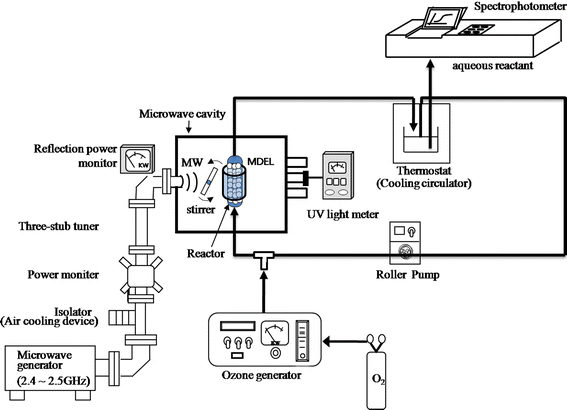
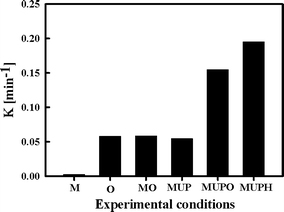
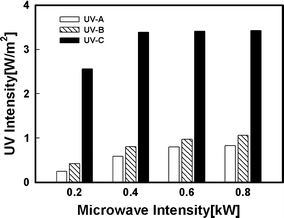
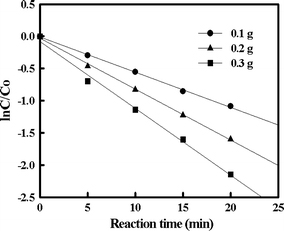
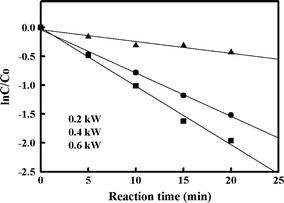
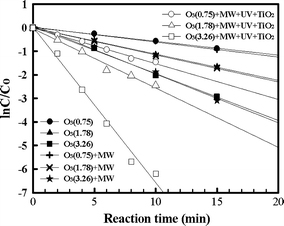
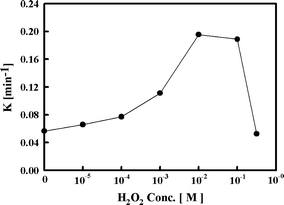
In this study, a microwave/UV/TiO(2)/ozone/H(2)O(2) hybrid process system, in which various techniques that have been used for water treatment are combined, is evaluated to develop an advanced technology to treat non-biodegradable water pollutants efficiently. In particular, the objective of this study is to develop a novel advanced oxidation process that overcomes the limitations of existing single-process water treatment methods by adding microwave irradiation to maximize the formation of active intermediate products, e.g., OH radicals, with the aid of UV irradiation by microwave discharge electrodeless lamp, photo-catalysts, and auxiliary oxidants. The results of photo-catalytic degradation of BTB showed that the decomposition rate increased with the TiO(2) particle dosages and microwave intensity. When an auxiliary oxidant such as ozone or hydrogen peroxide was added to the microwave-assisted photo-catalysis, however, a synergy effect that enhanced the reaction rate considerably was observed.
在本研究中,评估了一种微波/紫外线/二氧化钛/臭氧/过氧化氢混合处理系统,该系统结合了各种已用于水处理的技术,以开发一种高效处理难生物降解水污染物的先进技术。具体而言,本研究的目的是开发一种新型高级氧化工艺,通过添加微波辐射,借助微波放电无电极灯的紫外线辐射、光催化剂和辅助氧化剂,克服现有单一工艺水处理方法的局限性,最大限度地形成活性中间产物,如羟基自由基。溴百里酚蓝的光催化降解结果表明,分解速率随二氧化钛颗粒剂量和微波强度的增加而提高。然而,当向微波辅助光催化中添加臭氧或过氧化氢等辅助氧化剂时,观察到了显著提高反应速率的协同效应。