Department of Pediatric Oncology, Dana-Farber Cancer Institute, Harvard Medical School, Boston, MA, USA.
Leukemia. 2011 Mar;25(3):506-14. doi: 10.1038/leu.2010.280. Epub 2010 Nov 16.
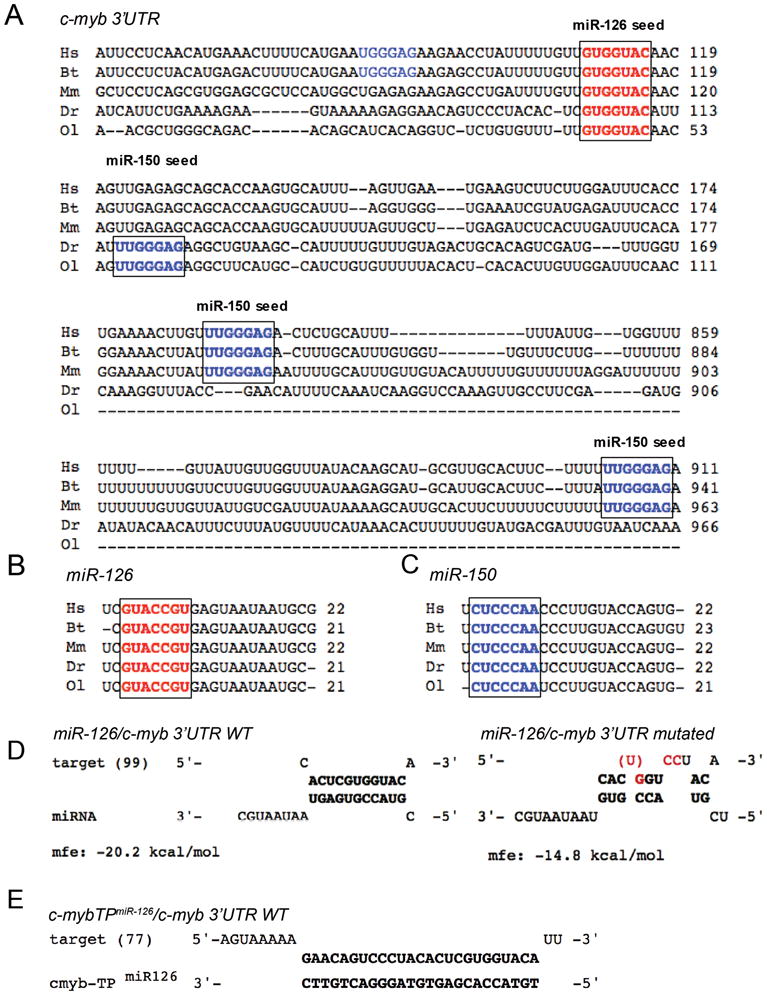
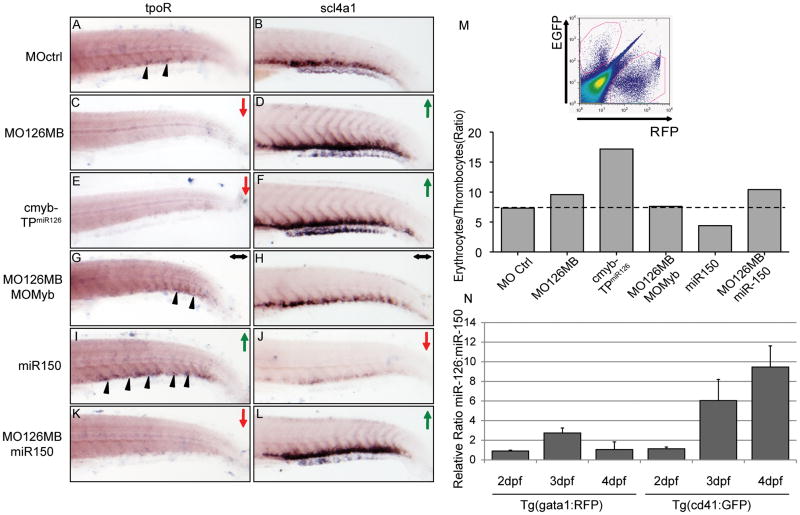
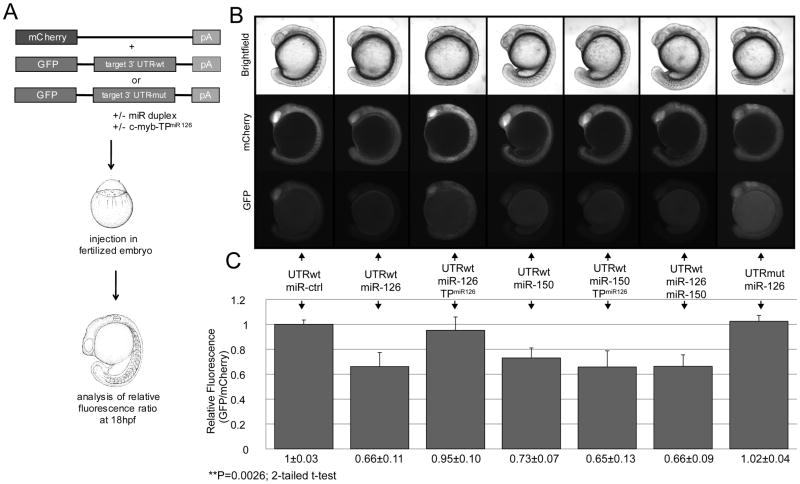
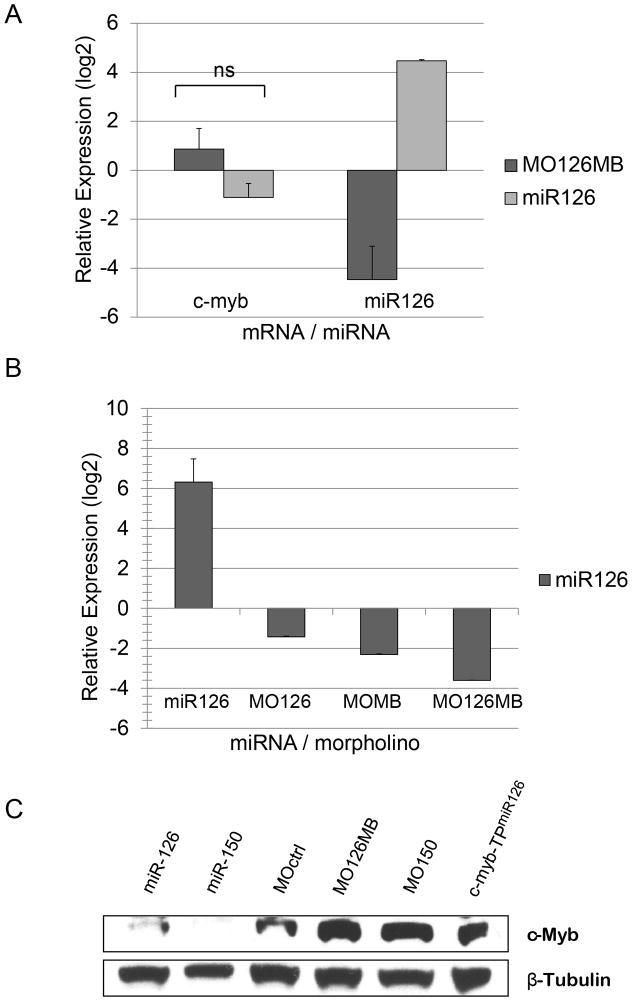
Precise regulatory mechanisms are required to appropriately modulate the cellular levels of transcription factors controlling cell fate decisions during blood cell development. In this study, we show that miR-126 is a novel physiological regulator of the proto-oncogene c-myb during definitive hematopoiesis. We show that knockdown of miR-126 results in increased c-Myb levels and promotes erythropoiesis at the expense of thrombopoiesis in vivo. We further provide evidence that specification of thrombocyte versus erythrocyte cell lineages is altered by the concerted activities of the microRNAs (miRNAs) miR-126 and miR-150. Both miRNAs are required but not sufficient individually to precisely regulate the cell fate decision between erythroid and megakaryocytic lineages during definitive hematopoiesis in vivo. These results support the notion that miRNAs not only function to provide precision to developmental programs but also are essential determinants in the control of variable potential functions of a single gene during hematopoiesis.
精确的调控机制对于适当调节控制血细胞发育过程中细胞命运决定的转录因子的细胞水平是必需的。在这项研究中,我们表明 miR-126 是原癌基因 c-myb 在确定性造血过程中的一种新的生理调节剂。我们表明,miR-126 的敲低导致 c-Myb 水平升高,并促进体内红细胞生成而牺牲血小板生成。我们进一步提供证据表明,血小板与红细胞谱系的特化是由 microRNAs (miRNAs) miR-126 和 miR-150 的协同作用改变的。这两种 miRNA 都是必需的,但单独使用不足以在体内确定性造血过程中精确调节红细胞和巨核细胞谱系之间的细胞命运决定。这些结果支持这样一种观点,即 miRNA 不仅有助于为发育程序提供精度,而且在造血过程中控制单个基因的可变潜在功能方面也是必不可少的决定因素。