Department of Microbiology and Immunology, Mucosal Immunobiology and Vaccine Center, Institute of Biomedicine, The University of Gothenburg, Gothenburg, Sweden.
PLoS Pathog. 2010 Nov 4;6(11):e1001179. doi: 10.1371/journal.ppat.1001179.
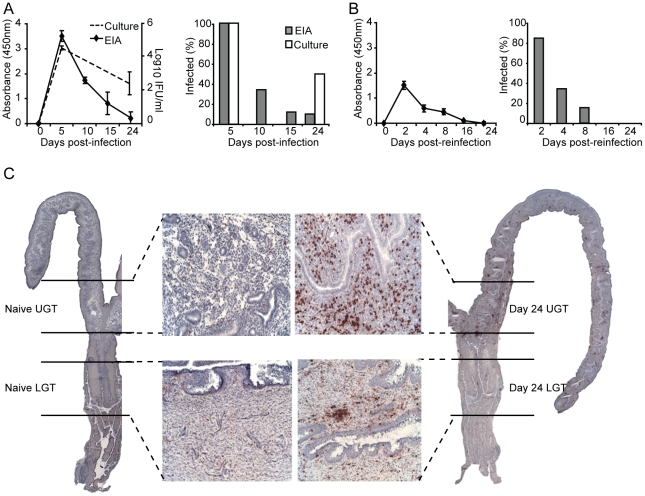
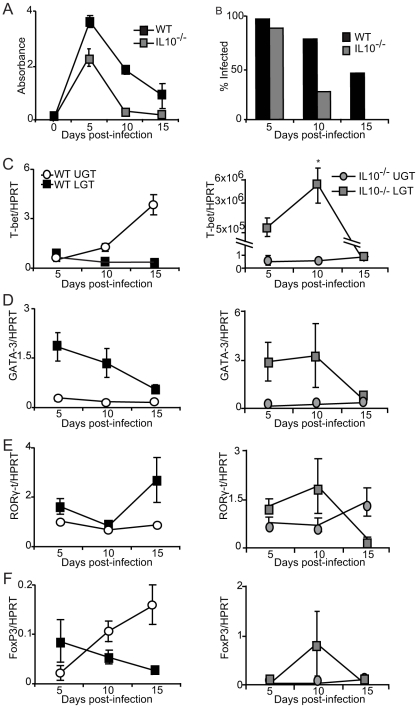
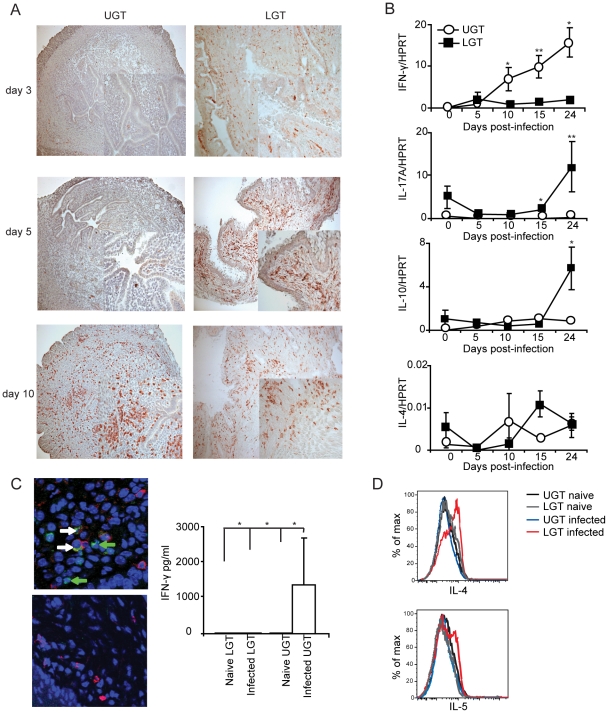
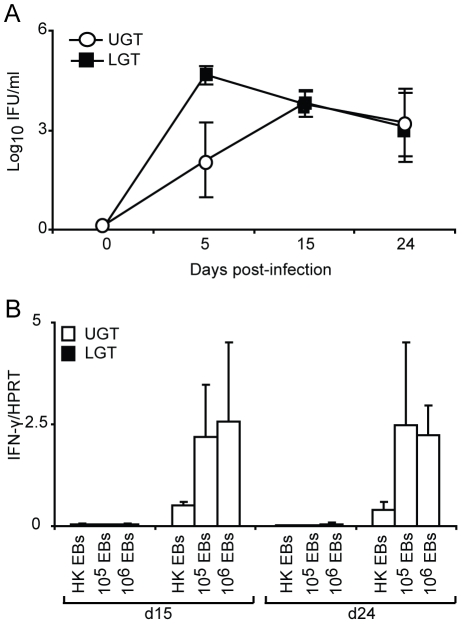
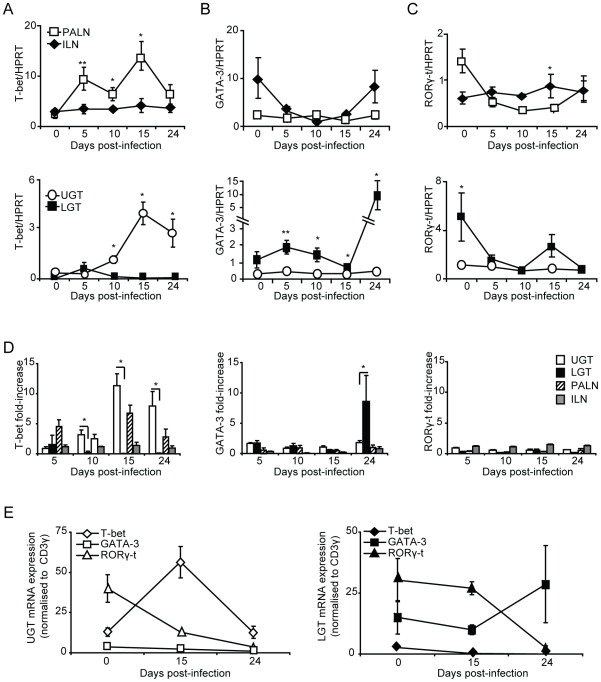
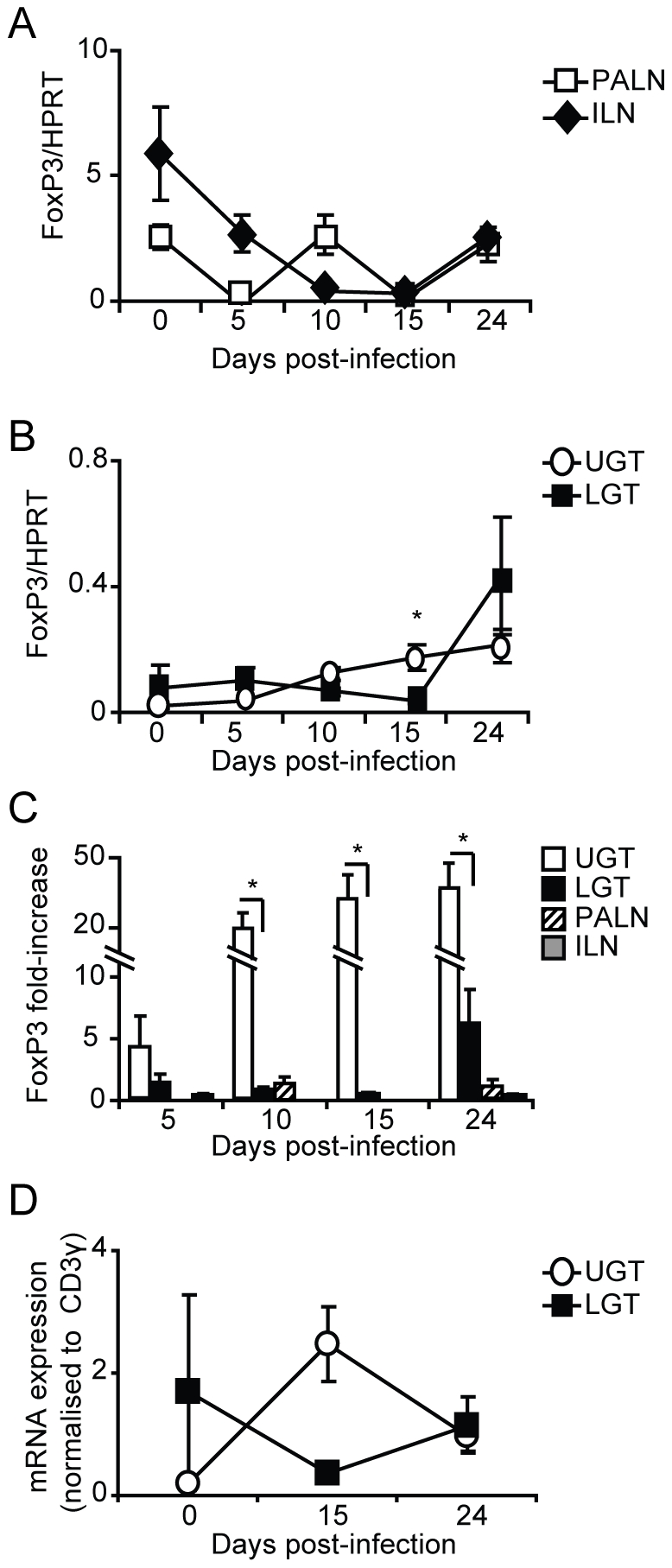
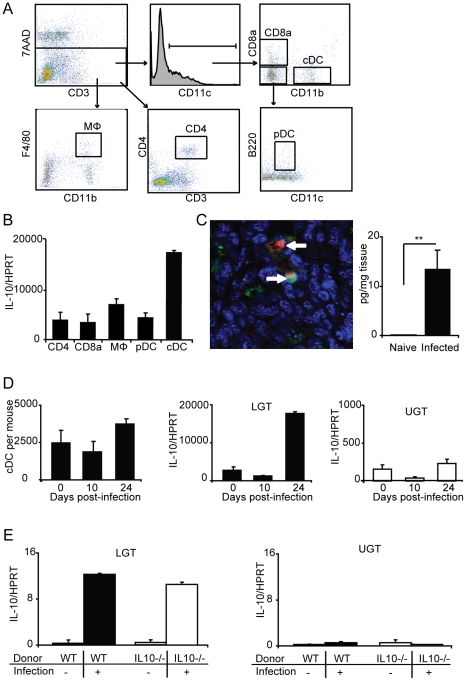
While a primary genital tract infection with C. trachomatis stimulates partial-protection against re-infection, it may also result in severe inflammation and tissue destruction. Here we have dissected whether functional compartments exist in the genital tract that restrict Th1-mediated protective immunity. Apart from the Th1-subset, little is known about the role of other CD4(+) T cell subsets in response to a genital tract chlamydial infection. Therefore, we investigated CD4(+) T cell subset differentiation in the genital tract using RT-PCR for expression of critical transcription factors and cytokines in the upper (UGT) and lower genital tract (LGT) of female C57BL/6 mice in response to C. trachomatis serovar D infection. We found that the Th1 subset dominated the UGT, as IFN-γ and T-bet mRNA expression were high, while GATA-3 was low following genital infection with C. trachomatis serovar D. By contrast, IL-10 and GATA-3 mRNA dominated the LGT, suggesting the presence of Th2 cells. These functional compartments also attracted regulatory T cells (Tregs) differently as increased FoxP3 mRNA expression was seen primarily in the UGT. Although IL-17A mRNA was somewhat up-regulated in the LGT, no significant change in RORγ-t mRNA expression was observed, suggesting no involvement of Th17 cells. The dichotomy between the LGT and UGT was maintained during infection by IL-10 because in IL-10-deficient mice the distinction between the two compartments was completely lost and a dramatic shift to the predominance of Th1 cells in the LGT occurred. Unexpectedly, the major source of IL-10 was CD11c(+) CD11b(+) DC, probably creating an anti-inflammatory privileged site in the LGT.
虽然生殖道初次感染沙眼衣原体可刺激部分免受再感染,但也可能导致严重的炎症和组织破坏。在这里,我们探讨了生殖道中是否存在限制 Th1 介导的保护性免疫的功能区室。除了 Th1 亚群外,对于其他 CD4+T 细胞亚群在生殖道沙眼衣原体感染中的作用知之甚少。因此,我们使用 RT-PCR 研究了生殖道中 CD4+T 细胞亚群的分化,以研究关键转录因子和细胞因子在 C57BL/6 雌性小鼠生殖道中的表达,以响应沙眼衣原体血清型 D 的感染。我们发现,Th1 亚群主导 UGT,因为 IFN-γ 和 T-bet mRNA 的表达较高,而 GATA-3 在生殖道感染沙眼衣原体血清型 D 后较低。相比之下,IL-10 和 GATA-3 mRNA 主导 LGT,表明存在 Th2 细胞。这些功能区室还吸引了不同的调节性 T 细胞(Tregs),因为 FoxP3 mRNA 的表达主要在 UGT 中增加。尽管 LGT 中的 IL-17A mRNA 略有上调,但 RORγ-t mRNA 的表达没有明显变化,表明 Th17 细胞没有参与。IL-10 感染期间 LGT 和 UGT 之间的这种二分法得以维持,因为在 IL-10 缺陷型小鼠中,这两个区室之间的区别完全消失,并且 LGT 中 Th1 细胞的优势明显增加。出乎意料的是,IL-10 的主要来源是 CD11c+CD11b+DC,可能在 LGT 中形成了一个抗炎特权部位。