University of Manchester, UK.
Clin Exp Immunol. 2011 Feb;163(2):178-88. doi: 10.1111/j.1365-2249.2010.04289.x. Epub 2010 Nov 19.
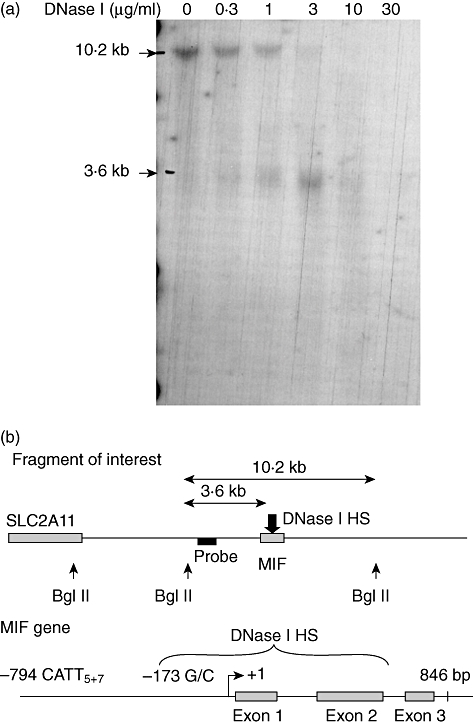
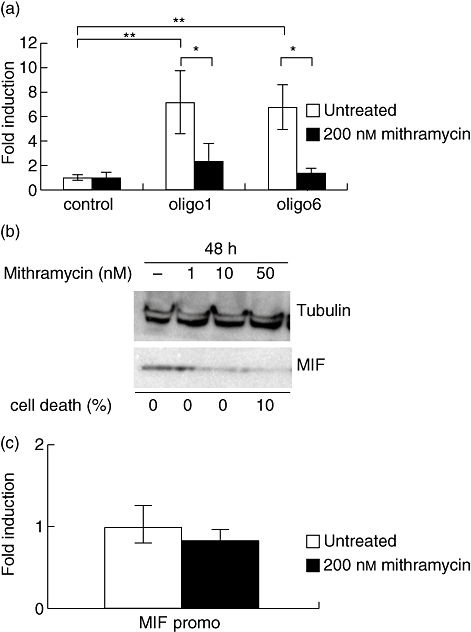
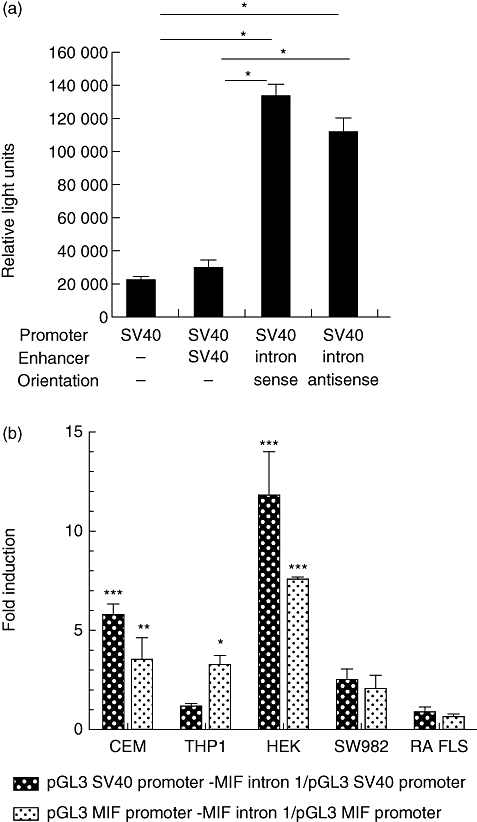
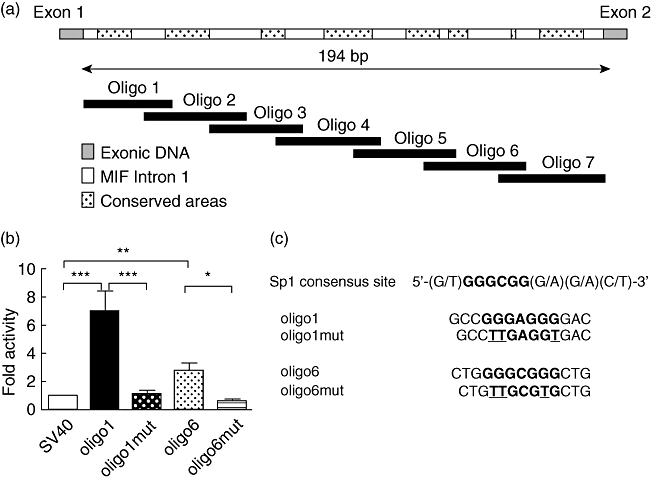
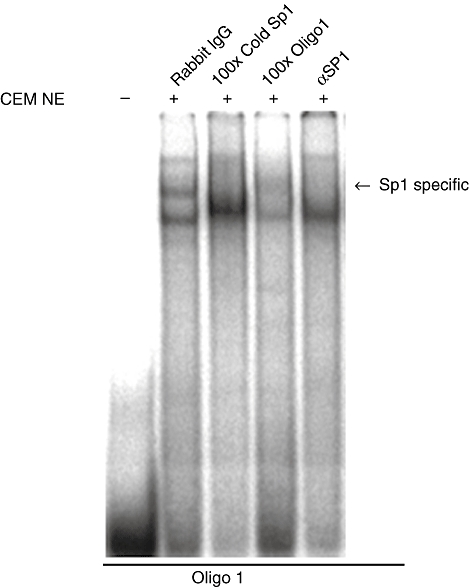
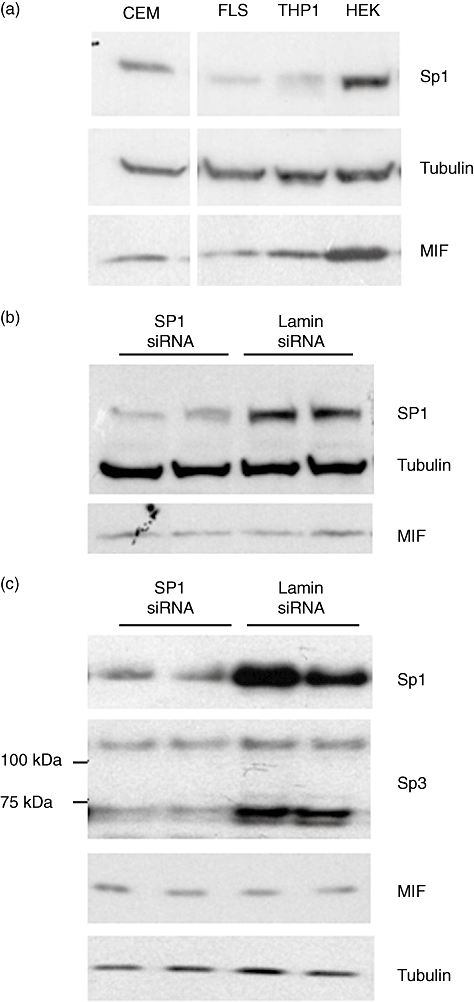
The aim of this study was to determine the genetic regulation of macrophage migration inhibitory factor (MIF). DNase I hypersensitivity was used to identify potential hypersensitive sites (HS) across the MIF gene locus. Reporter gene assays were performed in different human cell lines with constructs containing the native or mutated HS element. Following phylogenetic and transcription factor binding profiling, electrophoretic mobility shift assay (EMSA) and RNA interference were performed and the effects of incubation with mithramycin, an antibiotic that binds GC boxes, were also studied. An HS centred on the first intron of MIF was identified. The HS acted as an enhancer in human T lymphoblasts (CEMC7A), human embryonic kidney cells (HEK293T) and human monocytic cells (THP-1), but not in a fibroblast-like synoviocyte (FLS) cell line (SW982) or cultured FLS derived from rheumatoid arthritis (RA) patients. Two cis-elements within the first intron were found to be responsible for the enhancer activity. Mutation of the consensus Sp1 GC box on each cis-element abrogated enhancer activity and EMSA indicated Sp1 binding to one of the cis-elements contained in the intron. SiRNA knock-down of Sp1 alone or Sp1 and Sp3 together was incomplete and did not alter the enhancer activity. Mithramycin inhibited expression of MIF in CEMC7A cells. This effect was specific to the intronic enhancer and was not seen on the MIF promoter. These results identify a novel, cell type-specific enhancer of MIF. The enhancer appears to be driven by Sp1 or related Sp family members and is highly sensitive to inhibition via mithramycin.
本研究旨在确定巨噬细胞移动抑制因子(MIF)的遗传调控。使用 DNA 酶 I 超敏反应来鉴定 MIF 基因座上的潜在超敏位点(HS)。在不同的人细胞系中,用含有天然或突变 HS 元件的构建体进行报告基因测定。在进行系统发育和转录因子结合分析后,进行电泳迁移率变动分析(EMSA)和 RNA 干扰,并研究与结合 GC 盒的抗生素米托霉素孵育的影响。鉴定出以 MIF 第一个内含子为中心的 HS。该 HS 作为人 T 淋巴母细胞(CEMC7A)、人胚肾细胞(HEK293T)和人单核细胞(THP-1)的增强子,但在成纤维样滑膜细胞系(SW982)或源自类风湿关节炎(RA)患者的培养滑膜细胞中不起作用。发现第一个内含子内的两个顺式元件负责增强子活性。突变每个顺式元件上的共识 Sp1 GC 盒会使增强子活性丧失,EMSA 表明 Sp1 结合到内含子中包含的一个顺式元件上。Sp1 或 Sp1 和 Sp3 单独的 siRNA 敲低是不完全的,并且不会改变增强子活性。米托霉素抑制 CEMC7A 细胞中 MIF 的表达。这种作用是针对内含子增强子的,在 MIF 启动子上没有观察到。这些结果确定了 MIF 的一种新型、细胞类型特异性增强子。该增强子似乎由 Sp1 或相关 Sp 家族成员驱动,对米托霉素的抑制非常敏感。