Department of Medical Oncology, University of Torino Medical School, Institute for Cancer Research and Treatment, Candiolo, Italy.
BMC Cancer. 2010 Nov 18;10:631. doi: 10.1186/1471-2407-10-631.
Advanced biliary tract carcinomas (BTCs) have poor prognosis and limited therapeutic options. Therefore, it is crucial to combine standard therapies with molecular targeting. In this study EGFR, HER2, and their molecular transducers were analysed in terms of mutations, amplifications and over-expression in a BTC case series. Furthermore, we tested the efficacy of drugs targeting these molecules, as single agents or in combination with gemcitabine, the standard therapeutic agent against BTC.
Immunohistochemistry, FISH and mutational analysis were performed on 49 BTC samples of intrahepatic (ICCs), extrahepatic (ECCs), and gallbladder (GBCs) origin. The effect on cell proliferation of different EGFR/HER2 pathway inhibitors as single agents or in combination with gemcitabine was investigated on BTC cell lines. Western blot analyses were performed to investigate molecular mechanisms of targeted drugs.
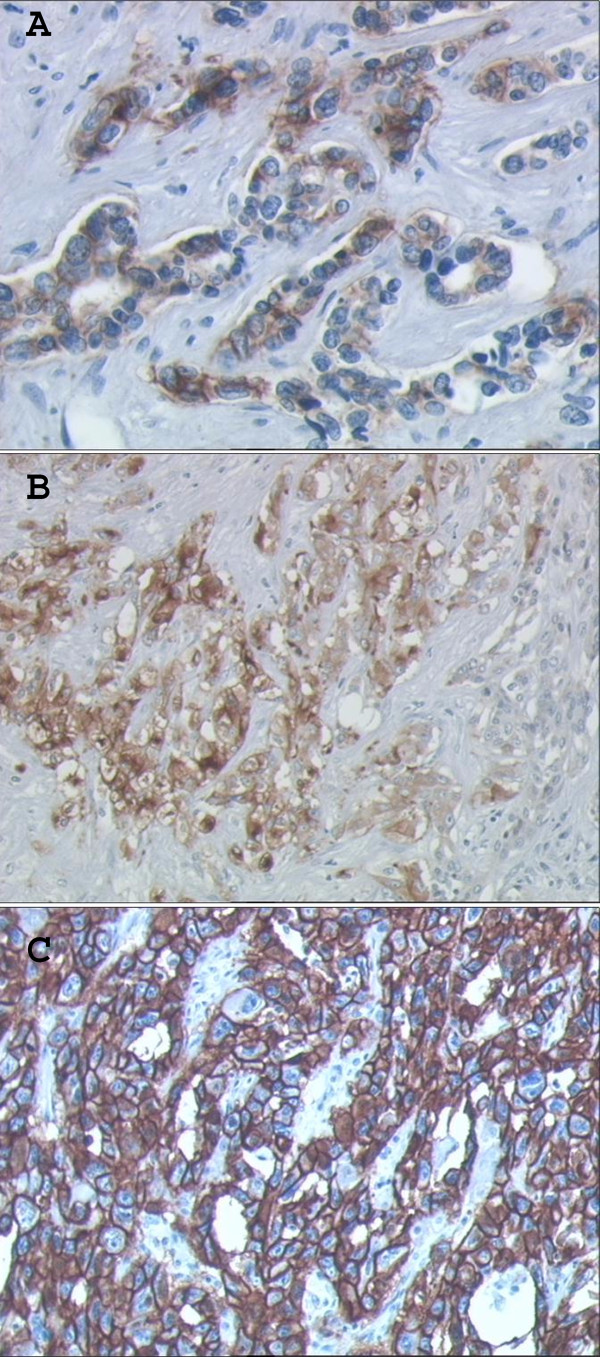
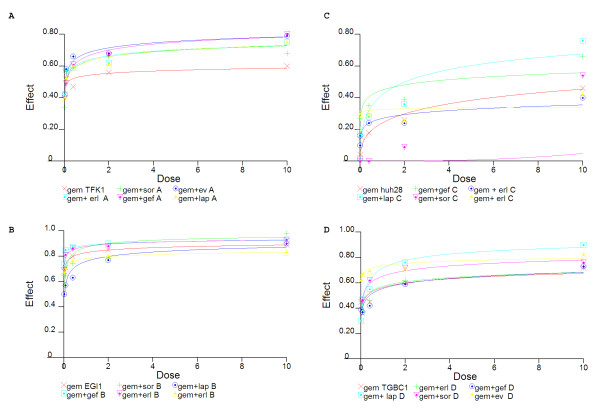
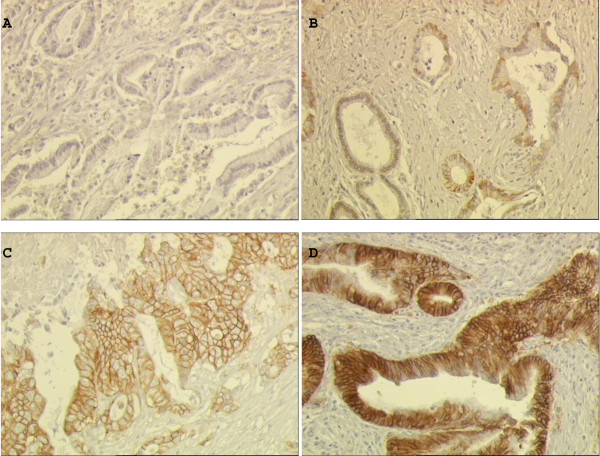
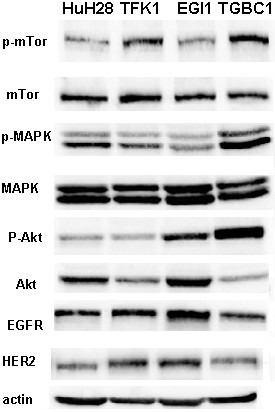
EGFR is expressed in 100% of ICCs, 52.6% of ECCs, and in 38.5% of GBCs. P-MAPK and p-Akt are highly expressed in ICCs (>58% of samples), and to a lower extent in ECCs and GBCs (<46%), indicating EGFR pathway activation. HER2 is overexpressed in 10% of GBCs (with genomic amplification), and 26.3% of ECCs (half of which has genomic amplification). EGFR or its signal transducers are mutated in 26.5% of cases: 4 samples bear mutations of PI3K (8.2%), 3 cases (6.1%) in K-RAS, 4 (8.2%) in B-RAF, and 2 cases (4.1%) in PTEN, but no loss of PTEN expression is detected. EGI-1 cell line is highly sensitive to gemcitabine, TFK1 and TGBC1-TKB cell lines are responsive and HuH28 cell line is resistant. In EGI-1 cells, combination with gefitinib further increases the antiproliferative effect of gemcitabine. In TFK1 and TGBC1-TKB cells, the efficacy of gemcitabine is increased with addiction of sorafenib and everolimus. In TGBC1-TKB cells, lapatinib also has a synergic effect with gemcitabine. HuH28 becomes responsive if treated in combination with erlotinib. Moreover, HuH28 cells are sensitive to lapatinib as a single agent. Molecular mechanisms were confirmed by western blot analysis.
These data demonstrate that EGFR and HER2 pathways are suitable therapeutic targets for BTCs. The combination of gemcitabine with drugs targeting these pathways gives encouraging results and further clinical studies could be warranted.
晚期胆道癌(BTC)预后差,治疗选择有限。因此,将标准疗法与分子靶向相结合至关重要。在这项研究中,我们分析了胆道癌病例系列中 EGFR、HER2 及其分子转导物的突变、扩增和过表达情况。此外,我们测试了针对这些分子的药物的疗效,这些药物可以单独使用或与吉西他滨联合使用,吉西他滨是治疗 BTC 的标准药物。
对 49 例源自肝内(ICC)、肝外(ECC)和胆囊(GBC)的 BTC 样本进行免疫组化、FISH 和突变分析。在 BTC 细胞系上,研究了不同的 EGFR/HER2 通路抑制剂作为单一药物或与吉西他滨联合使用对细胞增殖的影响。通过 Western blot 分析研究了靶向药物的分子机制。
EGFR 在 100%的 ICCs、52.6%的 ECCs 和 38.5%的 GBCs 中表达。P-MAPK 和 p-Akt 在 ICCs 中高度表达(>58%的样本),在 ECCs 和 GBCs 中表达程度较低(<46%),表明 EGFR 通路激活。HER2 在 10%的 GBCs(有基因组扩增)和 26.3%的 ECCs(其中一半有基因组扩增)中过表达。在 26.5%的病例中发现 EGFR 或其信号转导物发生突变:4 例存在 PI3K 突变(8.2%),3 例(6.1%)存在 K-RAS 突变,4 例(8.2%)存在 B-RAF 突变,2 例(4.1%)存在 PTEN 突变,但未检测到 PTEN 表达缺失。EGI-1 细胞系对吉西他滨敏感,TFK1 和 TGBC1-TKB 细胞系有反应,HuH28 细胞系有耐药性。在 EGI-1 细胞中,与 gefitinib 联合使用进一步增加了 gemcitabine 的抗增殖作用。在 TFK1 和 TGBC1-TKB 细胞中,添加 sorafenib 和 everolimus 可增加 gemcitabine 的疗效。在 TGBC1-TKB 细胞中,lapatinib 与 gemcitabine 联合使用也具有协同作用。HuH28 与 erlotinib 联合使用可使其变得敏感。此外,HuH28 细胞对 lapatinib 作为单一药物敏感。通过 Western blot 分析证实了这些分子机制。
这些数据表明,EGFR 和 HER2 通路是 BTC 的合适治疗靶点。吉西他滨与靶向这些通路的药物联合使用可获得令人鼓舞的结果,可能需要进一步的临床研究。