Aslan Ahmet, Meyer Zu Vilsendorf Andreas, Kleine Moritz, Bredt Martin, Bektas Hüseyin
Department of General Surgery, Faculty of Medicine, Mustafa Kemal University, Antakya-Hatay, Turkey.
Case Rep Gastroenterol. 2009 Nov 20;3(3):306-312. doi: 10.1159/000242420.
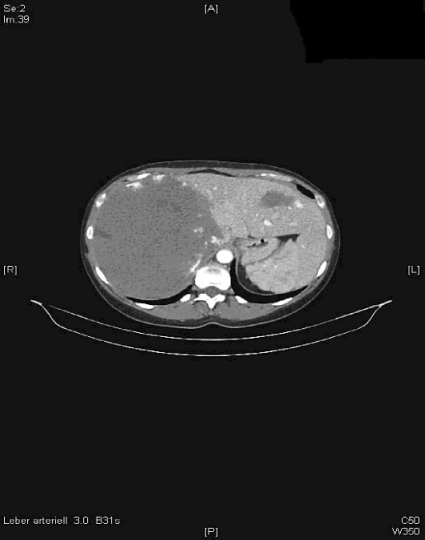
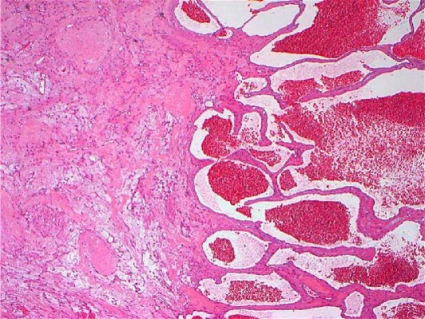
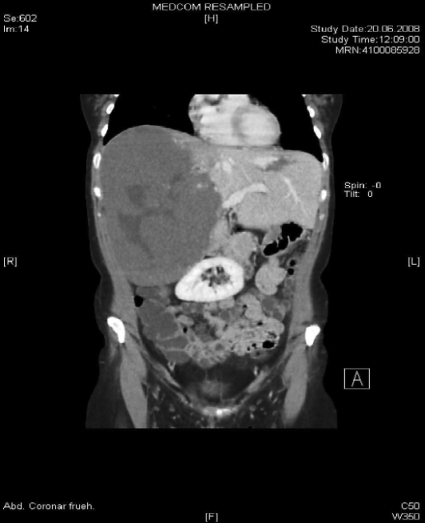
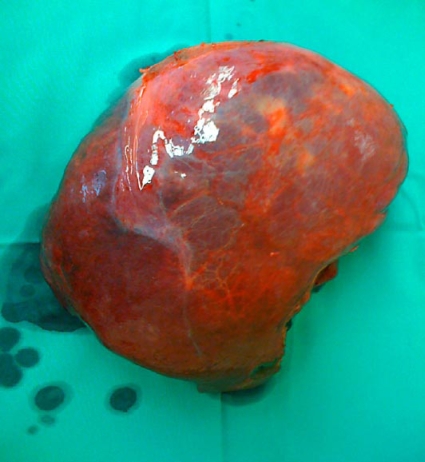
Cavernous hemangiomas are the most common benign tumors of the liver. They can reach enormous sizes and cause various complications. Kasabach-Merritt syndrome is a rare but serious complication characterized by consumptive coagulopathy caused by the hemangioma; mortality rate ranges between 10 and 37%. More than 80% of cases occur within the first year of life. Goals of the treatment are to control the coagulopathyand thrombocytopenia as well as to eradicate the hemangioma. Different nonsurgical treatment regimens are performed, includingsystemic corticosteroids, irradiation and various chemicals. Surgery should be limited to symptomatic or complicated cases. Although difficult, resection of the tumor is usually curative. Here we present a 44-year-old woman with giant hepatic hemangioma causing Kasabach-Merritt syndrome managed by enucleation.
海绵状血管瘤是肝脏最常见的良性肿瘤。它们可长得非常大,并引发各种并发症。卡萨巴赫-梅里特综合征是一种罕见但严重的并发症,其特征为血管瘤导致的消耗性凝血病;死亡率在10%至37%之间。超过80%的病例发生在出生后的第一年内。治疗目标是控制凝血病和血小板减少症,并根除血管瘤。采用了不同的非手术治疗方案,包括全身用皮质类固醇、放射治疗和各种化学药物。手术应限于有症状或复杂的病例。尽管困难,但肿瘤切除通常可治愈。在此,我们报告一例44岁女性巨大肝血管瘤导致卡萨巴赫-梅里特综合征,通过摘除术进行治疗。