Department of Molecular and Cellular Biology, Harvard University, Cambridge, MA 02138, USA.
Cell. 2010 Dec 10;143(6):924-37. doi: 10.1016/j.cell.2010.11.015.
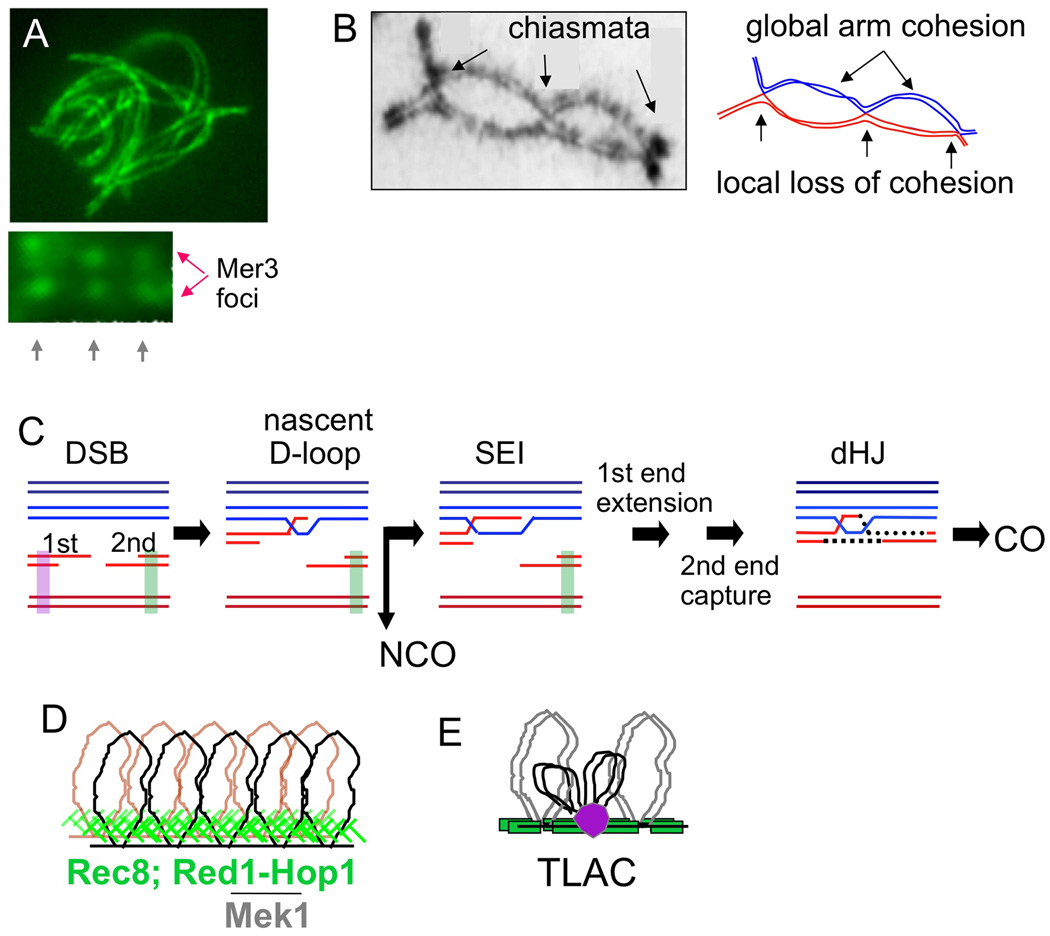
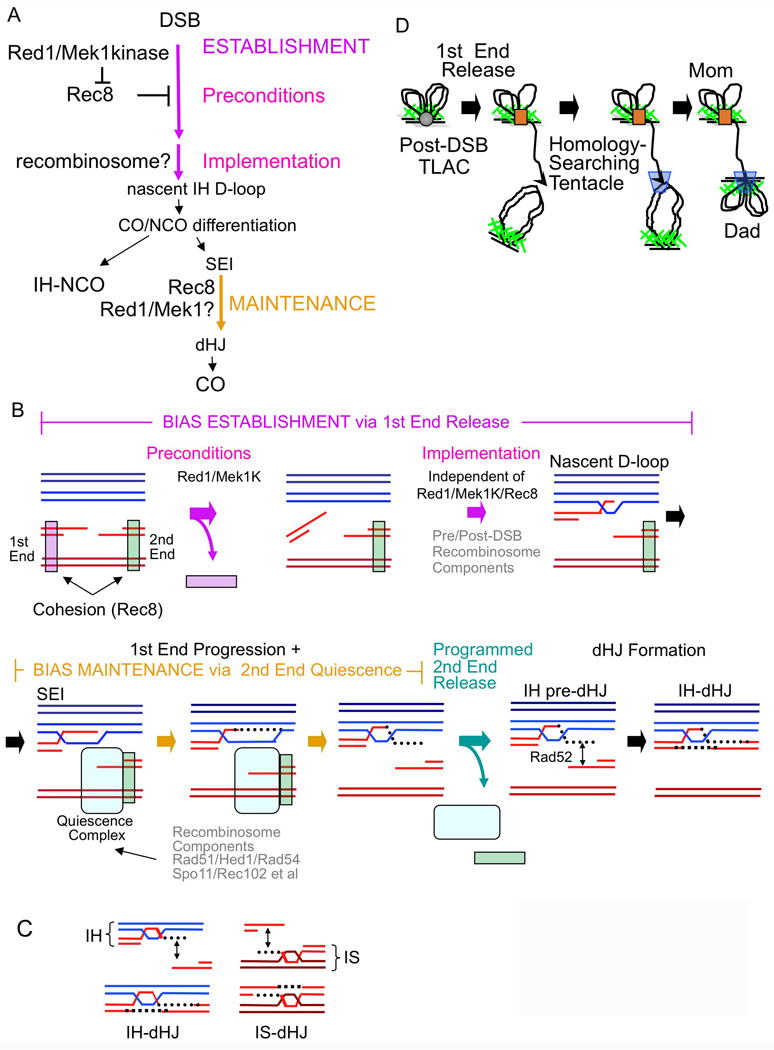
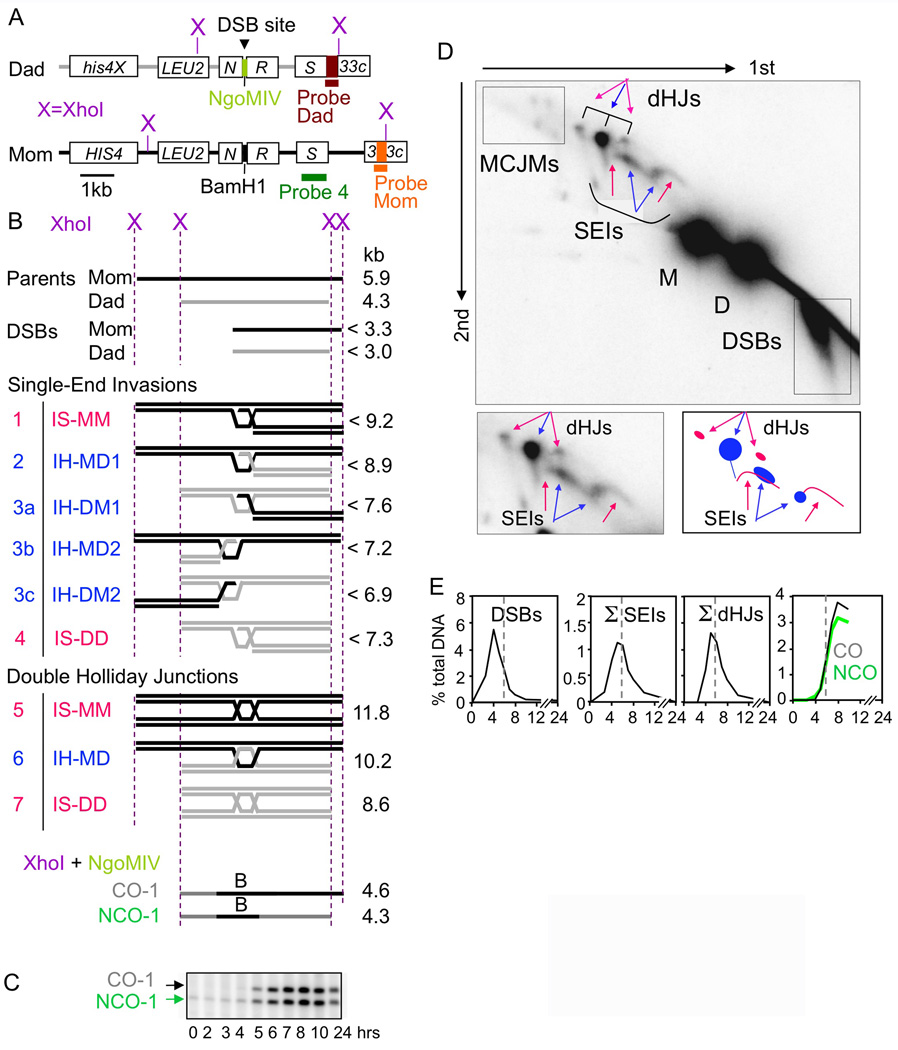
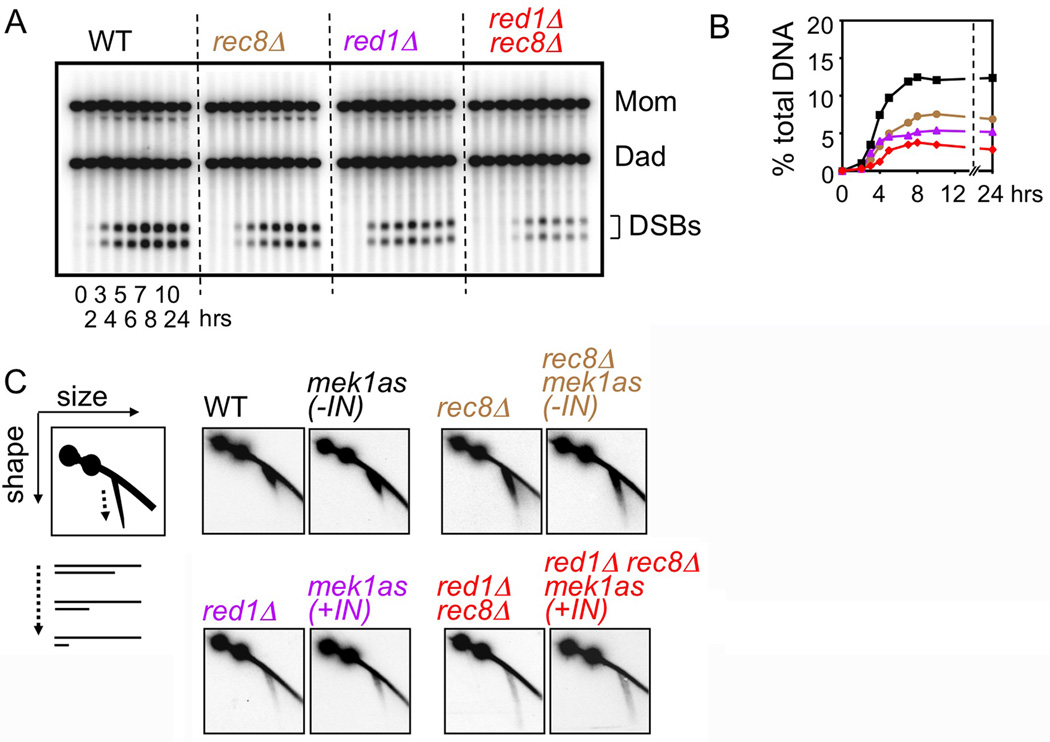
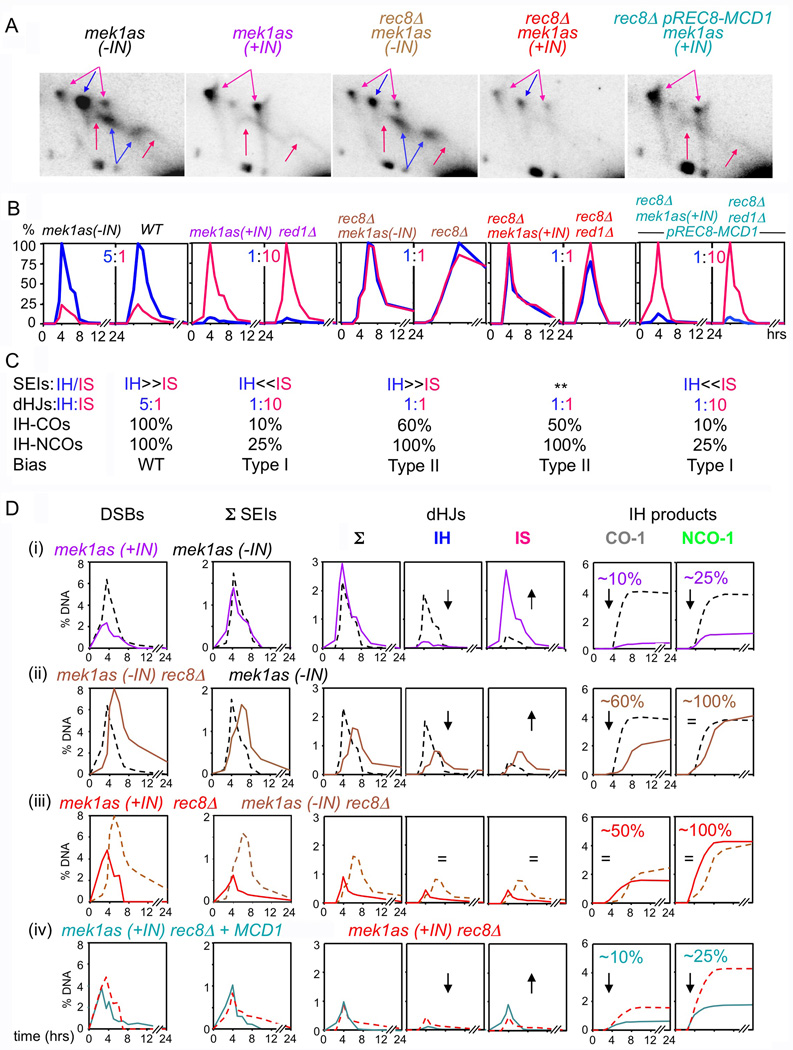
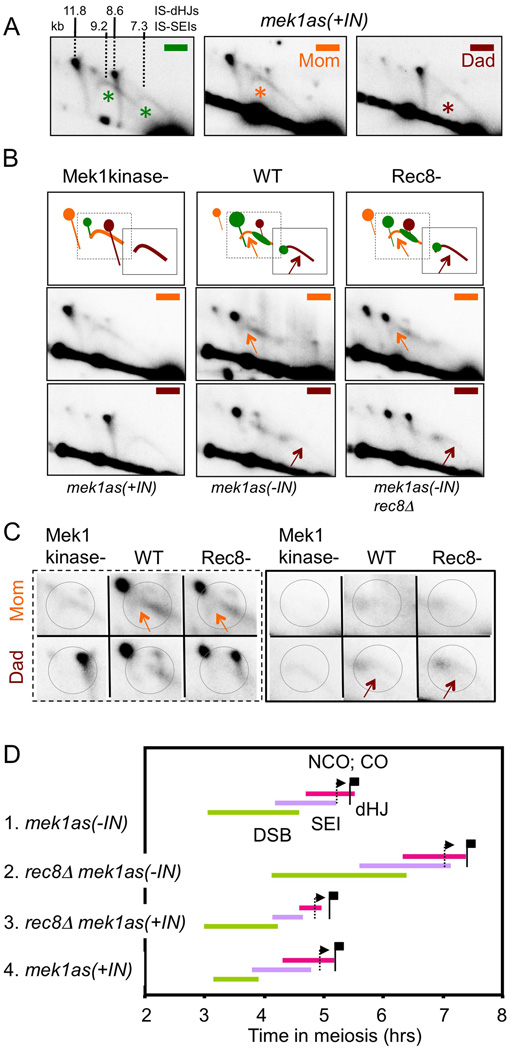
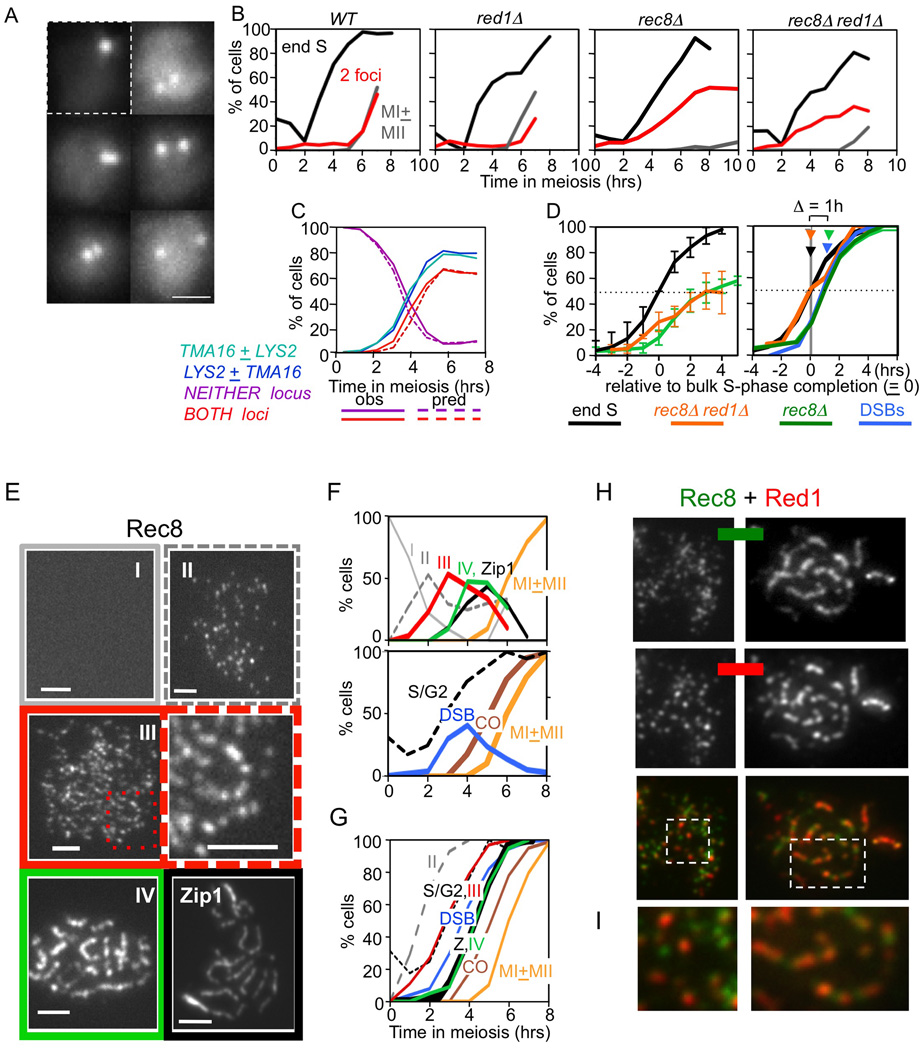
Meiotic double-strand break (DSB)-initiated recombination must occur between homologous maternal and paternal chromosomes ("homolog bias"), even though sister chromatids are present. Through physical recombination analyses, we show that sister cohesion, normally mediated by meiotic cohesin Rec8, promotes "sister bias"; that meiosis-specific axis components Red1/Mek1kinase counteract this effect, thereby satisfying an essential precondition for homolog bias; and that other components, probably recombinosome-related, directly ensure homolog partner selection. Later, Rec8 acts positively to ensure maintenance of bias. These complexities mirror opposing dictates for global sister cohesion versus local separation and differentiation of sisters at recombination sites. Our findings support DSB formation within axis-tethered recombinosomes containing both sisters and ensuing programmed sequential release of "first" and "second" DSB ends. First-end release would create a homology-searching "tentacle." Rec8 and Red1/Mek1 also independently license recombinational progression and abundantly localize to different domains. These domains could comprise complementary environments that integrate inputs from DSB repair and mitotic chromosome morphogenesis into the complete meiotic program.
减数分裂双链断裂(DSB)引发的重组必须发生在同源的母本和父本染色体之间(“同源偏好”),即使存在姐妹染色单体。通过物理重组分析,我们表明姐妹染色单体的黏合,通常由减数分裂黏合蛋白 Rec8 介导,促进了“姐妹偏好”;而减数分裂特异性轴成分 Red1/Mek1kinase 会抵消这种效应,从而满足同源偏好的必要前提;而其他成分,可能与重组体相关,直接确保同源伴侣的选择。随后,Rec8 会积极作用以确保偏好在后期得以维持。这些复杂性反映了全局姐妹黏合与在重组位点分离和分化姐妹的局部要求之间的对立指令。我们的研究结果支持在含有姐妹染色单体的轴束缚重组体中形成 DSB,并随之进行“第一”和“第二”DSB 末端的程序化顺序释放。第一末端的释放会形成一个同源搜索“触手”。Rec8 和 Red1/Mek1 也独立地许可重组进程,并大量定位于不同的区域。这些区域可能包含互补的环境,将 DSB 修复和有丝分裂染色体形态发生的输入整合到完整的减数分裂程序中。