Department of Physiology, University of California, San Francisco, San Francisco, CA 94158, USA.
J Cell Biol. 2010 Dec 13;191(6):1173-87. doi: 10.1083/jcb.201006131.
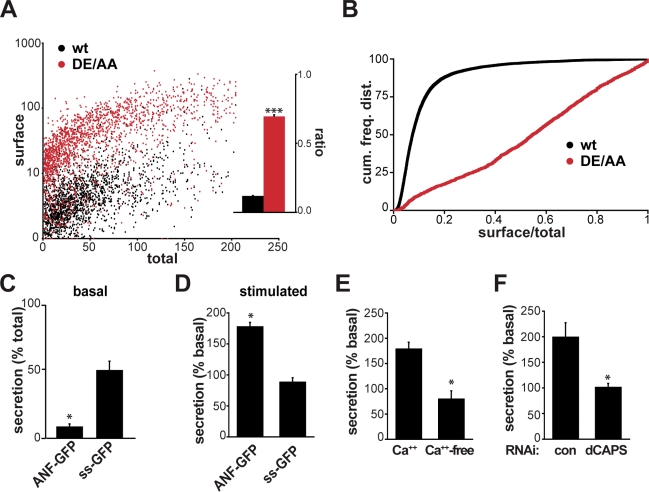
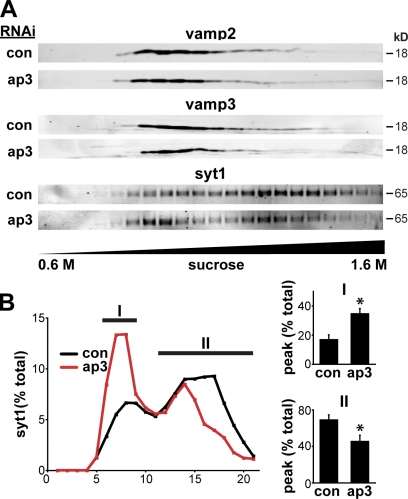
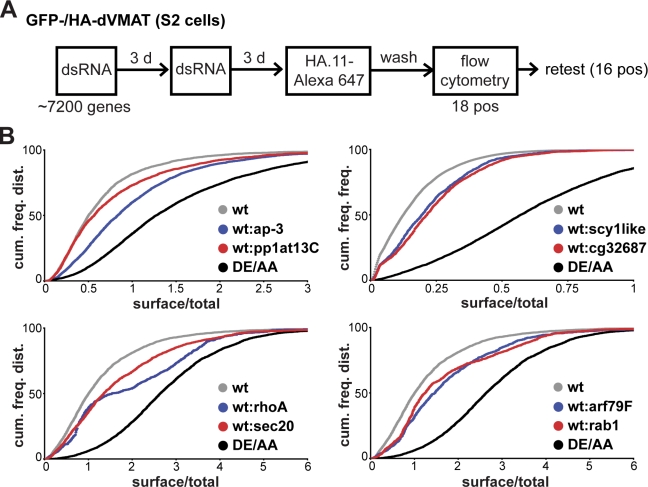
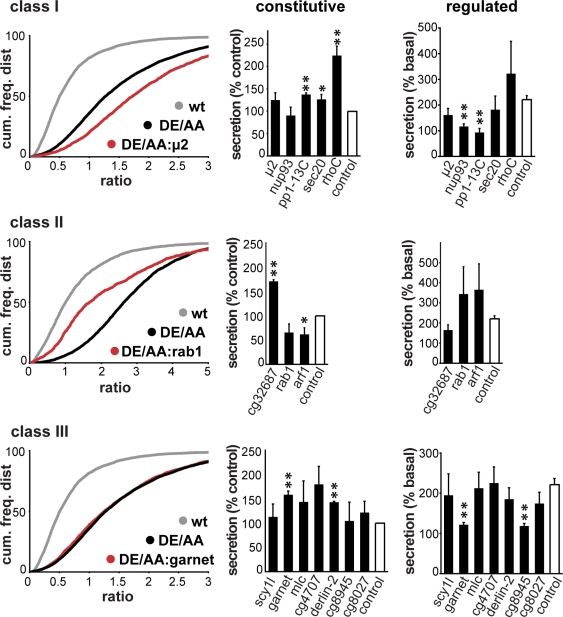
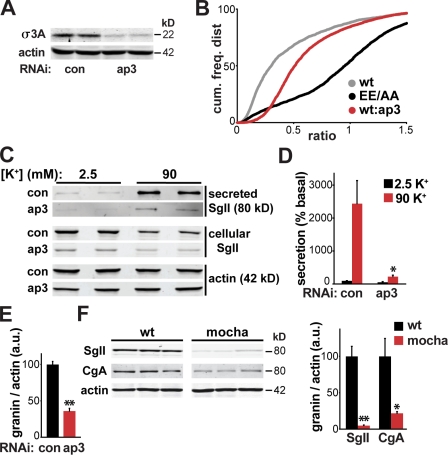
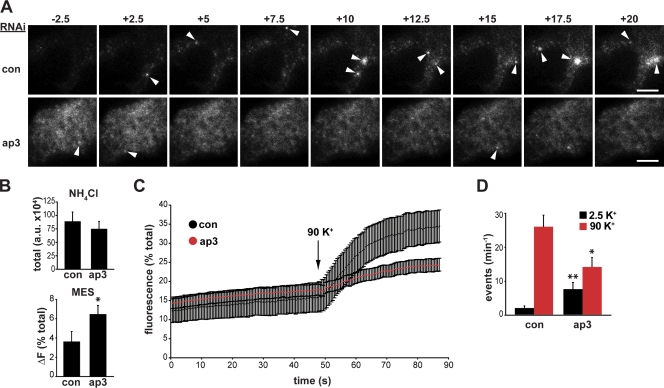
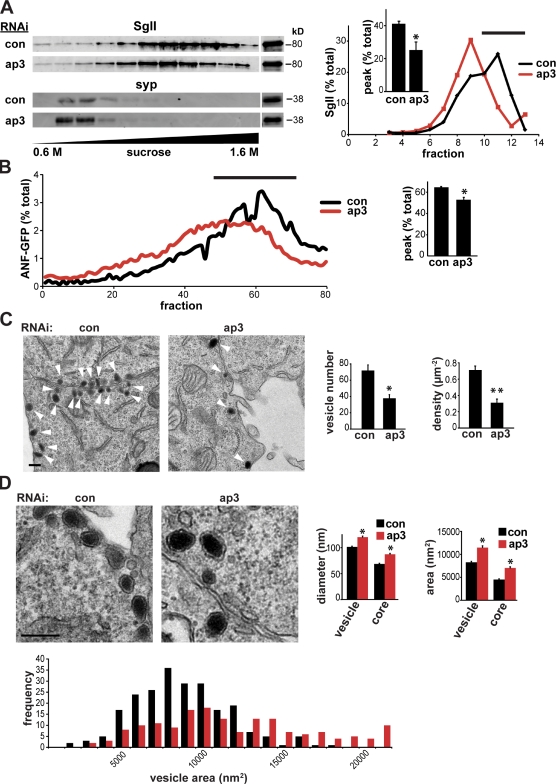
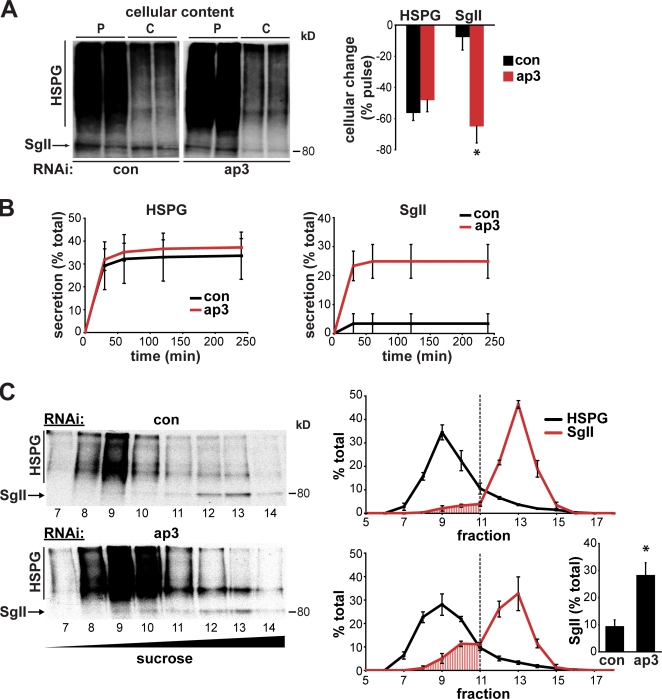
The regulated release of proteins depends on their inclusion within large dense-core vesicles (LDCVs) capable of regulated exocytosis. LDCVs form at the trans-Golgi network (TGN), but the mechanism for protein sorting to this regulated secretory pathway (RSP) and the cytosolic machinery involved in this process have remained poorly understood. Using an RNA interference screen in Drosophila melanogaster S2 cells, we now identify a small number of genes, including several subunits of the heterotetrameric adaptor protein AP-3, which are required for sorting to the RSP. In mammalian neuroendocrine cells, loss of AP-3 dysregulates exocytosis due to a primary defect in LDCV formation. Previous work implicated AP-3 in the endocytic pathway, but we find that AP-3 promotes sorting to the RSP within the biosynthetic pathway at the level of the TGN. Although vesicles with a dense core still form in the absence of AP-3, they contain substantially less synaptotagmin 1, indicating that AP-3 concentrates the proteins required for regulated exocytosis.
蛋白质的调节释放取决于它们是否包含在能够进行调节性胞吐的大型致密核心囊泡(LDCV)中。LDCV 形成于跨高尔基网络(TGN),但蛋白质分选到这种调节分泌途径(RSP)的机制以及涉及该过程的细胞质机制仍知之甚少。我们现在使用果蝇 S2 细胞中的 RNA 干扰筛选,鉴定出少数基因,包括异四聚体衔接蛋白 AP-3 的几个亚基,这些基因是分选到 RSP 所必需的。在哺乳动物神经内分泌细胞中,AP-3 的缺失由于 LDCV 形成的主要缺陷而导致胞吐作用失调。先前的工作表明 AP-3 参与了内吞途径,但我们发现 AP-3 在 TGN 水平上在生物合成途径中促进了 RSP 的分选。尽管在没有 AP-3 的情况下仍然形成了具有致密核心的囊泡,但它们含有明显较少的突触结合蛋白 1,表明 AP-3 浓缩了调节性胞吐所需的蛋白质。