Centro de Biotecnologia Molecular Estrutural, Instituto de Física de São Carlos, Universidade de São Paulo, Avenida Trabalhador São-Carlense 400, CEP 13566-590, Brazil.
J Synchrotron Radiat. 2011 Jan;18(1):62-5. doi: 10.1107/S0909049510027718. Epub 2010 Nov 12.
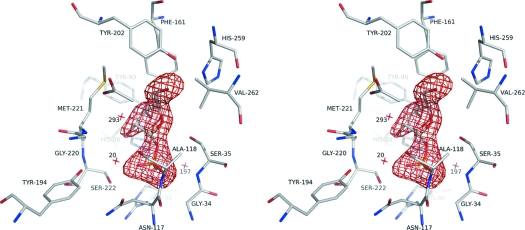
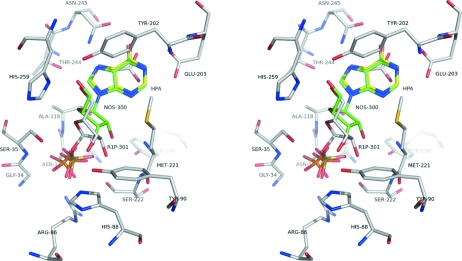
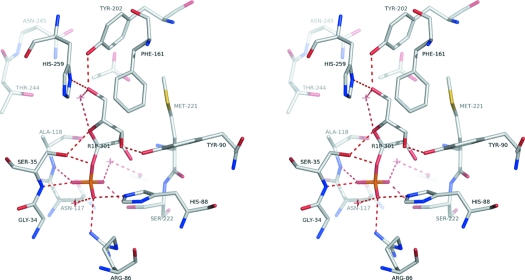
Schistosomes are blood flukes which cause schistosomiasis, a disease affecting approximately 200 million people worldwide. Along with several other important human parasites including trypanosomes and Plasmodium, schistosomes lack the de novo pathway for purine synthesis and depend exclusively on the salvage pathway for their purine requirements, making the latter an attractive target for drug development. Part of the pathway involves the conversion of inosine (or guanosine) into hypoxanthine (or guanine) together with ribose-1-phosphate (R1P) or vice versa. This inter-conversion is undertaken by the enzyme purine nucleoside phosphorylase (PNP) which has been used as the basis for the development of novel anti-malarials, conceptually validating this approach. It has been suggested that, during the reverse reaction, R1P binding to the enzyme would occur only as a consequence of conformational changes induced by hypoxanthine, thus making a binary PNP-R1P complex unlikely. Contradictory to this statement, a crystal structure of just such a binary complex involving the Schistosoma mansoni enzyme has been successfully obtained. The ligand shows an intricate hydrogen-bonding network in the phosphate and ribose binding sites and adds a further chapter to our knowledge which could be of value in the future development of selective inhibitors.
血吸虫是引起血吸虫病的血吸类寄生虫,这种疾病影响着全球约 2 亿人。与其他几种重要的人体寄生虫(包括锥虫和疟原虫)一样,血吸虫缺乏从头合成嘌呤的途径,完全依赖补救途径来满足嘌呤需求,这使得后者成为药物开发的一个有吸引力的目标。该途径的一部分涉及将肌苷(或鸟苷)转化为次黄嘌呤(或鸟嘌呤),同时与核糖-1-磷酸(R1P)或反之亦然。这种相互转化是由嘌呤核苷磷酸化酶(PNP)完成的,该酶已被用于开发新型抗疟药物,从概念上验证了这种方法。有人认为,在逆反应中,R1P 与酶的结合仅会因次黄嘌呤诱导的构象变化而发生,因此不太可能形成二元 PNP-R1P 复合物。与这一说法相反,已经成功获得了涉及曼氏血吸虫酶的这样一个二元复合物的晶体结构。配体在磷酸盐和核糖结合位点显示出复杂的氢键网络,并为我们的知识增加了一个可能对未来选择性抑制剂的开发有价值的章节。