Center for Sleep Sciences and Department of Psychiatry, Stanford University School of Medicine, Palo Alto, California, USA.
Nat Genet. 2011 Jan;43(1):66-71. doi: 10.1038/ng.734. Epub 2010 Dec 19.
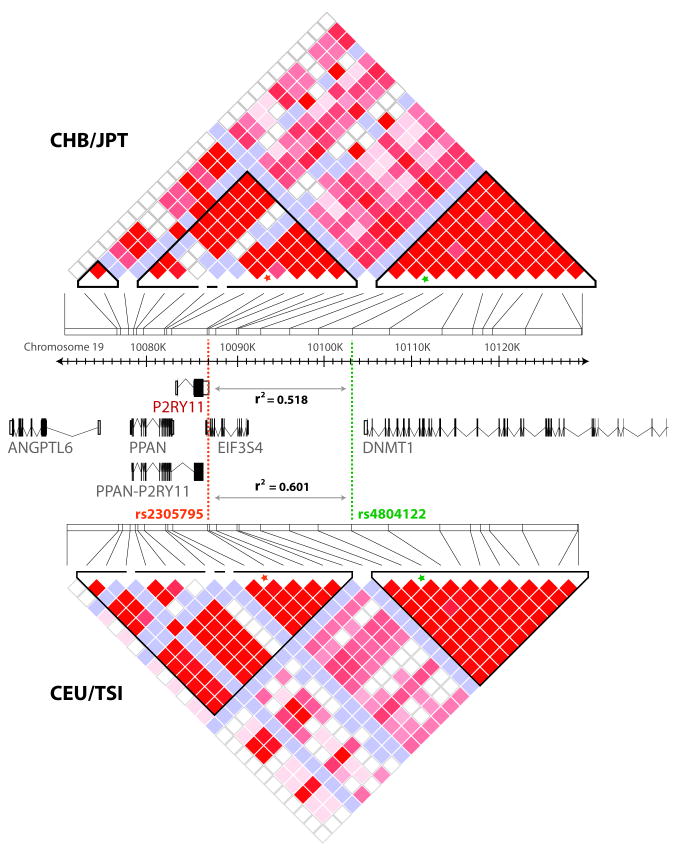
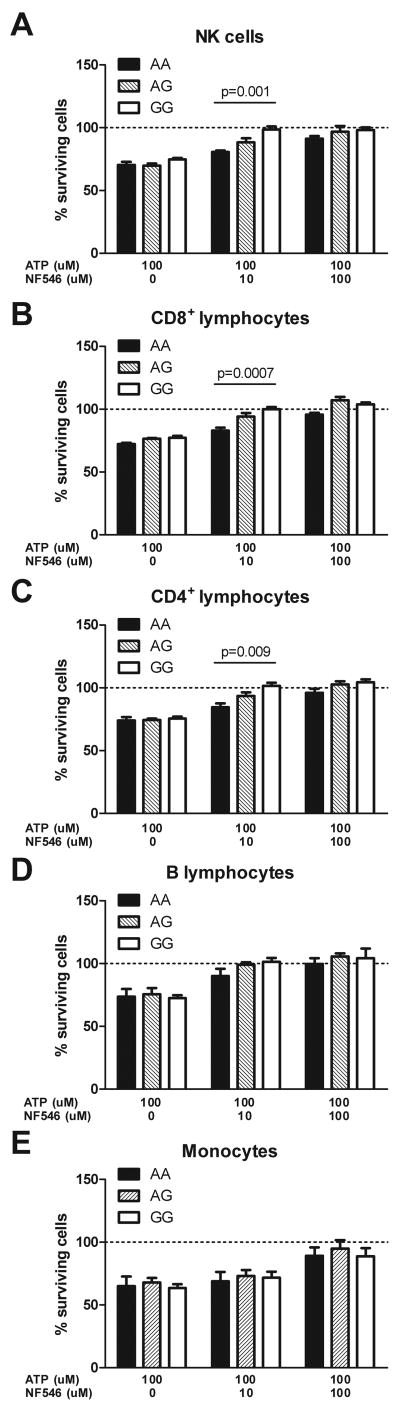
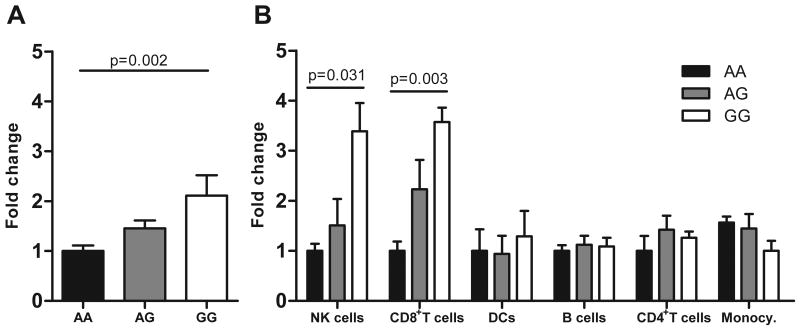
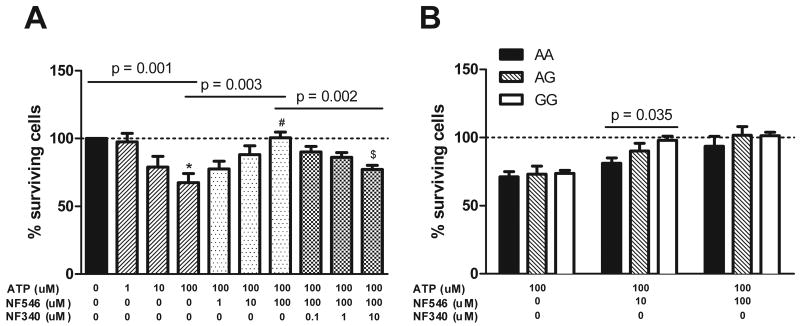
Growing evidence supports the hypothesis that narcolepsy with cataplexy is an autoimmune disease. We here report genome-wide association analyses for narcolepsy with replication and fine mapping across three ethnic groups (3,406 individuals of European ancestry, 2,414 Asians and 302 African Americans). We identify a SNP in the 3' untranslated region of P2RY11, the purinergic receptor subtype P2Y₁₁ gene, which is associated with narcolepsy (rs2305795, combined P = 6.1 × 10⁻¹⁰, odds ratio = 1.28, 95% CI 1.19-1.39, n = 5689). The disease-associated allele is correlated with reduced expression of P2RY11 in CD8(+) T lymphocytes (339% reduced, P = 0.003) and natural killer (NK) cells (P = 0.031), but not in other peripheral blood mononuclear cell types. The low expression variant is also associated with reduced P2RY11-mediated resistance to ATP-induced cell death in T lymphocytes (P = 0.0007) and natural killer cells (P = 0.001). These results identify P2RY11 as an important regulator of immune-cell survival, with possible implications in narcolepsy and other autoimmune diseases.
越来越多的证据支持发作性睡病伴猝倒症是一种自身免疫性疾病的假说。我们在此报告了针对发作性睡病的全基因组关联分析,该分析在三个种族群体中进行了复制和精细定位(3406 名欧洲血统个体、2414 名亚洲人和 302 名非裔美国人)。我们在嘌呤能受体亚型 P2Y₁₁ 基因的 3'非翻译区鉴定到一个与发作性睡病相关的 SNP(rs2305795,联合 P = 6.1×10⁻¹⁰,优势比 = 1.28,95%CI 1.19-1.39,n = 5689)。与疾病相关的等位基因与 CD8(+)T 淋巴细胞(减少 339%,P = 0.003)和自然杀伤(NK)细胞(P = 0.031)中 P2RY11 的表达降低相关,但与其他外周血单核细胞类型无关。低表达变异体也与 T 淋巴细胞(P = 0.0007)和自然杀伤细胞(P = 0.001)中对 ATP 诱导的细胞死亡的 P2RY11 介导的抗性降低相关。这些结果确定了 P2RY11 是免疫细胞存活的重要调节剂,可能对发作性睡病和其他自身免疫性疾病有影响。