Ruff Robert L, Riechers Ronald G, Ruff Suzanne S
F1000 Med Rep. 2010 Aug 19;2:64. doi: 10.3410/M2-64.
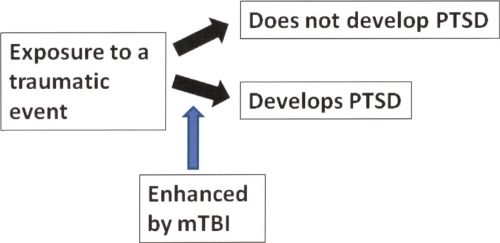
The setting of the trauma is a distinguishing feature between mild traumatic brain injury (mTBI; also called concussion) that occurs in civilian settings compared with that occurring in combat. Combat mTBI is frequently associated with a prolonged stress reaction, post-traumatic stress disorder (PTSD). Individuals with mTBI and PTSD from combat in Operations Iraqi Freedom and Enduring Freedom often develop prolonged post-concussion symptoms (PCSs) such as headache. Both mTBI and PTSD may contribute to PCSs. PTSD may worsen and prolong the PCSs following mTBI by disrupting sleep. It is not known how mTBI predisposes an individual to develop PTSD.
创伤发生的背景是 civilian 环境中发生的轻度创伤性脑损伤(mTBI,也称为脑震荡)与战斗中发生的此类损伤之间的一个显著特征。战斗性 mTBI 经常与长期应激反应、创伤后应激障碍(PTSD)相关联。在伊拉克自由行动和持久自由行动中经历战斗并患有 mTBI 和 PTSD 的个体常常会出现如头痛等长期的脑震荡后症状(PCSs)。mTBI 和 PTSD 都可能导致 PCSs。PTSD 可能通过扰乱睡眠而使 mTBI 后的 PCSs 恶化并延长。目前尚不清楚 mTBI 如何使个体易患 PTSD。