Schmidt-Kittler Oleg, Zhu Jiuxiang, Yang Jian, Liu Guosheng, Hendricks William, Lengauer Christoph, Gabelli Sandra B, Kinzler Kenneth W, Vogelstein Bert, Huso David L, Zhou Shibin
The Ludwig Center for Cancer Genetics and Therapeutics and Howard Hughes Medical Institute, Johns Hopkins Kimmel Cancer Center, Baltimore, MD 21231, USA.
Oncotarget. 2010 Sep;1(5):339-48. doi: 10.18632/oncotarget.166.
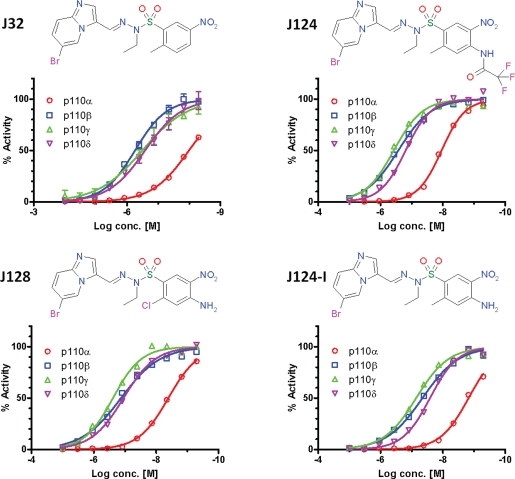
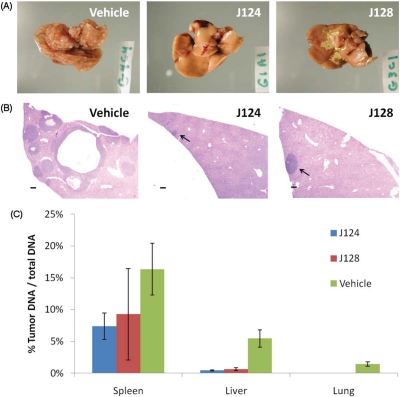
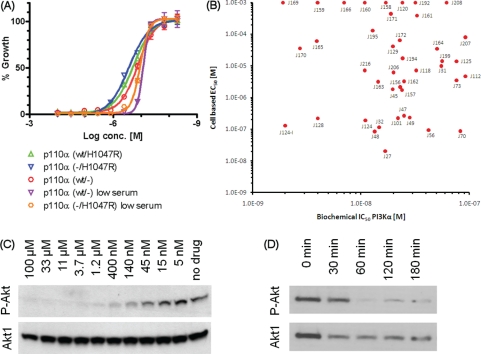
Previous genetic analyses have suggested that mutations of the genes encoding PI3Kα facilitate invasion and metastasis but have less effect on primary tumor growth. These findings have major implications for therapeutics but have not been factored into pre-clinical drug development designs. Here we show that the inhibition of PI3Kα by newly designed small molecule inhibitors prevented metastasis formation in mice but had much less effect on the growth of subcutaneous xenografts or primary intra-abdominal tumors. These data support the idea that PI3Kα plays an important role in the metastatic process and suggest a more informed strategy for selecting drugs worthy of further development for clinical application.
先前的基因分析表明,编码PI3Kα的基因突变促进侵袭和转移,但对原发性肿瘤生长的影响较小。这些发现对治疗具有重要意义,但尚未纳入临床前药物开发设计中。在此,我们表明新设计的小分子抑制剂对PI3Kα的抑制作用可防止小鼠体内转移灶的形成,但对皮下异种移植瘤或原发性腹腔内肿瘤的生长影响较小。这些数据支持PI3Kα在转移过程中起重要作用的观点,并为选择值得进一步开发用于临床应用的药物提供了更明智的策略。