Beirne B. Carter Center for Immunology Research, Department of Microbiology, University of Virginia, Charlottesville, VA 22904, USA.
J Exp Med. 2011 Jan 17;208(1):167-80. doi: 10.1084/jem.20101850. Epub 2010 Dec 27.
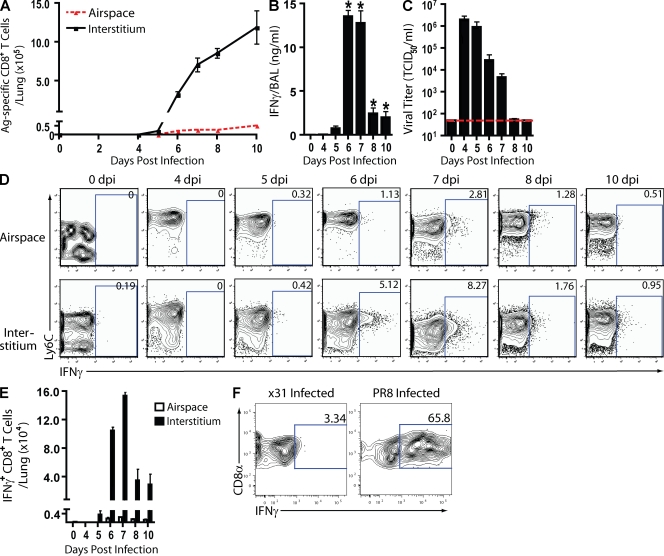
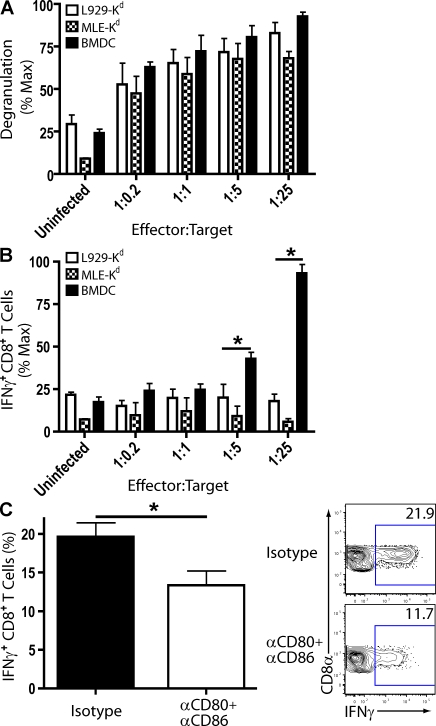
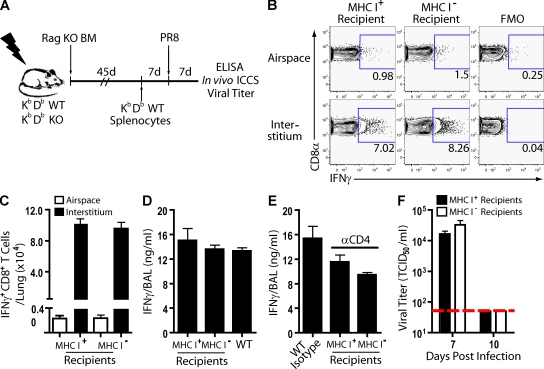
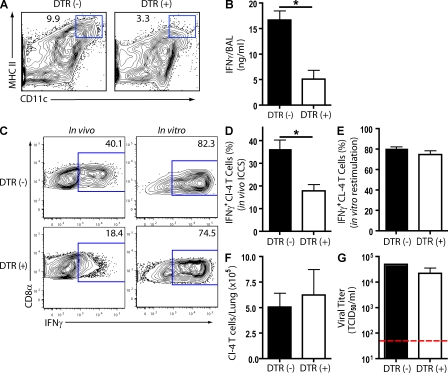
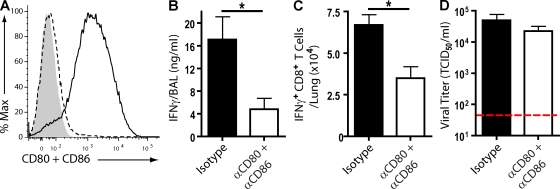
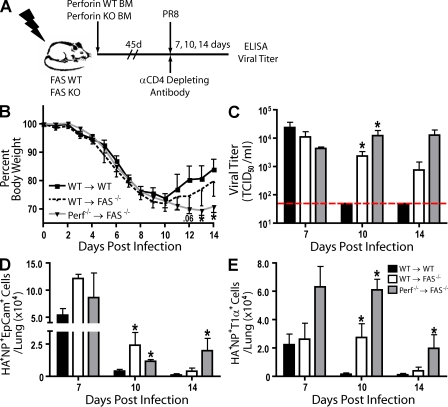
Cytotoxic T lymphocytes (CTLs) play a prominent role in the resolution of viral infections through their capacity both to mediate contact-dependent lysis of infected cells and to release soluble proinflammatory cytokines and chemokines. The factors controlling these antiviral effector activities in vivo at infection sites are ill defined. Using a mouse model of influenza infection, we observed that the expression of CTL effector activity in the infected lungs is dictated by the target cell type encountered. CD45(+) lung infiltrating inflammatory mononuclear cells, particularly CD11c(hi) dendritic cells, trigger both CTL cytotoxicity and release of inflammatory mediators, whereas CD45(-) influenza-infected respiratory epithelial cells stimulate only CTL cytotoxicity. CTL proinflammatory mediator release is modulated by co-stimulatory ligands (CD80 and CD86) expressed by the CD45(+) inflammatory cells. These findings suggest novel mechanisms of control of CTL effector activity and have potentially important implications for the control of excess pulmonary inflammation and immunopathology while preserving optimal viral clearance during respiratory virus infections.
细胞毒性 T 淋巴细胞 (CTL) 通过其既能介导感染细胞的接触依赖性裂解,又能释放可溶性促炎细胞因子和趋化因子的能力,在病毒感染的清除中发挥重要作用。在感染部位控制这些抗病毒效应活性的因素尚未明确。我们使用流感感染的小鼠模型观察到,在感染的肺部中 CTL 效应活性的表达取决于所遇到的靶细胞类型。CD45(+)肺浸润性炎症性单核细胞,特别是 CD11c(hi)树突状细胞,触发 CTL 细胞毒性和炎症介质的释放,而 CD45(-)流感感染的呼吸道上皮细胞仅刺激 CTL 细胞毒性。CTL 促炎介质的释放受 CD45(+)炎症细胞表达的共刺激配体(CD80 和 CD86)调节。这些发现提示了控制 CTL 效应活性的新机制,对于在保留最佳病毒清除的同时控制呼吸道病毒感染期间过度的肺部炎症和免疫病理学具有潜在的重要意义。