Laboratorio de Fisiopatogenia, Departamento de Fisiología, Facultad de Medicina, Buenos Aires, Argentina.
PLoS One. 2010 Dec 29;5(12):e15127. doi: 10.1371/journal.pone.0015127.
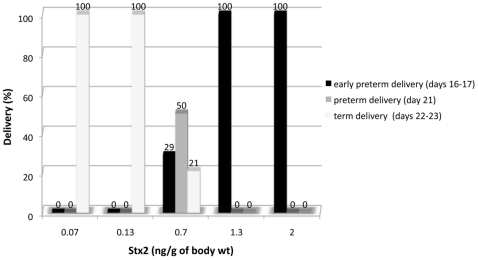
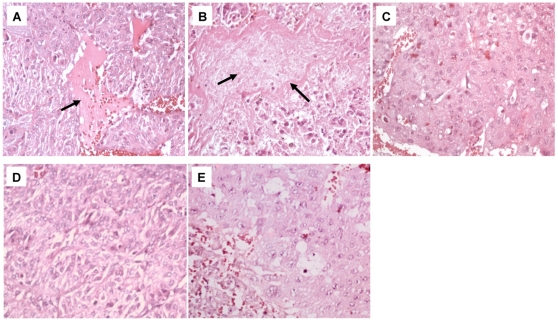
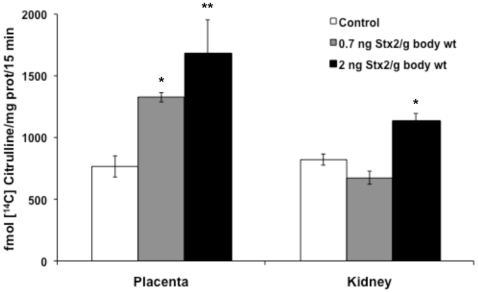
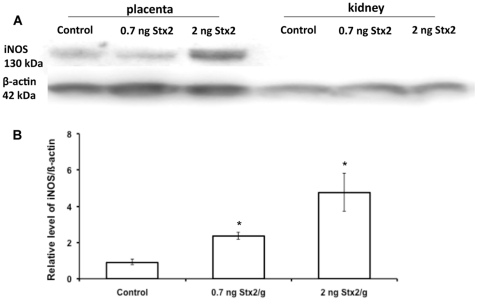
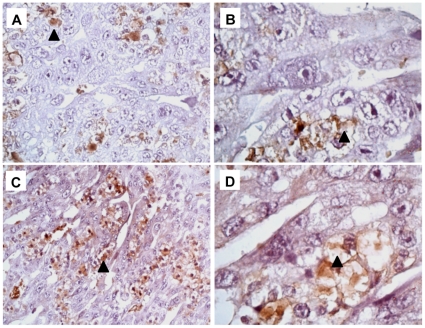
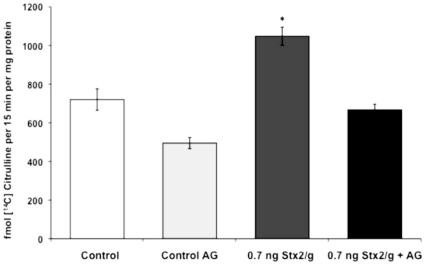
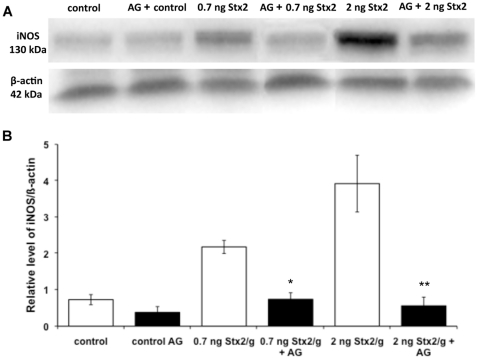
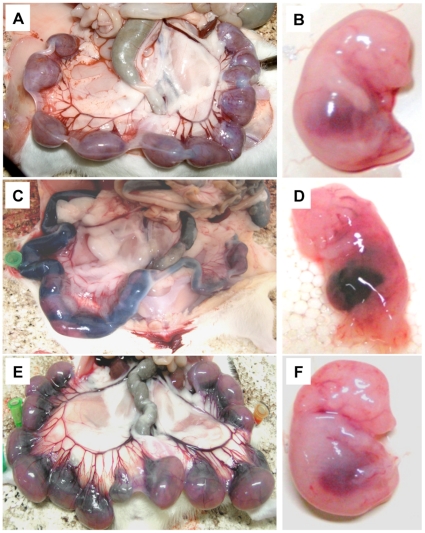
Shiga toxin-producing Escherichia coli (STEC) infections could be one of the causes of fetal morbimortality in pregnant women. The main virulence factors of STEC are Shiga toxin type 1 and/or 2 (Stx1, Stx2). We previously reported that intraperitoneal (i.p.) injection of rats in the late stage of pregnancy with culture supernatant from recombinant E. coli expressing Stx2 and containing lipopolysaccharide (LPS) induces premature delivery of dead fetuses. It has been reported that LPS may combine with Stx2 to facilitate vascular injury, which may in turn lead to an overproduction of nitric oxide (NO). The aim of this study was to evaluate whether NO is involved in the effects of Stx2 on pregnancy. Pregnant rats were i.p. injected with culture supernatant from recombinant E. coli containing Stx2 and LPS (sStx2) on day 15 of gestation. In addition, some rats were injected with aminoguanidine (AG), an inducible isoform inhibitor of NO synthase (iNOS), 24 h before and 4 h after sStx2 injection. NO production was measured by NOS activity and iNOS expression by Western blot analysis. A significant increase in NO production and a high iNOS expression was observed in placental tissues from rats injected with sStx2 containing 0.7 ng and 2 ng Stx2/g body weight and killed 12 h after injection. AG caused a significant reduction of sStx2 effects on the feto-maternal unit, but did not prevent premature delivery. Placental tissues from rats treated with AG and sStx2 presented normal histology that was indistinguishable from the controls. Our results reveal that Stx2-induced placental damage and fetus mortality is mediated by an increase in NO production and that AG is able to completely reverse the Stx2 damages in placental tissues, but not to prevent premature delivery, thus suggesting other mechanisms not yet determined could be involved.
产志贺毒素大肠杆菌(STEC)感染可能是导致孕妇胎儿死亡的原因之一。STEC 的主要毒力因子是志贺毒素 1 型和/或 2 型(Stx1、Stx2)。我们之前报道过,在妊娠晚期向大鼠腹腔内注射含有 Stx2 和脂多糖(LPS)的重组大肠杆菌培养液上清液会导致死胎早产。据报道,LPS 可能与 Stx2 结合,促进血管损伤,进而导致一氧化氮(NO)的过度产生。本研究旨在评估 NO 是否参与 Stx2 对妊娠的影响。妊娠第 15 天,向大鼠腹腔内注射含有 Stx2 和 LPS 的重组大肠杆菌培养液上清液(sStx2)。此外,一些大鼠在注射 sStx2 前 24 小时和后 4 小时注射氨基胍(AG),一种诱导型一氧化氮合酶(iNOS)抑制剂。通过 NOS 活性和 Western blot 分析测量 NO 产生和 iNOS 表达。在注射含有 0.7ng 和 2ng Stx2/g 体重的 sStx2 后 12 小时处死的大鼠胎盘组织中观察到 NO 产生显著增加和 iNOS 表达升高。AG 可显著降低 sStx2 对胎母单位的作用,但不能防止早产。用 AG 和 sStx2 处理的大鼠胎盘组织呈现正常的组织学特征,与对照组无区别。我们的结果表明,Stx2 诱导的胎盘损伤和胎儿死亡是由 NO 产生增加介导的,AG 能够完全逆转胎盘组织中的 Stx2 损伤,但不能防止早产,这表明可能涉及其他尚未确定的机制。