After Completion of Therapy Clinic, Department of Oncology, St. Jude Children's Research Hospital, USA.
J Neurosci Nurs. 2010 Dec;42(6):323-8; quiz 329-30. doi: 10.1097/jnn.0b013e3181f8a59d.
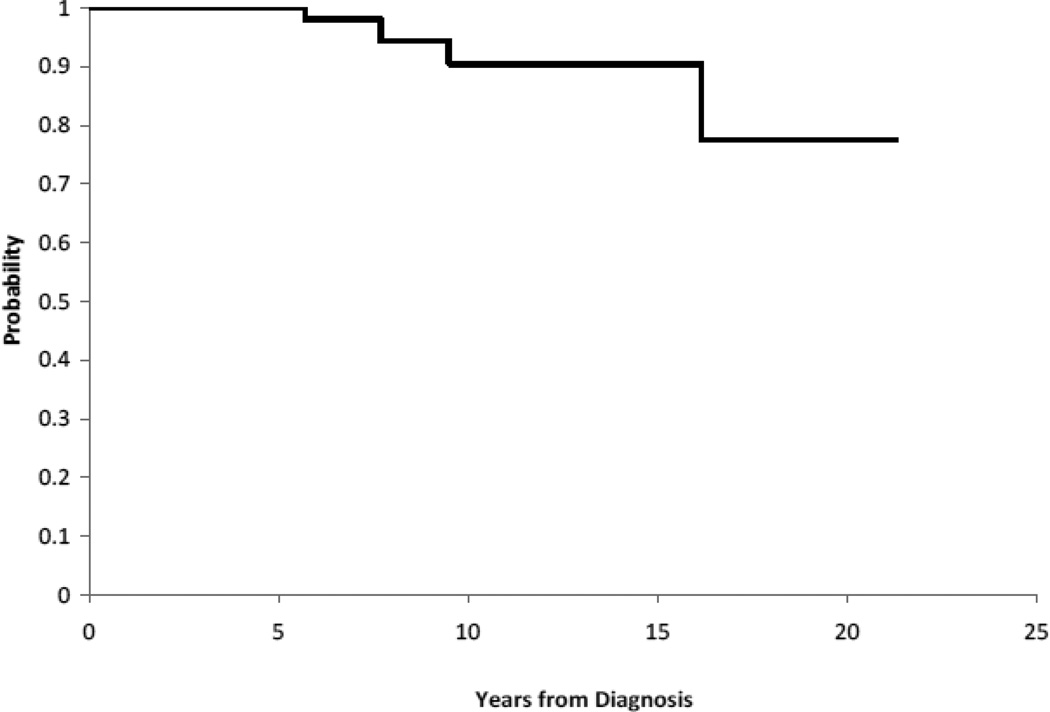
Craniopharyngiomas are the third most common pediatric brain tumor and most common pediatric suprasellar tumor. Contemporary treatment of craniopharyngiomas uses limited surgery and radiation in an effort to minimize morbidity, but the long-term health status of patients treated in this fashion has not been well described. The purpose of this study was to analyze the health status of long-term survivors of pediatric craniopharyngioma treated primarily with radiation and conservative surgical resection. Medical records of all long-term survivors of craniopharyngioma treated at St. Jude Children's Research Hospital and then transferred to the long-term follow-up clinic were reviewed. The initial cohort comprised 55 patients. Of these, 51 (93%) were alive at the time of this analysis. The median age at diagnosis was 7.1 years (range, 1.2-17.6 years), and 29 (57%) were male. At the time of analysis, the median survival was 7.6 years (range, 5.0-21.3 years). Diagnosis and treatment included surgical biopsy, resection (n = 50), and radiation therapy (n=48). Only 1 patient received chemotherapy. Polyendocrinopathy was the most common morbidity, with hypothyroidism (96%), adrenocorticotropic hormone deficiency (84%), and diabetes insipidus (53%) occurring most frequently. Half of the patients were hypogonadal, and 33 (65%) were overweight or obese. The most common neurologic problems included shunt dependence (37%), seizures (28%), and headaches (39%). Psychological and educational deficits were also identified in a significant number of these individuals. Despite efforts to reduce morbidity in these patients, many survivors remain burdened with significant medical complications. In a small percentage of patients, complications may result in death even during extended remission of craniopharyngioma. Because of the broad spectrum or morbidities experienced, survivors of craniopharyngioma continue to benefit from multidisciplinary care.
颅咽管瘤是第三大常见的小儿脑肿瘤,也是最常见的小儿鞍上肿瘤。目前颅咽管瘤的治疗方法是采用有限的手术和放疗,以尽量降低发病率,但这种治疗方式的患者长期健康状况尚未得到很好的描述。本研究旨在分析主要采用放疗和保守性手术切除治疗的小儿颅咽管瘤长期幸存者的健康状况。对圣裘德儿童研究医院治疗后转至长期随访诊所的所有颅咽管瘤长期幸存者的病历进行了回顾性分析。最初的队列包括 55 名患者。其中,51 名(93%)在本分析时仍存活。诊断时的中位年龄为 7.1 岁(范围为 1.2-17.6 岁),29 名(57%)为男性。分析时的中位生存时间为 7.6 年(范围为 5.0-21.3 年)。诊断和治疗包括手术活检、切除(n=50)和放疗(n=48)。仅 1 例患者接受了化疗。多内分泌腺病是最常见的并发症,甲状腺功能减退症(96%)、促肾上腺皮质激素缺乏症(84%)和尿崩症(53%)最常见。一半的患者性腺功能减退,33 名(65%)超重或肥胖。最常见的神经系统问题包括分流依赖(37%)、癫痫(28%)和头痛(39%)。这些人中也有相当一部分存在心理和教育方面的缺陷。尽管努力降低这些患者的发病率,但许多幸存者仍承受着严重的医疗并发症。在少数患者中,即使颅咽管瘤得到长期缓解,并发症也可能导致死亡。由于存在广泛的并发症,颅咽管瘤幸存者仍受益于多学科治疗。