Department of Orthopedic Surgery, Kurume University, Kurume, Fukuoka, Japan.
BMC Musculoskelet Disord. 2011 Jan 17;12:18. doi: 10.1186/1471-2474-12-18.
There is growing evidence that adiponectin, a physiologically active polypeptide secreted by adipocytes, controls not only adipose tissue but also bone metabolism. However, a role for adiponectin in bone development remains controversial.
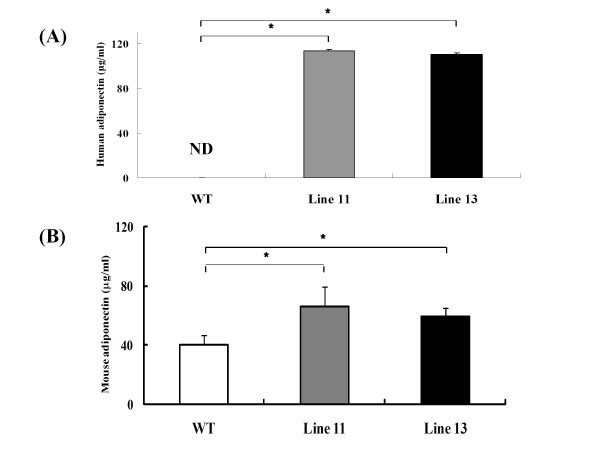
We therefore investigated the endocrine effects of adiponectin on bone metabolism using 12-week-old male transgenic (Ad-Tg) mice with significant hyperadiponectinemia overexpressing human full-length adiponectin in the liver.
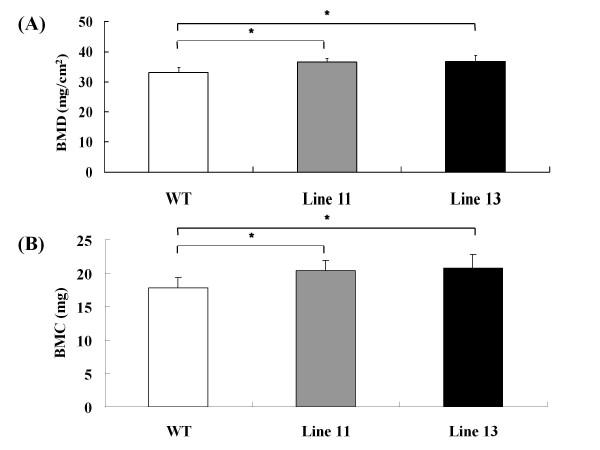
In Ad-Tg mice, the serum level of osteocalcin was significantly increased, but the levels of RANKL, osteoprotegerin, and TRAP5b were not. Bone mass was significantly greater in Ad-Tg mice with increased bone formation. In contrast, bone resorption parameters including the number of osteoclasts and eroded surface area did not differ between Ad-Tg and their littermates.
These findings demonstrate that hyperadiponectinemia enhances bone formation in mice.
越来越多的证据表明,脂联素是脂肪细胞分泌的一种具有生理活性的多肽,它不仅能控制脂肪组织,还能控制骨代谢。然而,脂联素在骨发育中的作用仍存在争议。
因此,我们使用 12 周龄的雄性转基因(Ad-Tg)小鼠研究了脂联素对骨代谢的内分泌影响,这些小鼠在肝脏中过度表达全长人脂联素,导致脂联素血症显著升高。
在 Ad-Tg 小鼠中,骨钙素的血清水平显著升高,而 RANKL、骨保护素和 TRAP5b 的水平没有变化。Ad-Tg 小鼠的骨量明显增加,骨形成增加。相比之下,破骨细胞数量和侵蚀表面积等骨吸收参数在 Ad-Tg 小鼠与其同窝仔鼠之间没有差异。
这些发现表明,脂联素血症增强了小鼠的骨形成。